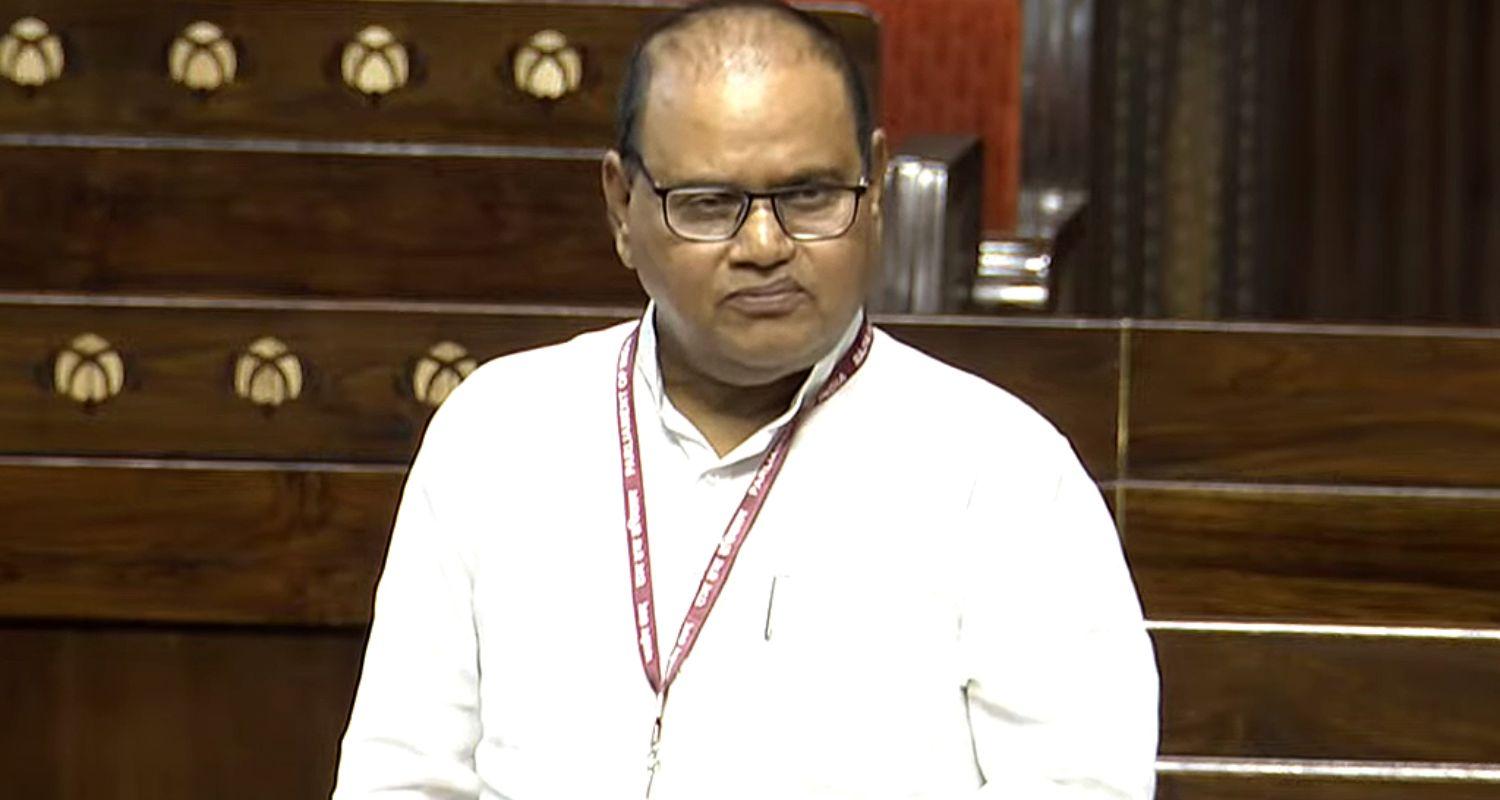
A BJP Member of Parliament (MP) introduced a Private Member’s Bill in the Rajya Sabha on Friday to amend the Constitution of India, and remove the terms ‘secular’ and ‘socialist’ from it.
Bhim Singh introduced The Constitution (Amendment) Bill, 2025 (amendment of the Preamble) in the Upper House, saying the words ‘secular’ and ‘socialist’ were introduced in the Preamble of the Constitution during the Emergency in an “undemocratic” manner, and that they create “confusion”.
“I have introduced a Private Member’s Bill to amend the Preamble of the Constitution, to remove the words ‘socialist’ and ‘secular’... The original Constitution adopted in 1949, which has been in force since 1950, did not have these two words. Mrs. Indira Gandhi added these two words to the Constitution during the Emergency in 1976, under the 42nd Constitution amendment. At that time, no debate was held in Parliament,” he said.
“All the opposition leaders – including Atal Bihari Vajpayee, Lal Krishna Advani, and George Fernandes – were in jail [at the time]. Democracy was being murdered, and in that situation, Mrs. Indira Gandhi added these two words. So, these are the words that were added later, and the Constitution should remain in its original form,” Singh said.
Singh claimed the words were added to “make the then USSR happy”, and that the term ‘secular’, in particular, was added to “appease the Muslims”.
Also Read: BJP MP objects to ‘GAY’ code for Gaya airport; sparks backlash
“It is unnecessary, not required, and only creates confusion,” he said, adding, “Was India not secular before 1976? Were Nehru ji, Lal Bahadur Shastri or Indira Gandhi running a communal government? Why were these words required then?”
The RS MP went on to claim that the chairman of the Drafting Committee, Dr. BR Ambedkar had also not supported the inclusion of the term ‘secular’ on the grounds that the very structure of the Constitution of India was aimed at the being secular.
“There was a debate on the word ‘socialist’ as well. Dr. Ambedkar said that the Constitution committee cannot force future generations to follow the same political and economic policy. What if tomorrow, someone wants to change the economic policy? As far as socialism is concerned, it is related to the welfare of the people.
How to ensure the welfare of the people, how to reduce poverty, how should wealth be distributed… all this has already been factored in the Constitution,” he Singh said.
Alleging the inclusion of these words was for “politics of appeasement”, Singh accused the Opposition of also indulging in politics of appeasement, saying the Bill is not an “attack” on the Constitution, as claimed by the Opposition parties, but was aimed at “restoring” the Constitution to its original form.
When reminded that only a few Private Member’s Bills have been passed in decades, the MP said his intention was for the issue to “come to the attention of the government and the people”.
A Private Member’s Bill is a legislative proposal introduced in Parliament by a member who is not a minister. Only 14 such Bills have been passed into laws in the history of the Indian Parliament, and none have been passed by both Houses since 1970.

 Follow us