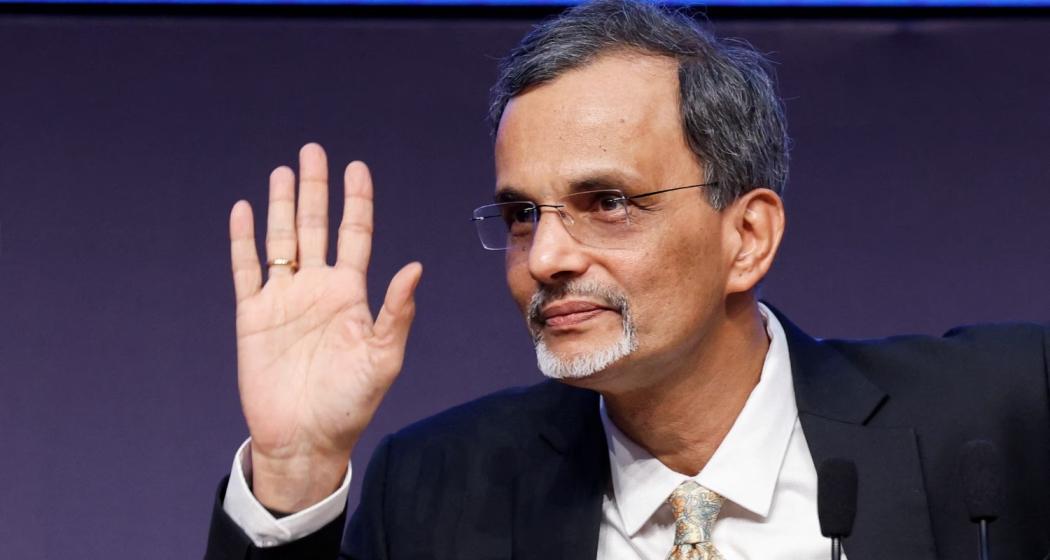
Chief Economic Adviser V Anantha Nageswaran has suggested making E10 petrol available again for older vehicles while allowing newer vehicles designed for higher ethanol blends to continue using E20.
The proposal comes amid a growing debate over the nationwide use of E20 petrol, with owners of older vehicles raising concerns over fuel economy, compatibility and the long-term impact of higher ethanol blends on vehicle components.
Nageswaran made the suggestion in a column co-authored with Akash Poojari, a consultant with the Department of Economic Affairs. The authors argued that the solution need not be a rollback of India's ethanol-blending programme, but a more flexible approach that takes into account the country's existing vehicle fleet.
“Restoring a lower blend at the pumps, say, E10, alongside the option to buy E20, would calm most public concern,” Nageswaran wrote.
According to the authors, India has an estimated 75-80 million older two-wheelers that were built for E10 fuel. Many older vehicles, particularly those equipped with carburettor-based engines, were not designed to operate with higher ethanol concentrations.
Nageswaran, however, rejected the broader suggestion that E20 is inherently damaging to engines. He noted that ethanol contains less energy than petrol and, consequently, some reduction in fuel economy is expected. He estimated the energy-related impact of E20 at around 6-7%.
The concern is more pronounced for older vehicles, he said. Carburettor engines may not automatically adjust to the additional oxygen associated with ethanol, while older rubber seals and other fuel-system components may not have been designed for higher ethanol concentrations.
What is the E20 debate?
E20 petrol contains 20% ethanol and 80% petrol. India has increased ethanol blending as part of efforts to reduce crude oil imports, cut dependence on imported fuel and support domestic agricultural production.
Since April 2026, petrol sold across the country has been mandated to contain 20% ethanol.
The government has defended the policy, saying E20 has undergone extensive testing and that there is no evidence of widespread engine damage caused by the fuel. However, concerns over reduced mileage and compatibility among owners of older vehicles have continued.
The issue has also reached the Supreme Court, which in 2025 dismissed a challenge to the nationwide E20 rollout.
Nageswaran and Poojari have also raised questions about increasing ethanol blending beyond 20%. They argued that higher blending targets could require larger quantities of feedstock, raising concerns over agricultural land, water consumption and the diversion of crops from food and other uses towards fuel production.
The authors have called for a closer assessment of the food-versus-fuel trade-off before India commits to higher ethanol-blending targets.
Nageswaran's proposal effectively separates the continuation of India's ethanol programme from the requirement that all petrol vehicles use the same blend. Under his suggestion, E20 could remain available for compatible newer vehicles, while E10 could be offered to older vehicles during the transition until they are upgraded, retrofitted or replaced.

 Follow us