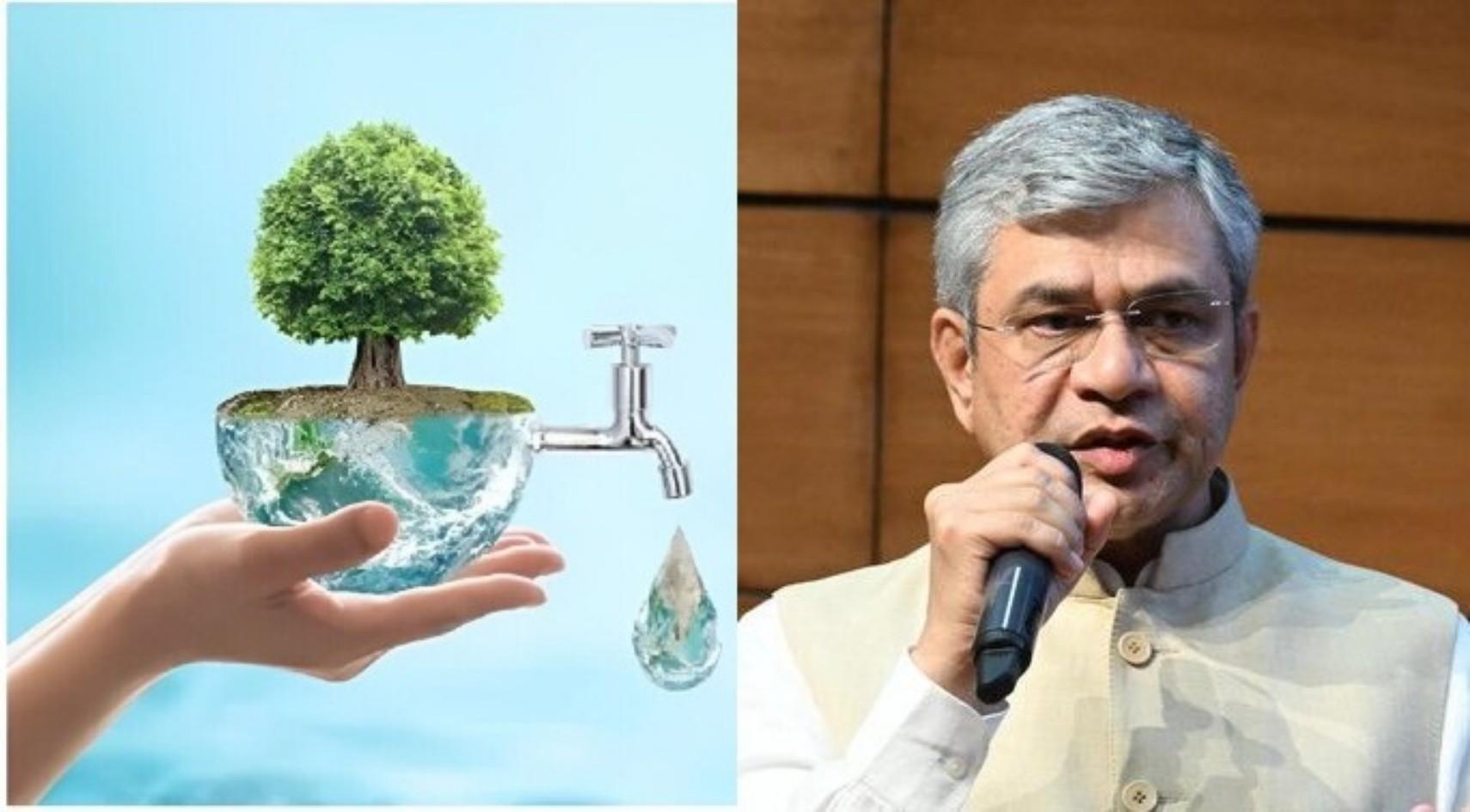
The Union Cabinet Chaired by PM Narender Modi on Tuesday approved the extension of Jal Jeevan Mission up to December 2028 with an enhanced outlay of Rs 8.7 lakh crore, Union Minister Ashwini Vaishnaw said.
The project was launched by Prime Minister Narendra Modi in 2019 to provide safe and adequate drinking water through tap connections to all households in rural India. It aims to provide Functional Household Tap Connections (FHTC) to every rural household in India, delivering 55 liters per capita daily. It focuses on, community participation, water sustainability, and improving quality of life. As of March 2026, over 15.82 crore (81.71%) rural households have access to tap water.
“The Cabinet approved the Ministry of Jal Shakti’s proposal to restructure and reorient the implementation of the Jal Jeevan Mission (JJM) from infrastructure creation to service delivery, supported by drinking water governance and institutional ecosystem for sustainable rural piped potable water supply,” the minister said at a press conference.
For restructuring JJM, focusing on structural reforms, the Cabinet has approved an enhancement of the total outlay to Rs. 8.69 lakh crore, with a total central assistance of Rs. 3.59 lakh crore as against from Rs. 2.08 lakh crore approved in 2019-20.
A uniform national digital framework called “Sujalam Bharat” shall be instituted, under which every village shall be assigned a unique Sujal Gaon or Service Area ID, digitally mapping the complete drinking water supply system from source to tap.
To this end, a uniform national digital framework, namely “Sujalam Bharat”, shall be instituted, under which every village shall be assigned a unique Sujal Gaon / Service Area ID, digitally mapping the complete drinking water supply system from source to tap. For ensuring transparency and accountability the involvement of GPs and VWSCs in the commissioning and formal handover of schemes through “Jal Arpan”.
A Gram Panchayat shall certify completion of works and declare itself “Har Ghar Jal” only upon confirmation that adequate in-village operation and maintenance mechanisms have been established by the State Government. Recognizing that community ownership and participation are critical for operational efficiency and source sustainability, the programme shall promote “Jal Utsav” as an annual, community-led maintenance and review event, integrating local cultural ethos while reinforcing collective responsibility for drinking water secure future.

 Follow us