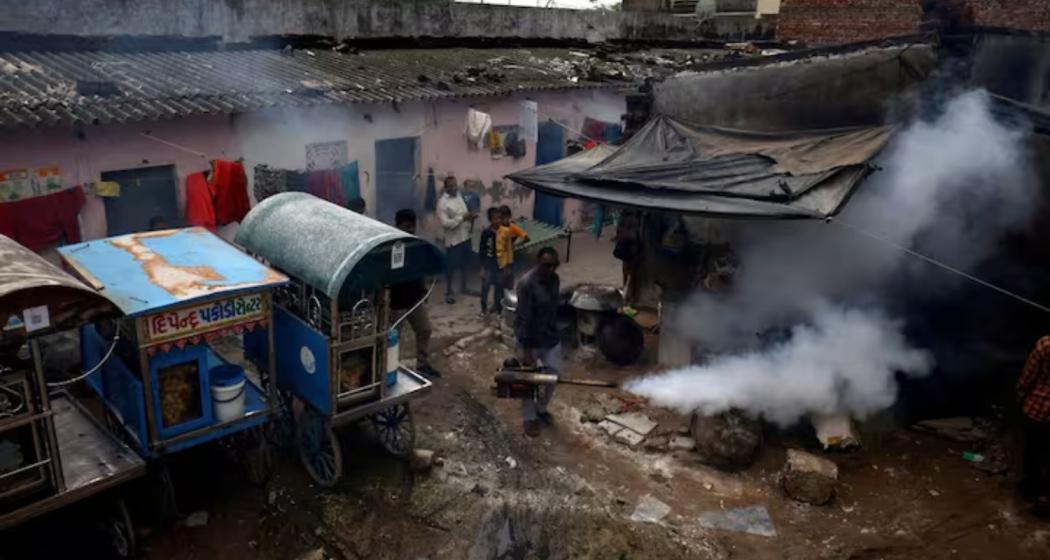
The Centre has deployed a National Joint Outbreak Response Team (NJORT) to Gujarat and Rajasthan as it steps up efforts to investigate and contain the ongoing Chandipura Virus Disease (CHPV) outbreak through a coordinated, multi-agency scientific response.
The Union Ministry of Health and Family Welfare said the expert team comprises specialists from the National Centre for Disease Control (NCDC), the Indian Council of Medical Research (ICMR) and the Department of Animal Husbandry and Dairying (DAHD). The team will assist state governments in outbreak investigation, epidemiological assessment, clinical management, laboratory coordination, vector surveillance and implementation of public health measures.
The deployment comes as the Centre intensifies scientific investigations under the Integrated Disease Surveillance Programme (IDSP), with the NCDC coordinating surveillance alongside state health authorities. The NCDC's Public Health Emergency Operations Centre has also been activated to support field operations.
Multiple premier research institutions, including ICMR's National Institute of Virology, National Institute of Epidemiology and National Institute of Vector Control Research, along with the ICAR-National Institute of Veterinary Epidemiology and Disease Informatics, are jointly studying the outbreak. Researchers are examining the virus's transmission patterns, clinical spectrum, epidemiology and possible treatment strategies to guide evidence-based interventions.
Active surveillance has been expanded among patients with Acute Febrile Illness (AFI) and Acute Encephalitis Syndrome (AES) in affected districts, while community-based serosurveys are underway to assess the extent of asymptomatic infections and overall virus transmission.
Scientists are also investigating whether vectors other than sandflies—such as mosquitoes, ticks and mites—could play a role in spreading the virus. Animal surveillance has been widened, with blood samples collected from cattle, buffaloes and goats, as well as milk samples, to determine whether domestic animals could serve as reservoirs. Officials stressed that no conclusions would be drawn until laboratory investigations are complete.
Researchers are additionally carrying out whole-genome sequencing of virus samples to determine whether the circulating strain has undergone genetic changes. The Centre said the coordinated response reflects a "One Health" approach, integrating human, animal and vector surveillance to better understand the outbreak and strengthen containment measures.

 Follow us