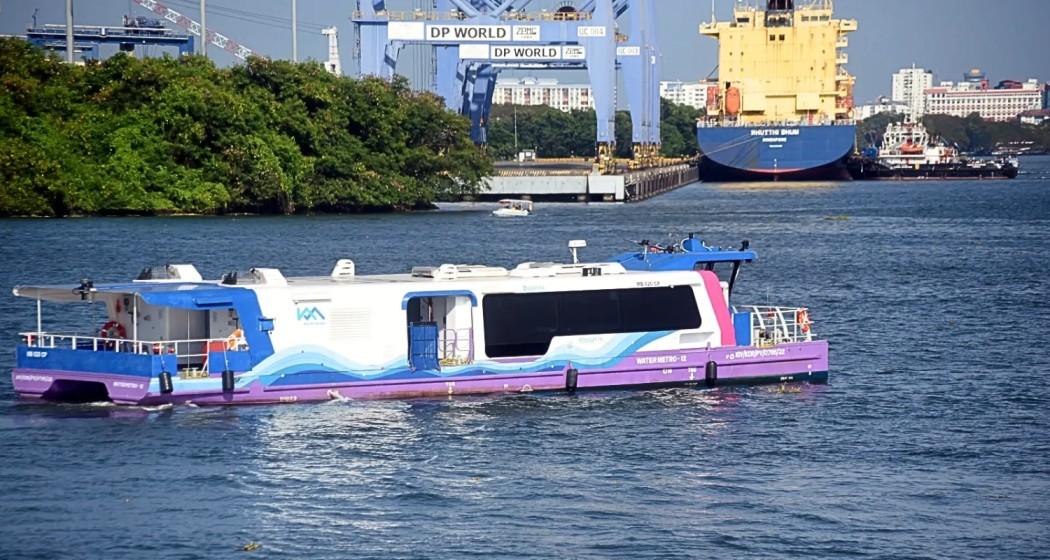
India’s urban mobility map could soon extend beyond roads and railways into rivers and lakes, with the Centre exploring water metro systems in Srinagar, Guwahati and Kolkata as part of a broader effort to rethink how congested cities move people.
Instead of treating rivers and lakes as scenic backdrops or tourism assets, the proposal seeks to reimagine them as active transport corridors — potentially allowing daily commuters to travel by boat in some of the country’s most traffic-choked urban centres.
The idea is currently at the feasibility stage, with Detailed Project Reports (DPRs) being prepared to assess passenger demand, route viability, terminal infrastructure, vessel requirements and operating frameworks. The studies will also guide future engineering design and eventual execution.
If the plan moves forward, it could mark a shift in India’s urban transport thinking, taking cues from the Water Metro model already operational in Kochi and extending it to geographically distinct cities with strong river or lake systems.
In Srinagar, the concept leans heavily on the city’s natural water grid — the River Jhelum and Dal Lake — which once formed the backbone of local movement. Preliminary mapping has identified potential stops from Pantha Chowk and Zero Bridge to Amira Kadal, Chhatabal and even Wular Lake, alongside tourist-heavy points such as Nishat and Shalimar gardens. The idea is to reconnect fragmented neighbourhoods through water routes rather than road expansion.
Also read: Kolkata among cities selected for Water Metro service
In Kolkata, where ferry services on the Hooghly already carry thousands daily, the proposal aims to bring structure and integration to an informal but long-standing system. Key nodes such as Dakshineswar, Belur Math, Howrah Station Jetty and Babughat have been shortlisted for a more formal water metro network.
Guwahati’s plan is centred on the Brahmaputra, with routes being studied from the city core to peripheral points including North Guwahati, IIT Guwahati and Pandu Port. One of the more ambitious ideas under examination is linking the city to the airport via water transport — a move that could significantly alter urban connectivity patterns.
Alongside commuter routes, the Centre is also considering cruise terminals in all three cities, indicating a dual focus on daily transport and tourism-driven riverfront development.
Whether the plan becomes a commuter reality or remains a long-term infrastructure experiment will depend on the upcoming DPR findings. But the direction is clear: India is beginning to look at its rivers not just as geography — but as potential highways.

 Follow us