Chhari Dhandh, located in Gujarat’s Kutch desert, has been designated as the latest Ramsar site. It is the 98th site in India and the fifth in Gujarat, recognised under the Ramsar convention as a wetland of international importance.
Chhari Dhandh is not a permanent lake. It is a natural depression that fills up during the monsoon and lingers through winter, creating a fragile but rich ecosystem. For a few months each year, this quiet patch of water transforms into a critical halt on the Central Asian Flyway, welcoming thousands of migratory birds escaping harsh northern climates.
Every year, more than 30,000 common cranes migrate thousands of miles from Central Asia to third place. In addition, it is a safe haven for critically endangered species such as the sociable lapwing and the common pochard. The biodiversity of this wetland is so rich that it attracts birds from Saudi Arabia and other countries, ensuring India's role in the Central Asian Flyway.
The peak migration period for birds here is November to March, with November to February considered the best time for viewing maximum species. Early mornings or late afternoons are the best time for bird-watching and photography.
The Maldharis of the Banni region of Kutch have been the guardians of the forest for generations. Their animal husbandry and coexistence with nature keep these wetlands alive. The government has implemented a special action plan here in collaboration with local communities and NGOs to control invasive species. Spread over 80 square kilometers, this area is filled with rainwater during the monsoon and resounds with the chirping of birds as winter sets in.
In local dialect, Chhari means salt-affected and Dhandh means shallow wetlands. This place is a paradise for bird-watchers and ornithologists, having around 370 bird species and is particularly rich in water fly, waders and larks.
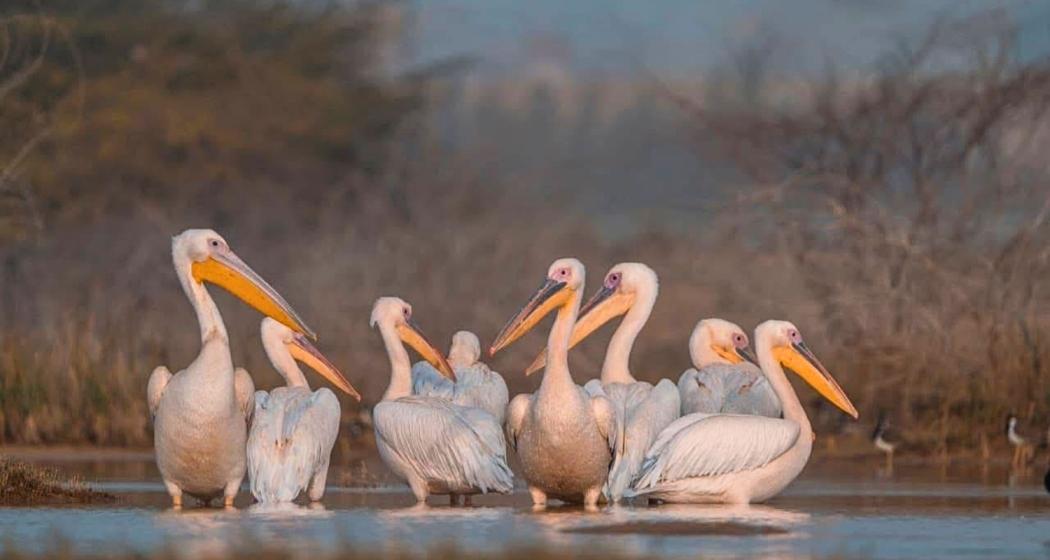
By November, the skies above Chhari Dhandh begin to change. Greater flamingos wade gracefully through shallow waters, painted storks patrol the edges, and flocks of pelicans glide in near-perfect formation. Ducks, geese, sandpipers and raptors add to the spectacle.
Meanwhile, India now has a total of 98 Ramsar sites, which is the most compared to any country in South Asia. These sites cover an area of approximately 13.84 lakh hectares. 'Sundarbans' in West Bengal is the largest wetland in India with its vast mangroves, while 'Renuka Sarovar' in Himachal Pradesh, though the smallest, is extremely rich in terms of biodiversity.

 Follow us