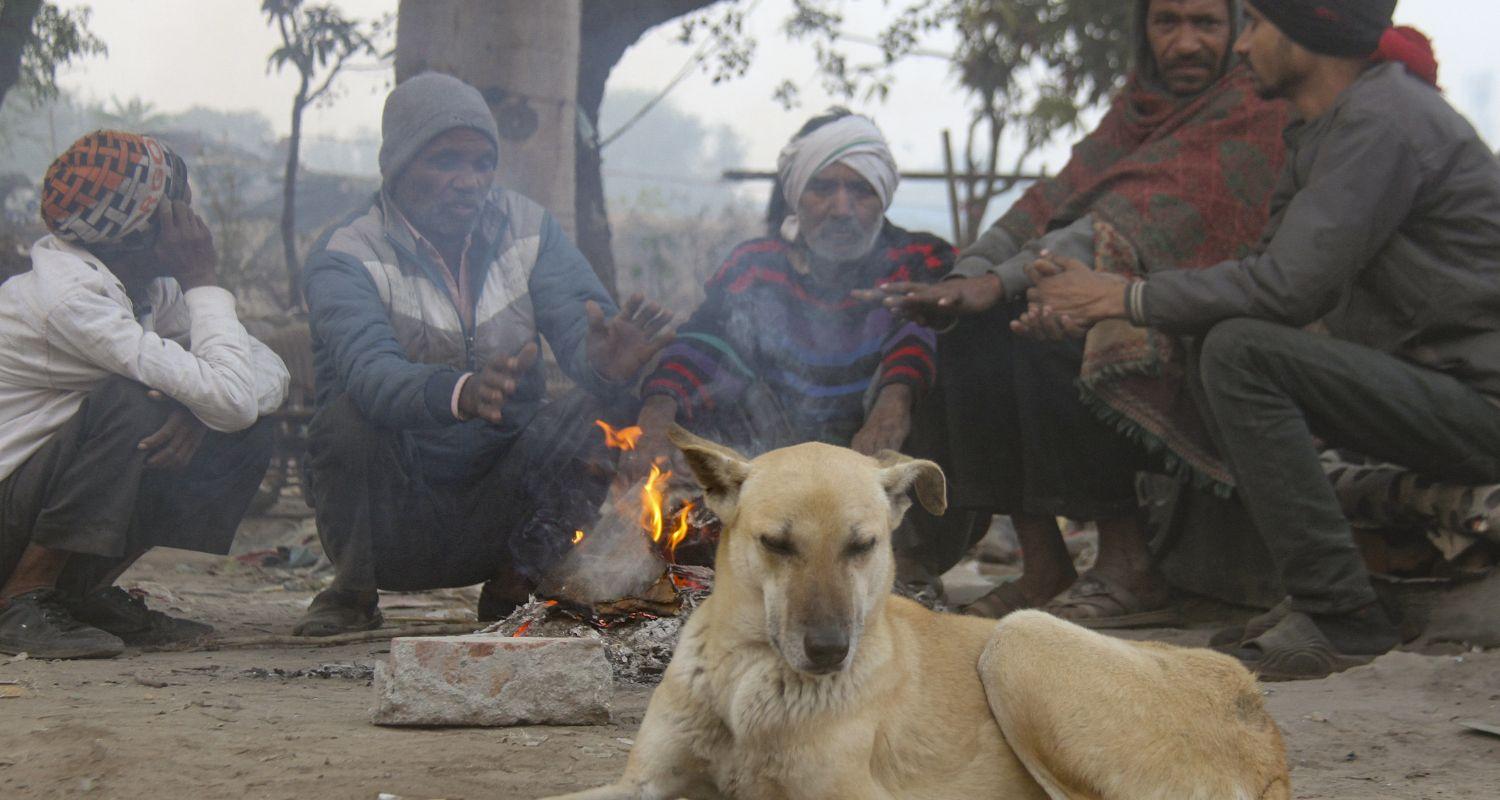
Delhi woke up to a dense blanket of fog and lower temperature on Sunday, while a cold wave seems to have the entire north in its grip.
The temperature in the national capital was recorded at 9 degrees Celsius, with thick smog reducing visibility. The minimum temperature was at 6.3 degrees Celsius, 0.5 notches below the season’s average, while the humidity was recorded at 71 per cent at 8.30 am, according to the India Meteorological Department (IMD).
The maximum temperature is likely to hover around 21 degrees Celsius, with the weather department forecasting mainly clear skies.
In Haryana, Uttar Pradesh, Punjab, and Assam too, minimum temperatures dropped to 9 degrees Celsius, with Karnal in Haryana recording 9 degrees Celsius at 8 a.m., along with fog; Agra’s Taj Mahal being enveloped by a thick layer of fog; Guwahati in Assam waking up to low visibility and a minimum temperature of 15 degrees Celsius, and Kanpur too witnessing a spell of cold wave.
The IMD issued an orange alert in Moradabad, Uttar Pradesh, forecasting a minimum temperature of 9 degrees Celsius.
However, services at Indira Gandhi International Airport remain unaffected as of 8 pm on Sunday, according to a travel advisory from Delhi Airport.
Meanwhile, the Air Quality Index (AQI) was at 391 in New Delhi on Sunday, slotted in the severe category, with some regions exceeding 400, according to the Central Pollution Control Board (CPCB).
Also Read: Delhi's air quality slips into 'red zone' again at 20 stations
Anand Vihar recorded an AQI of 445; Patparganj, 425; Nehru Nagar, 433; Shadipur, 445; Mundka, 413; and IGI Airport, 320, indicating severe pollution across the region.
According to CPCB categorisation, AQI readings between 0-50 is ‘good’, 51-100 ‘satisfactory’, 101-200 ‘moderate’, 201-300 ‘poor’, 301-400 ‘very poor’, and 401-500 ‘severe’.
The Commission for Air Quality Management has invoked Stage IV measures again under the Graded Response Action Plan (GRAP), including restrictions on construction and industrial activities. Authorities have also enforced measures, including the ‘No PUC, No Fuel’ rule, to address the situation.
Weather analysts said a combination of cold weather, calm winds, and dense fog is trapping pollutants, leading to haze and smog. This cycle of poor air quality is expected to persist under current weather patterns, prompting ongoing monitoring and calls for stricter pollution-control measures.
The Delhi Cabinet approved an allocation of ₹100 crore for the rejuvenation of around 1000 water bodies, of which 160 fall under the Delhi government’s jurisdiction.
Delhi Environment Minister, Manjinder Singh Sirsa, said the rejuvenation of Delhi’s water bodies will play a crucial role in pollution control.
The Cabinet also approved the establishment of Delhi’s first E-Waste Park at Holambi Kalan, an 11-5-acre facility that “will adhere to the highest pollution-control standards and operate on a 100 per cent circular, zero-waste model”, he said.

 Follow us