The Delhi High Court on Friday questioned whether Jantar Mantar should continue as the capital's designated protest venue, observing that repeated demonstrations should not come at the cost of disrupting normal life in the city.
Hearing a petition filed by the All India Dalit Christian Rights Protection Committee (AIDCRPC), Justice Amit Mahajan remarked that if protests were repeatedly inconveniencing the public, the government could consider shutting the site. "Why don't you shut it down? According to me these things should not happen in the city, but it is the government's call. Why should the city be put to ransom unnecessarily?" the judge observed.
The petition sought permission to hold a peaceful demonstration at Jantar Mantar on August 10, demanding the inclusion of Dalit Christians within the Scheduled Castes framework. The organisation told the court that around 75 people would participate in the three-hour protest and that despite applying on July 9, Delhi Police had neither issued a written rejection nor suggested an alternative venue.
Also read: Fresh India-China face-off claims emerge in Arunachal
Senior advocate Sanjoy Ghose, appearing for the petitioner, urged the court to direct the police to decide on the pending application. The petitioner said officials had orally indicated on August 4 that permission would not be granted.
During the hearing, Justice Mahajan said maintaining law and order was the responsibility of the Delhi Police and asked the authorities to take an appropriate decision on the request. At the same time, he reiterated that protests within the city often caused traffic disruptions and affected emergency services. "Don't put the city to ransom. Let the police take a call," he said.
Opposing the plea, Additional Solicitor General Chetan Sharma argued that the organisers had not obtained the required no-objection certificates from local authorities. He also informed the court that the Supreme Court was already examining whether Jantar Mantar should continue as a designated protest site.
Sharma further submitted that prohibitory orders under Section 163 of the Bharatiya Nagarik Suraksha Sanhita (BNSS) were in force ahead of Independence Day celebrations and that security concerns made such gatherings difficult. He also cautioned that a gathering of 75 people could quickly swell into a much larger crowd.
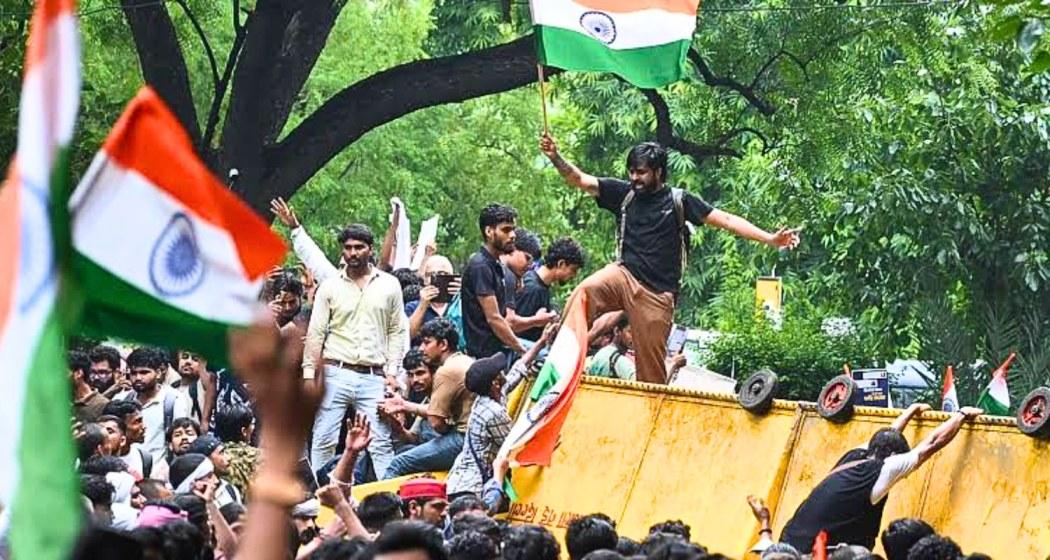
The observations come in the backdrop of recent large-scale student protests at Jantar Mantar that culminated in clashes with police, prompting renewed debate over whether the historic site should continue to host public demonstrations.

 Follow us