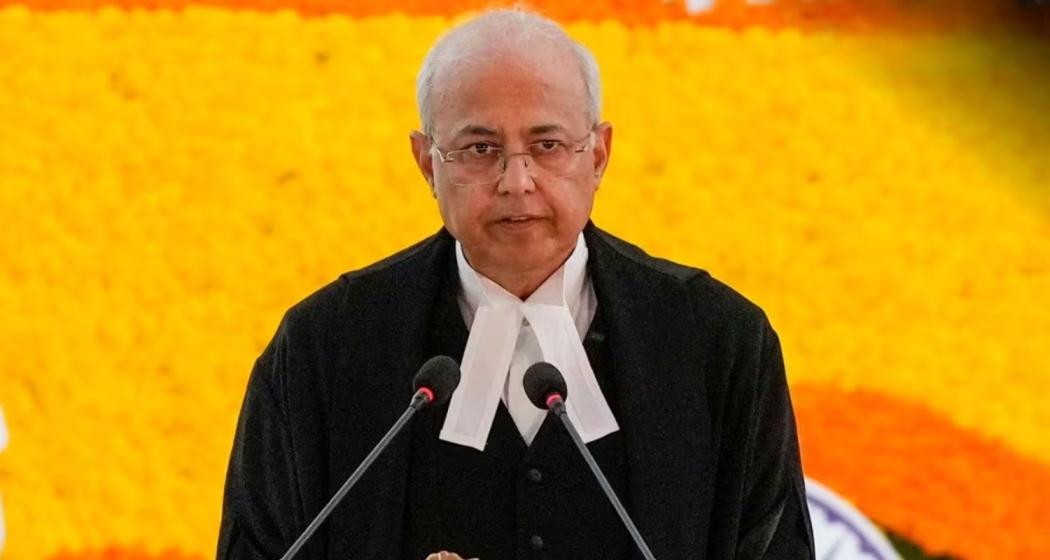
Supreme Court of India Judge Justice Manmohan on Saturday said criticism of existing systems should be viewed as constructive suggestions aimed at reform rather than condemnation, stressing the need for a more mature and balanced approach to institutional introspection.
Speaking at a legal conclave organised by the Society of Indian Law Firms (SILF) and the Society of Legal Professionals (SILP), the Supreme Court judge said previous remarks he made on improving the system had been misconstrued as criticism of the judiciary itself.
“When you highlight the shortcomings in the system, you do so only to improve the system, not to condemn it. Therefore, it should not be treated as a condemnation of the system,” he said, adding that such observations should not be weaponised for personal or professional gain.
Criticism as a tool for reform
Justice Manmohan underlined that constructive criticism is essential for institutional growth. He illustrated his point by recalling a case where he quashed an FIR filed against a film producer under the Scheduled Castes and Scheduled Tribes (Prevention of Atrocities) Act.
The FIR alleged that the film’s depiction of caste-based discrimination warranted prosecution. However, the judge ruled that portraying a social evil was necessary to create awareness and understanding.
“A film which sought to convey that a social practice is evil had to necessarily depict that social practice,” he said, reinforcing that addressing uncomfortable realities is key to reform.
Also read: Constitution demands we dismantle structures of inequality:Ex-CJI
Technology and legal education
On the growing role of technology, Justice Manmohan described it as a “double-edged weapon,” cautioning against over-reliance.
“Technology must remain human-controlled… The ultimate decision must rest with the human mind,” he said, advocating its use as an enabling tool rather than a substitute for judicial reasoning.
He also urged law firms to broaden their outlook on legal education, calling for a global perspective. “The world today has to be treated as a single entity… You will have to find solutions to shared problems,” he noted.
Pendency and arbitration concerns
Addressing judicial pendency, the judge stressed the need to utilise all available mechanisms to reduce case backlogs. He raised concerns over arbitration, questioning whether it had strayed from its original purpose.
“Arbitration was supposed to be informal, inexpensive and sensitive. I think we have taken out the sensitivity aspect,” he said, adding that arbitral proceedings increasingly resemble conventional court processes.
Justice Manmohan also called for greater emphasis on mediation at all levels and suggested that the government reconsider policies limiting its role in arbitration beyond certain thresholds.
“If there are shortcomings, the solution lies in reforming the system through legislation, not abandoning it,” he said.
Reiterating his central argument, the judge emphasised that identifying flaws is an essential step towards strengthening institutions. “Criticism should not be treated as a condemnation of the system. It should be treated as a suggestion,” he said.

 Follow us