The Jammu & Kashmir and Ladakh High Court has ruled that the cross-LOC (Line of Control) trade between the divided parts of Jammu and Kashmir is intra-state trade as the areas presently under the de-facto control of Pakistan are a part of Jammu & Kashmir and, therefore, a part of India.
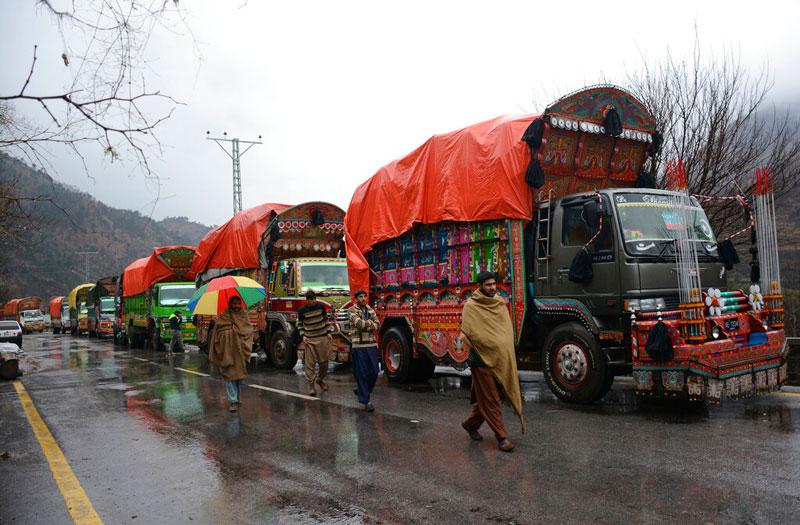
Cross-LOC trade was started as a confidence building measure between India and Pakistan on Srinagar-Muzaffarabad and Poonch-Rawalakote routes in October 2008.This was essentially a barter trade where there was no exchange of currency from either side. This cross-LoC trade was carried out between people living across LOC in J&K and aimed at benefiting the local economy on both sides.
However, the trade was suspended in 2019 in the aftermath of the Pulwama attack over reports of trade routes being misused for "funnelling illegal weapons, narcotics and fake currency etc."Dealing with a tax matter connected to the cross-LOC trade, a Division Bench of Justice Sanjeev Kumar and Justice Sanjay Parihar has ruled,
"It is not disputed by learned counsel appearing on either side that the area of the State presently under de-facto control of Pakistan is part of territories of the State of Jammu & Kashmir. Therefore, in the instant case the location of the suppliers and the place of supply of goods were within the then State of Jammu Kashmir (now Union Territory) and, therefore, the cross-LoC trade affected by the petitioners during the tax period in question was nothing but an intra-state trade."
The petitioners had earlier made a contrary argument in the pleadings. However, their counsel during the hearing conceded that the nature of cross-LoC trade was clearly suggestive of the fact that it was intra-state and not a trade involving the import or export of goods between two countries.
The petitioners before the Court were traders who had participated in the cross-LOC trade. The Jammu and Kashmir Value Added Taxes Act, 2005, gave them an exemption from payment of the tax. However, the Central Goods and Services Tax Act and J&K Goods and Services Tax Act did not provide a similar exemption.Considering the GST regime, the authorities decided to issue show-cause notices to the traders, considering that they had made huge outward and inward supplies while GST on such supplies had not been accounted for in their returns.
The traders then challenged the notices by way of writ petitions under Article 226 of the Constitution of India, stating that the cross-LoC trade was regulated by an SOP issued by the government of India and therefore, it was not amenable to the provisions of the GST Act.It was also argued that the notices were barred by limitation and that there was no willful misrepresentation or fraud. They also submitted that the demand for tax would not be permissible unless they are paid by the traders based in Pakistan-occupied Kashmir (PoK).
The Court found that there was prima face suppression of material facts by the petitioners as they were well aware that there was no specific notification issued by the government under Section 11 of the CGST Act of 2017 exempting cross-LoC barter trade from payment of GST.The Court also found that the notices were issued to the petitioners at least six months prior to the expiry of five years from the date due for furnishing the annual return for the financial years in question."Viewed from any angle, the show cause notices issued under Section 74(1) of the CGST Act of 2017 cannot be said to be barred by limitation prescribed under the Section," it held.

 Follow us