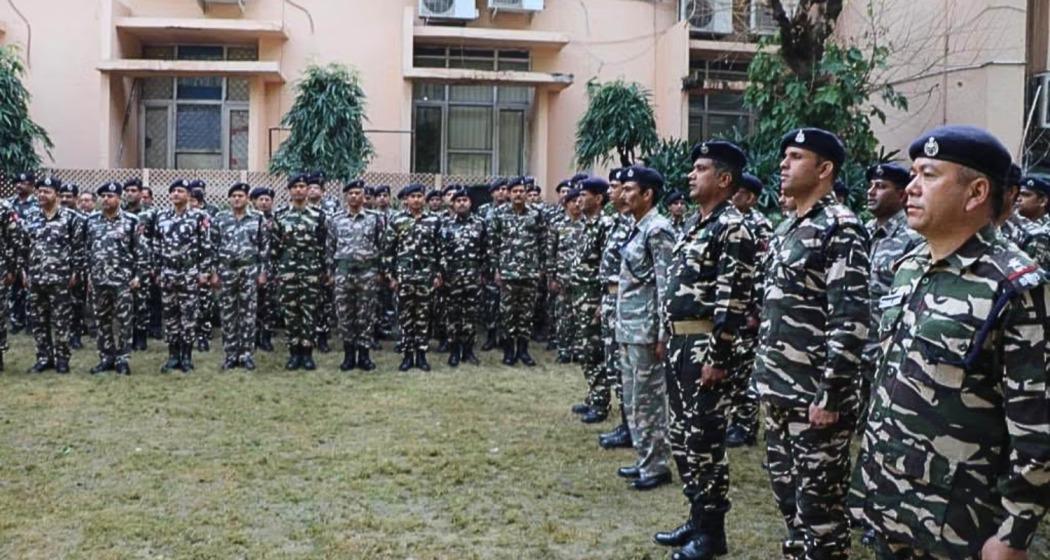
The Central Reserve Police Force (CRPF) has suspended a Deputy Inspector General-rank officer for allegedly sharing social media content opposing the government during the passage of the Central Armed Police Forces (General Administration) Bill, 2026, marking the first such action against a cadre officer amid an ongoing dispute over service conditions in the CAPFs.
The officer, DIG B C Patra, a 1994-batch CRPF cadre officer posted at the force's Tripura Sector headquarters in Agartala, was suspended a few days ago pending a preliminary enquiry under Rule 10(1) of the Central Civil Services (Classification, Control and Appeal) Rules, 1965.
Officials said the charges relate to the sharing of audio-visual and pictorial content on social media platforms that allegedly called for "changing" the country's lawfully elected government during the debate and passage of the CAPF legislation. The Bill became law after receiving presidential assent in April.
Confirming the action, CRPF Director General G P Singh said all serving and uniformed officers of the force are bound by service rules and the oath they take upon joining.
"All serving and uniformed officers of the CRPF are bound by the rules and statutes and the oath taken. Any word(s)- written or spoken or action contravening the same would be dealt appropriately in consonance with the law of the land," Singh said.
Patra could not be contacted for comment.
Also read: IGP Kashmir gets additional charge after Anand Jain’s transfer
However, some serving officers described the suspension as unjustified and linked it to Patra's role in legal battles fought by CAPF cadre officers seeking parity in promotions and service conditions with Indian Police Service (IPS) officers posted to the forces on deputation.
According to officers familiar with the matter, Patra was among the lead petitioners in court cases challenging the existing promotion structure and advocating greater career progression opportunities for cadre officers.
The controversy comes against the backdrop of opposition from sections of CAPF cadre officers to the new law. In representations submitted to the Ministry of Home Affairs, officers argued that certain provisions of the legislation were discriminatory and could perpetuate career stagnation if IPS deputations were not curtailed in line with a Supreme Court order issued last year.
The government, however, has maintained that the Act creates a unified legal framework for personnel across CAPFs and that IPS deputations remain necessary because officers of the all-India service perform supervisory roles across state police organisations and central forces.

 Follow us