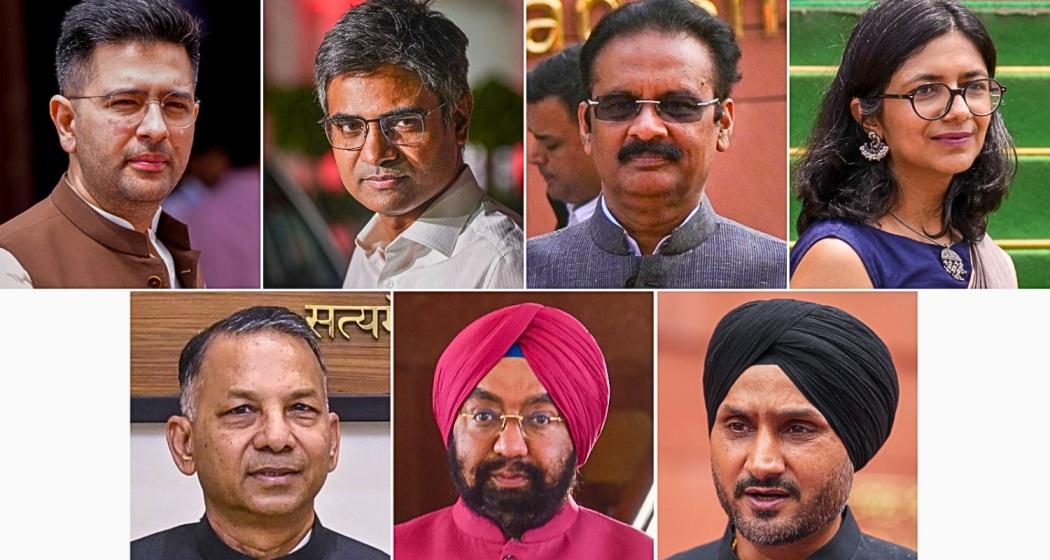
What began as a dramatic parliamentary defection has snowballed into a full-scale political confrontation, with former AAP MP Raghav Chadha and six other Rajya Sabha MPs intensifying their attack on Arvind Kejriwal within a day of quitting the party and merging with the Bharatiya Janata Party (BJP).
The developments have triggered internal unrest within AAP, with allegations of corruption, ideological drift, and governance failures now dominating the political narrative, while political mobilisation, demonstrations and clashes between party workers have been reported in parts of Punjab in the aftermath of the exits.
Sources indicate that as many as 63 AAP MLAs are reportedly in touch with Raghav Chadha, raising concerns over the stability of the Punjab government ahead of the 2027 Assembly elections. Punjab Chief Minister Bhagwant Mann has confirmed the development, alleging that the BJP is attempting to poach AAP legislators and destabilise the state government ahead of the polls.
Chadha backs BJP’s ‘Sheesh Mahal’ charge
Raghav Chadha, once seen as a close aide of Kejriwal and a key organisational pillar of AAP, launched his first major political salvo after joining the BJP.
He backed the BJP’s “Sheesh Mahal 2” allegations, claiming that the controversy surrounding Kejriwal’s official residence played a decisive role in AAP’s electoral setbacks in Delhi.
“Sheesh Mahal Part Two has come up in Delhi. Some pictures have surfaced… this was one of the major reasons for AAP’s defeat,” Chadha said.
He also alleged that the party had lost its original direction, claiming that “hardworking leaders no longer see space in the organisation”.
Mass defection reshapes Parliament arithmetic
The exit of Chadha along with Sandeep Pathak, Ashok Mittal, Harbhajan Singh, Rajinder Gupta, Swati Maliwal and Vikram Sahney marks a major blow to AAP’s parliamentary strength.
The group’s shift is expected to significantly weaken AAP’s presence in the Rajya Sabha while strengthening the BJP-led NDA, reshaping the balance of power in the Upper House.
The move was carried out under the constitutional provision allowing a two-thirds merger of parliamentary party members, shielding them from disqualification under anti-defection rules.
Also read: After defections, AAP workers take protest to MPs’ doorsteps
Swati Maliwal escalates attack on Kejriwal
Former AAP MP Swati Maliwal, who also joined the BJP, launched a direct attack on Kejriwal, alleging that the party had become associated with “corruption, lies and hooliganism”.
She also reiterated allegations of internal pressure and said dissenting voices were systematically sidelined within the party.
“People are not leaving out of fear, they are leaving because of Arvind Kejriwal,” she said, adding that more exits could follow.
Anna Hazare weighs in on split
Social activist Anna Hazare, once the face of the anti-corruption movement that birthed AAP, said the leaders would not have quit if the party had stayed true to its founding ideals.
“They must have faced some trouble. Had the party followed the right path, they would not have left,” Hazare said, calling it a reflection of internal dissatisfaction.
Protests across Punjab over defections
The fallout has spilled into Punjab politics. According to reports, Chief Minister Bhagwant Mann is seeking a meeting with President Droupadi Murmu over the mass defection, which has weakened AAP’s strength in the Rajya Sabha, with six of the seven MPs hailing from Punjab.
Bhagwant Mann has also criticised the defectors, calling them “traitors” and asserting that they lack public support, while dismissing their political impact.
Meanwhile, protests have been reported in parts of Punjab, with BJP and AAP workers clashing over the defections, and political opponents warning of wider instability in the state’s political landscape.
The mass exit has significantly weakened AAP’s presence in the Rajya Sabha and strengthened the BJP-led NDA’s numbers. Analysts say the development marks one of the most serious internal ruptures in AAP since its formation in 2012.

 Follow us