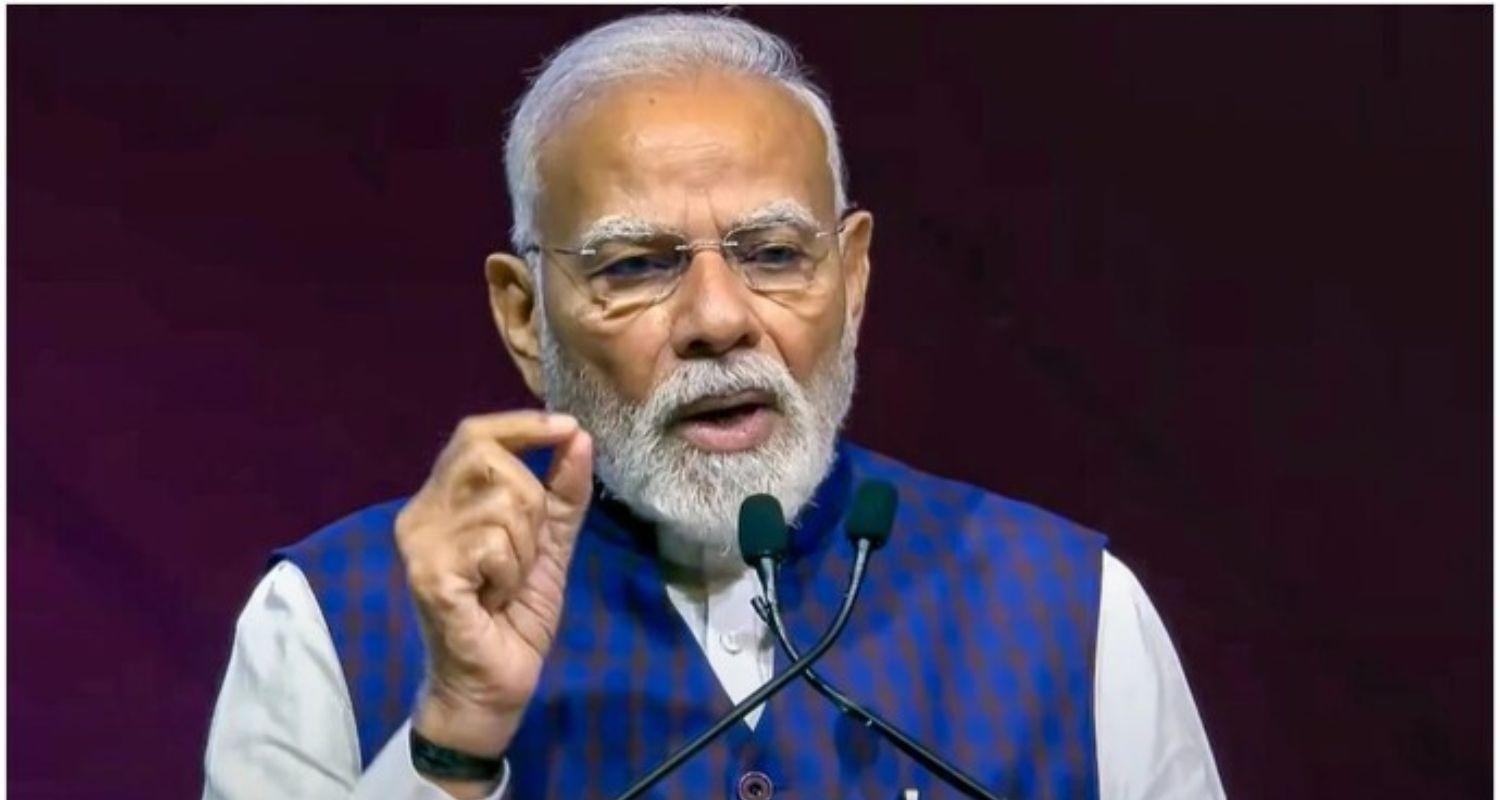
Prime Minister Narendra Modi has underscored the need for defence modernisation, saying that the government is “duty-bound to prepare our forces for the current realities.” In an interview, the Prime Minister pointed out that the increase in the defence budget in the Union Budget 2026 shows that India is ready to shift to a developed country.
"India must remain strong and prepared at all times, and that is precisely what we are doing," Modi stated. He described the budget not as a reactive measure born of compulsion, but as a proactive "we are ready" moment rooted in preparation and inspiration.
According to the Budget 2026 papers, the overall defence budget has been raised to ₹7.85 lakh crore in the current financial year, marking an approximate 15 per cent rise over last year’s budget of ₹6.81 lakh crore.
One of the most important components of this budget is the sudden rise in capital expenditure, which has been specifically allocated for modernisation. This has risen by 28 pc, reaching ₹2.31 lakh crore, up from last year’s ₹1.80 lakh crore. This rise in budget allocation is an indication of a planned approach towards the acquisition of modern weapon systems and the development of the country’s own defence manufacturing sector.
One such example of the country's commitment to this strategy is the approval of an agreement worth ₹3.25 lakh crores with France in January for the purchase of 114 Rafale fighter jets, which is one of the biggest purchases of combat aircraft in the country's history.
The Prime Minister reiterated his commitment to national security, pledging to "do whatever it takes to support the country's defence forces." Data indicates a significant upward trend in security investment, with total defence expenditure having grown from ₹2.94 lakh crore in 2015-16 to the current ₹7.85 lakh crore.
On the economic front, Modi highlighted that a stronger manufacturing sector, robust services, and improved MSMEs have allowed India to negotiate Free Trade Agreements (FTAs) from a position of strength with 38 nations.
"Our FTAs are meticulously designed to expand market access for MSMEs in sectors such as textiles, leather, chemicals, handicrafts, and gems," he explained.
Reflecting on previous administrations, the Prime Minister alleged that historical economic mismanagement had weakened India’s negotiating capacity, noting that past negotiations often broke down without substantial achievements.
Looking ahead, Modi emphasised the need for reform as one of the key agendas of his administration, stating that the private sector will play a crucial role in fueling the next wave of economic change. He called on industry leaders to shift their focus from just protecting their margins to investing heavily in R&D, supply chains, and quality.
"The next leap towards Viksit Bharat (Developed India) will depend on bold investment by the private sector in innovation, long-term capacity, and global competitiveness," he added, emphasising that productivity gains must be shared fairly with the workforce.
Finally, the Prime Minister mentioned the leadership role of India in the digital infrastructure space, especially through the UPI system. He concluded by speaking about his plans to lay the foundation for a robust AI ecosystem by developing computing power and data centre capacity, which he called a “massive job creator” for the youth.
Also read: PM Modi inaugurates ELF, IIM Guwahati in Assam

 Follow us