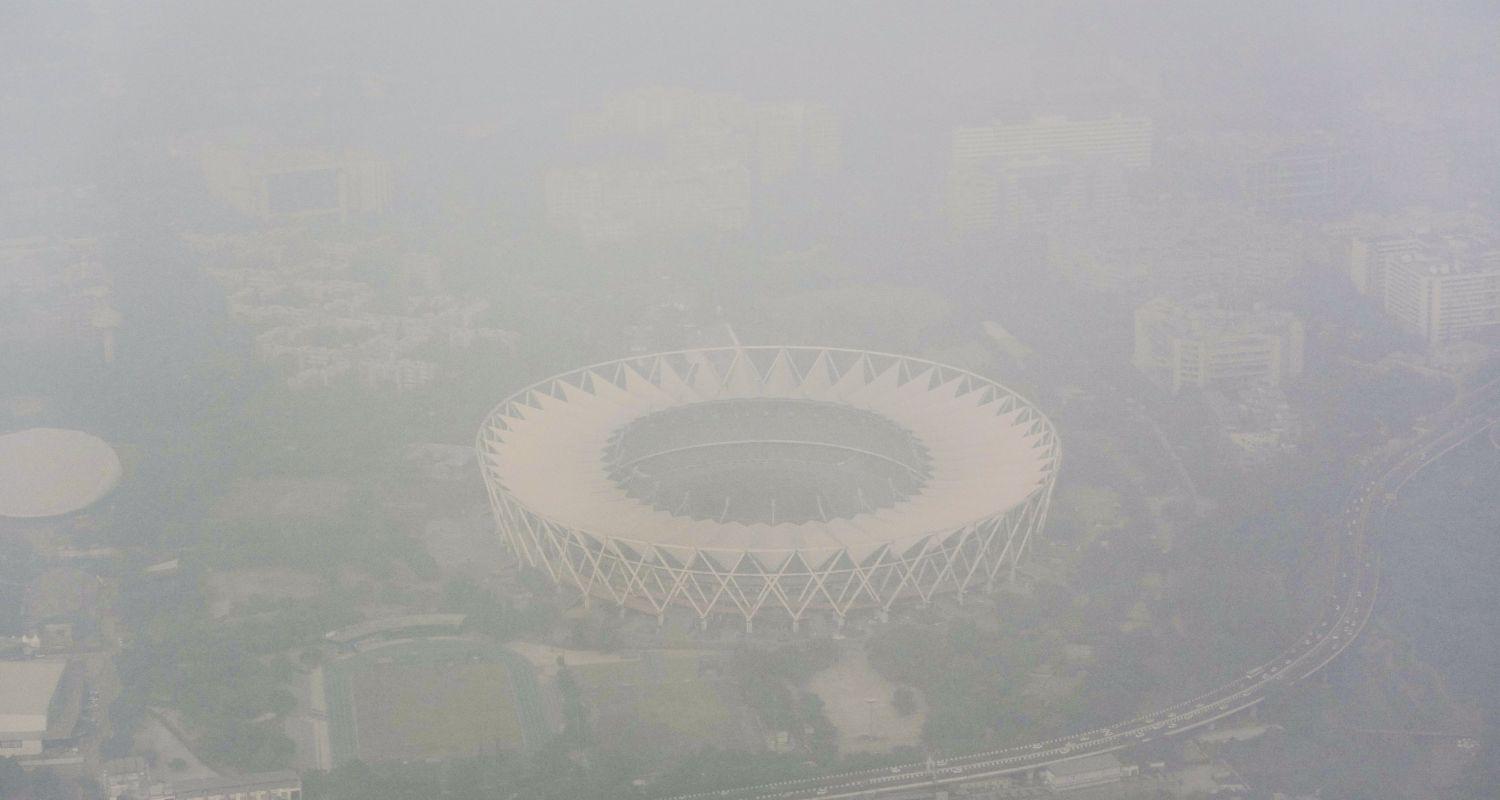
With the air quality in New Delhi remaining hazardous for health, Saturday was no different as the capital city woke up to an Air Quality Index (AQI) of 332, tagged as “very poor” by the Central Pollution Control Board (CPCB).
While this is marginally lower than Friday’s AQI of 369, as per the CPCB’s 9 am bulletin, it’s still considered a public health emergency, and everyone is at risk of serious health effects from exposure.
According to CPCB, an AQI between 0 and 50 is considered “good”, 51-100 “satisfactory”, 101-200 “moderate”, 201-300 “poor”, 301-400 “very poor”, and 401-500 “severe”.
Forecasts suggest the national Capital is likely to stay in the “very poor” category over the next few days.
Meanwhile, the city recorded a minimum temperature of 10.4 degrees Celsius, the India Meteorological Department (IMD) said.
Also Read: No respite in air pollution next week,Delhi gets 6 more stations
With a mainly clear sky, the maximum temperature is likely to touch 25 degrees Celsius, said the IMD, adding that the relative humidity stood at 90 per cent at 8.30 am.
The ongoing cold wave gripping Delhi and nearby areas is adding to the crisis, as low temperatures, fog, and high pollution levels worsen public health conditions.
In Delhi-NCR and several cities across North India, temperatures have dropped to minimum levels of 8 to 12 degrees Celsius.
Data from the Indian Institute of Tropical Meteorology’s Decision Support System showed that vehicular emissions remained the largest contributor to Delhi’s pollution on Thursday at 19.5 per cent. Ghaziabad contributed 8.2 per cent, Baghpat 7.3 per cent, while stubble burning accounted for 0.7 per cent.

 Follow us