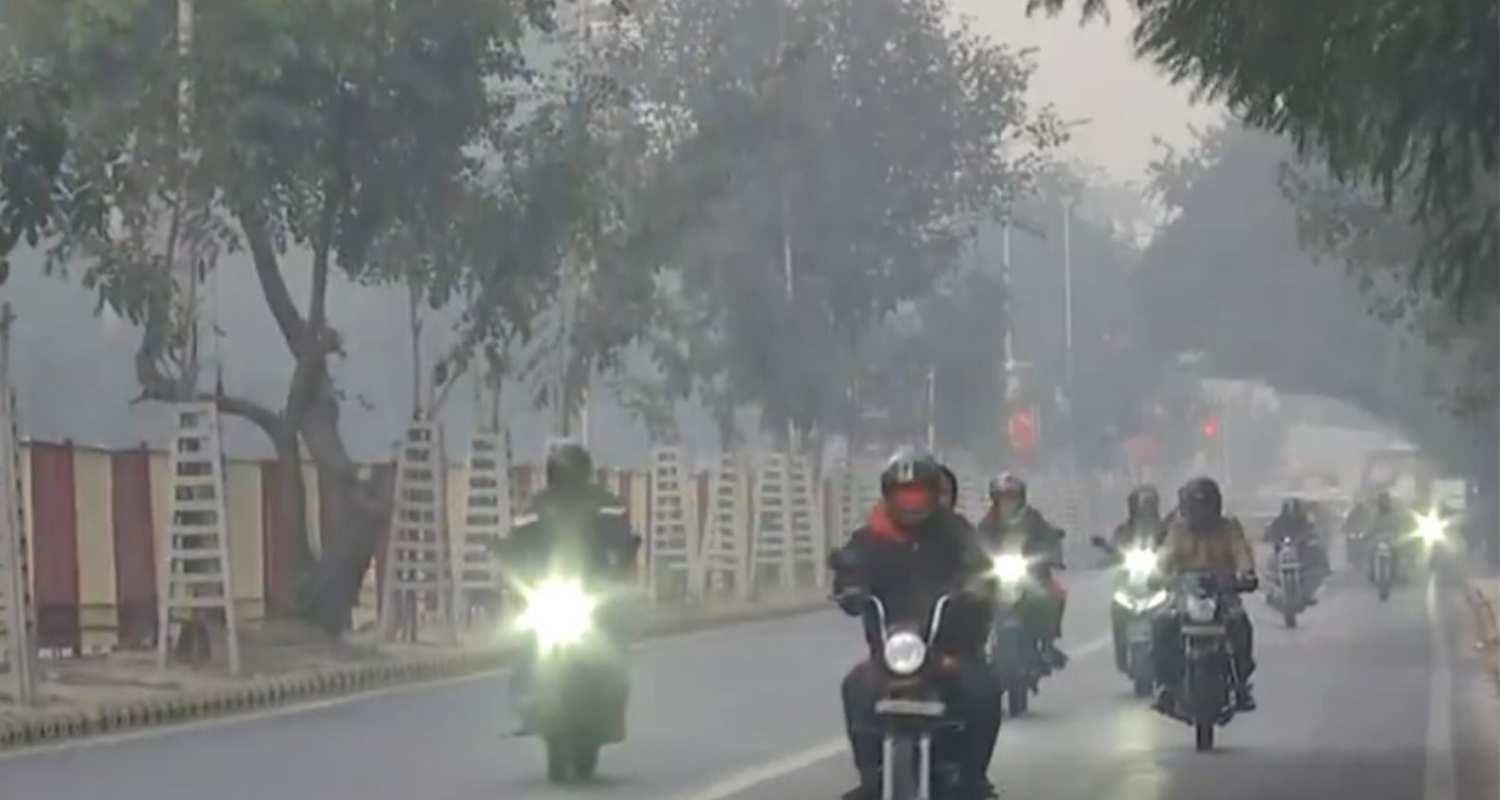
The air quality in Delhi, the national capital, continued to remain in the 'poor' category on Thursday. A thin layer of smog blanketed various parts of the city, reducing visibility in several areas. As reported by the Central Pollution Control Board (CPCB), the overall Air Quality Index (AQI) for the national capital stood at 287 at 8 am.
Multiple monitoring stations throughout the city recorded pollution levels solidly within the 'poor' category. For instance, at 8 am, Aya Nagar reported an AQI of 246, Burari Crossing registered 295, Dwarka Sector-8 showed 289, and Lodhi Road had 233.
In contrast, certain areas experienced significantly higher pollution. Anand Vihar recorded an AQI of 302, falling into the 'Very Poor' category, while Delhi Cantonment also reached this level. Other prominent monitoring stations continued to register readings in the "very poor" range, underscoring the extensive spread of pollution across Delhi. These included Ashok Vihar at 332, Bawana at 335, ITO Delhi at 310, Chandni Chowk at 309, and Alipur at 315.
As per the standard AQI categorisation, levels from 0-50 are classified as 'good', 51-100 as 'satisfactory', 101-200 as 'moderate', 201-300 as 'poor', 301-400 as 'very poor', and 401-500 as 'severe'.
The CPCB explains that the AQI, scaled from 0 to 500, is segmented into six categories, each indicating varying degrees of air pollution and corresponding health concerns. An AQI in the 0-50 range is deemed "Good," with little to no health effects.
The 51-100 range is "Satisfactory", where air quality is generally acceptable, although certain sensitive individuals—such as children, the elderly, and those with respiratory conditions—might feel minor discomfort.
Also Read: Kejriwal on Delhi CM's 'AQI is temperature' remark
The "Moderate" category (101-200) reflects rising pollution that may lead to respiratory symptoms in people suffering from asthma, lung, or heart diseases.
When the AQI falls between 201 and 300, it is labelled "Poor." In this range, extended exposure can lead to respiratory discomfort for the general population, beyond just those with preexisting conditions. This 'poor' level has grown more frequent in many areas of the capital, particularly during the winter months.
AQI values from 301 to 400 are categorised as "Very Poor," which can trigger respiratory illness in healthy people upon prolonged exposure. Finally, the "Severe" category encompasses AQI readings from 401 to 500, where air quality poses serious risks to everyone's health.
Also Read: Delhi bans coal, fines garbage burning over worsening AQI

 Follow us