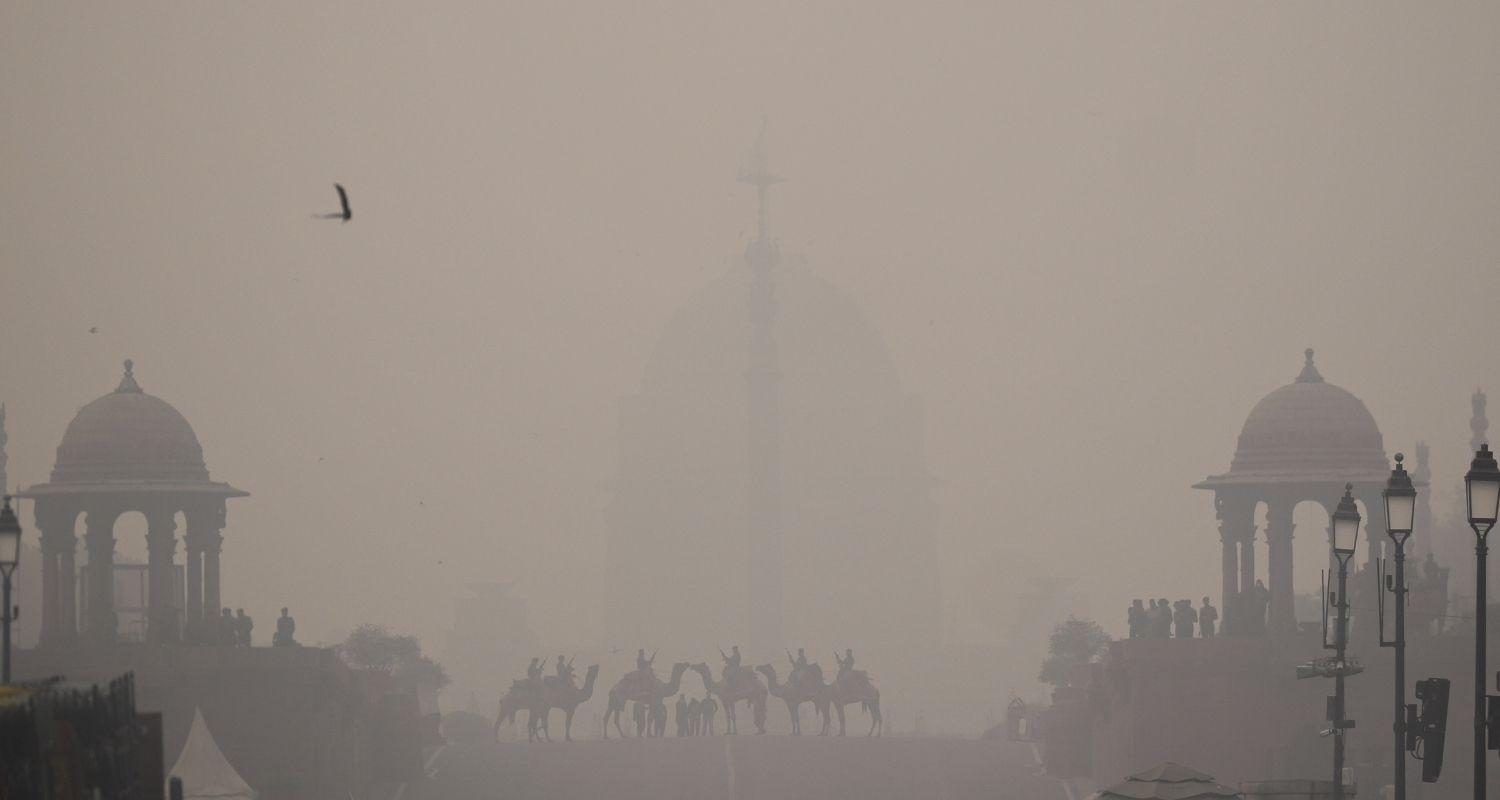
Visibility was sharply reduced in Delhi and National Capital Region (NCR) on Monday after a thick layer of smog enveloped the capital city and its neighbouring areas, even as the overall air quality index (AQI) remained in the ‘severe’ category.
According to the data released by the Central Pollution Control Board (CPCB), the overall AQI was recorded at 418, while air quality index in the ITO area was recorded at 434. Similar conditions prevailed near Rafi Marg, where the AQI stood at 417, while areas around the Swaminarayan Akshardham temple in Pandav Nagar reported an AQI of 455.
Several other locations across the capital also witnessed alarmingly high pollution levels, with Anand Vihar recording an AQI of 462, Ashok Vihar 473, Bawana 448, Burari 460, Chandni Chowk 454, Dwarka Sector-8 427, Mundka 467, Narela 437, Punjabi Bagh 434, RK Puram 439, Rohini 437 and Wazirpur 472.
The ‘severe’ category of AQI is extremely hazardous for health, especially those in the vulnerable age groups and already battling respiratory and cardiac health issues.
India’s financial capital, Mumbai, also woke up to dense fog on Monday morning, with temperatures hovering between 17 degrees Celsius and 30 degrees Celsius.
Also Read: Delhi air quality back to being ‘severe’, GRAP-4 imposed
Meanwhile, cold wave conditions stayed put in the north of India, with the India Meteorological Department (IMD) recording a minimum temperature of 8 degrees Celsius on Monday in Delhi, while the maximum temperature is expected to reach around 25 degrees Celsius later in the day.
With dense fog and smog further reducing visibility, especially in the IT stretch, vehicular movement in the national capital in the wee hours of the morning was slow, and further disruptions expected. It also impacted air travel operations, with several flights delayed at the Indira Gandhi International Airport due to poor visibility.
Meanwhile, in response to the deteriorating air quality, the Commission for Air Quality Management (CAQM) on Saturday reinvoked Stage-IV measures under the Graded Response Action Plan (GRAP) across Delhi and the National Capital Region (NCR).
“Keeping in view the prevailing trend of air quality and relevant factors and in an effort to prevent further deterioration of air quality in the region, the CAQM Sub-Committee on GRAP unanimously decides to invoke all actions as envisaged under Stage-IV of the extant GRAP - 'Severe+' Air Quality (DELHI AQI > 450), with immediate effect, in the entire NCR, as a proactive measure. This is in addition to the actions under Stages I, II & III of the extant GRAP already in force in NCR,” the order from the CAQM read.
The order further added that the NCR Pollution Control Boards and other agencies concerned have been asked to escalate the preventive measures to prevent further deterioration of air quality in the region.
With severe pollution, cold wave and dense fog persisting, authorities have urged citizens to limit outdoor activities, follow health advisories, and take precautions against the hazardous air quality.

 Follow us