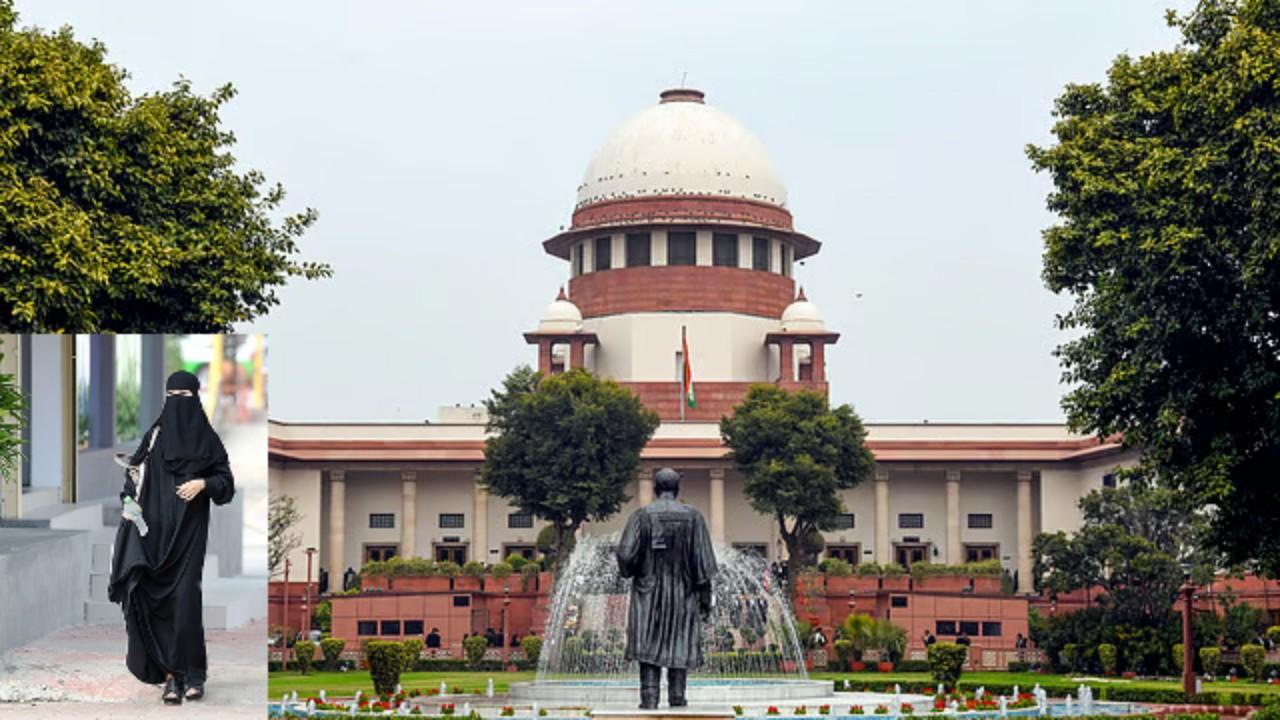
The Supreme Court on Thursday issued notice to the Union Government on a writ petition challenging Muslim personal law provisions as discriminatory against women.
The Court issued notice to the Central government and other concerned authorities on a plea challenging the Constitutional validity of provisions of the Muslim Personal Law (Shariat) Application Act, 1937 for discriminating against Muslim women in matters of succession.
A bench comprising Chief Justice of India Surya Kant, Justice Joymalya Bagchi and Justice Vipul Pancholi was hearing a writ petition filed under Article 32 of the Constitution by Advocate Poulomi Pavani Shukla, along with an organisation Nyaya Naari Foundation, represented by Aisha Jawaid.
On March 10, when the petition was previously heard, the bench had expressed concerns about judicial interference, saying that it might create a vaccum regarding Muslim personal law, since the Indian Succession Act is not applicable to followers of the Islam faith. The bench had also orally commented that the enactment of a Uniform Civil Code can resolve the issue. The Court had then adjourned the matter, suggesting that the petition be amended to include suggestions as regards the relief.
Today, when the matter was taken, Advocate Prashant Bhushan, for the petitioners, responding to the Court's earlier concerns, stated that the Indian Succession Act can be applied if the Court was striking down the Shariat law provisions.The Chief Justice then told Bhushan, "Someone will argue that it's a question of personal law."
Bhushan replied that personal law is not protected by Article 25 of the Constitution. "If it's discriminatory, it needs to be struck down. If it's struck down, the Indian Succession Act [can apply]. Only the Muslim succession law is not codified. Rules are so complicated that even lawyers find it difficult to discern. I often tell my Muslim friends not to oppose the Uniform Civil Code," Bhushan submitted.
CJI Surya Kant replied, "Uniform civil code is a constitutional ambition...it has nothing to do with religion." Justice Bagchi, while saying that the Special Marriage Act is one step towards uniformity qua marriage, asked if it was a matter for the Court to interfere or should it be left to the legislature. Bhushan replied that the Court can strike down discriminatory practices.
"Saying women will get half or even less than half compared to their male counterparts is discriminatory. This is a civil case and not an essential religious practice under Article 25," Bhushan said. At this juncture, the bench said that it would be better if an aggrieved person approached the Court. Bhushan replied that the second petitioner organisation is represented by a Muslim woman, and that the Advocate-on-Record was a Muslim.
Bhushan also pointed out that the Supreme Court is already considering petitions filed by Muslim individuals seeking the application of the Indian Succession Act, instead of the Shariat Law."This is a very important constitutional issue which requires to be considered by this Court," Bhushan said. The bench agreed to issue notice, and tagged it along with the similar petitions.

 Follow us