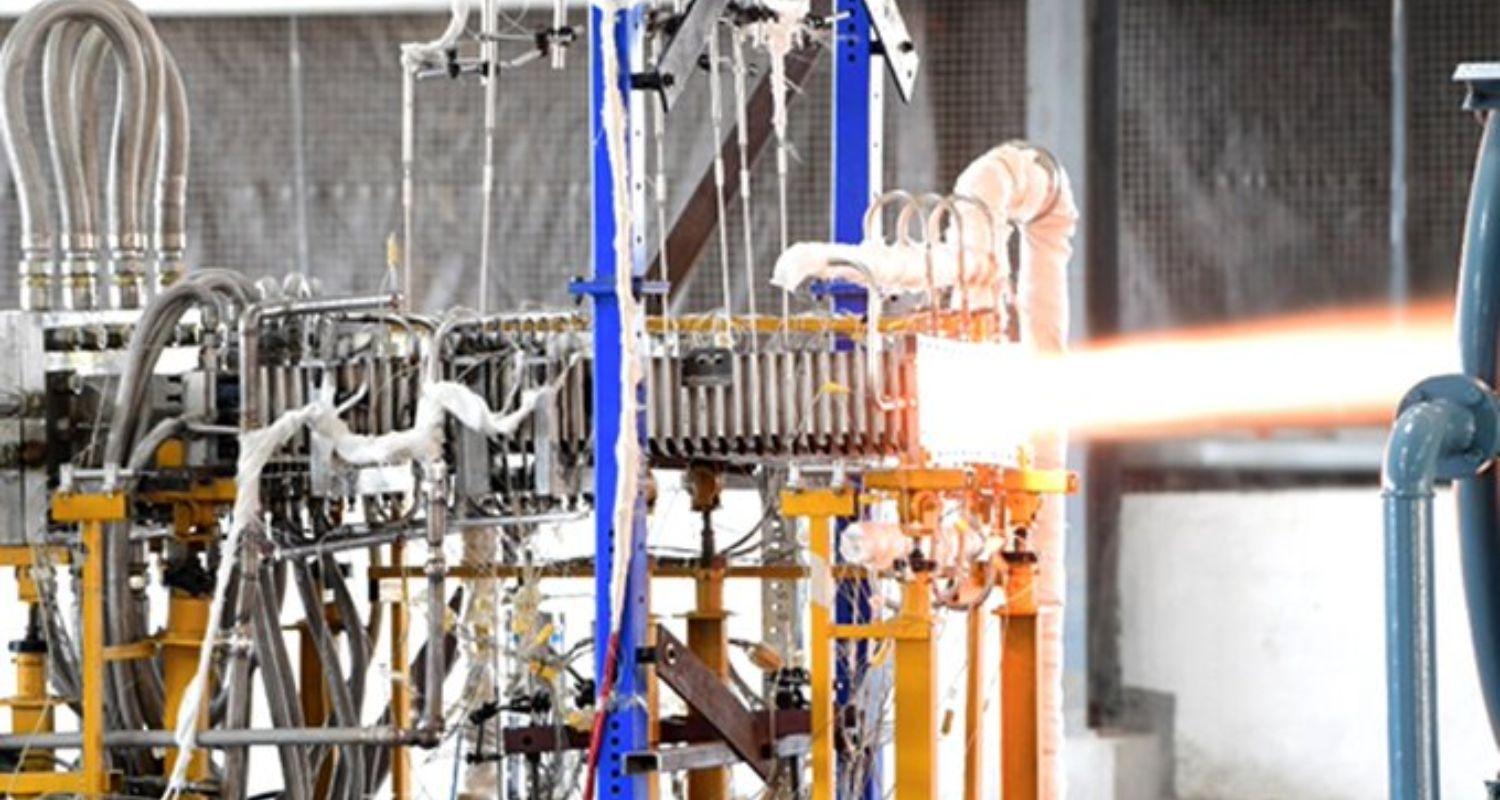
The Defence Research and Development Laboratory (DRDL), the Hyderabad-based lab of the Defence Research and Development Organisation (DRDO), has achieved a path-breaking milestone in the development of hypersonic missile technology.
DRDL successfully conducted an extensive long-duration ground test of its Actively Cooled Scramjet Full Scale Combustor, achieving a runtime of over 12 minutes at its state-of-the-art Scramjet Connect Pipe Test (SCPT) Facility here.
This builds on an earlier subscale test conducted on April 25, last year, and marks a crucial step forward in hypersonic missile development. The combustor and test facility were designed by DRDL and realised by industry partners, positioning India at the forefront of advanced aerospace capabilities.
“Defence Research & Development Laboratory (DRDL), the Hyderabad-based laboratory of DRDO, has achieved a path-breaking milestone in the development of Hypersonic Missiles. DRDL successfully conducted an extensive long-duration ground test of its Actively Cooled Scramjet Full Scale Combustor at its state-of-the-art Scramjet Connect Pipe Test (SCPT) Facility on 9 Jan 2026,” the Ministry of Defence (MoD) announced on social media.
Hypersonic cruise missiles can exceed five times the speed of sound (over 6,100 km/hr) for extended periods, powered by cutting-edge air-breathing engines that enable supersonic combustion for sustained flight. The SCPT tests have validated the advanced scramjet combustor design and the facility's capabilities.
Defence Minister Rajnath Singh congratulated DRDO, industry partners, and academia, calling the achievement a solid foundation for the nation’s Hypersonic Cruise Missile Development Programme.
An actively cooled scramjet combustor is the most critical component of a scramjet engine.
A scramjet engine differs fundamentally from a ramjet engine, such as those powering the Akash and BrahMos missiles. In a ramjet, airflow inside the combustion chamber is subsonic, whereas in a scramjet, the airflow remains supersonic throughout the combustion process.
A scramjet engine is an absolute prerequisite for sustained, level hypersonic flight within the atmosphere. The only alternative method for achieving hypersonic atmospheric flight is through boost-glide vehicles.
Boost-glide flight involves lofting a hypersonic glide vehicle (HGV) to altitudes of approximately 40–100 km using a booster rocket. The HGV then dives steeply toward Earth, achieving hypersonic speed due to gravity, before transitioning into a flatter glide trajectory, trading altitude to counter atmospheric drag.
HGVs have inherent operational limitations. Because they are lifted to high altitudes—or even beyond the atmosphere—by a booster, they are easily detected by radar and infrared sensors. Once detected, they can be readily tracked. During the boost and early glide phases, HGVs are particularly vulnerable to adversary air and missile defences.
In contrast, hypersonic cruise missiles need not be lofted to extreme altitudes. For maximum range, they can climb to 20–30 km to minimise drag and then cruise at hypersonic speed. When operating at shorter ranges, they can fly at much lower altitudes, significantly reducing the probability of radar detection and tracking.
Also read: Crimes against children, women rise in Hyderabad in 2025

 Follow us