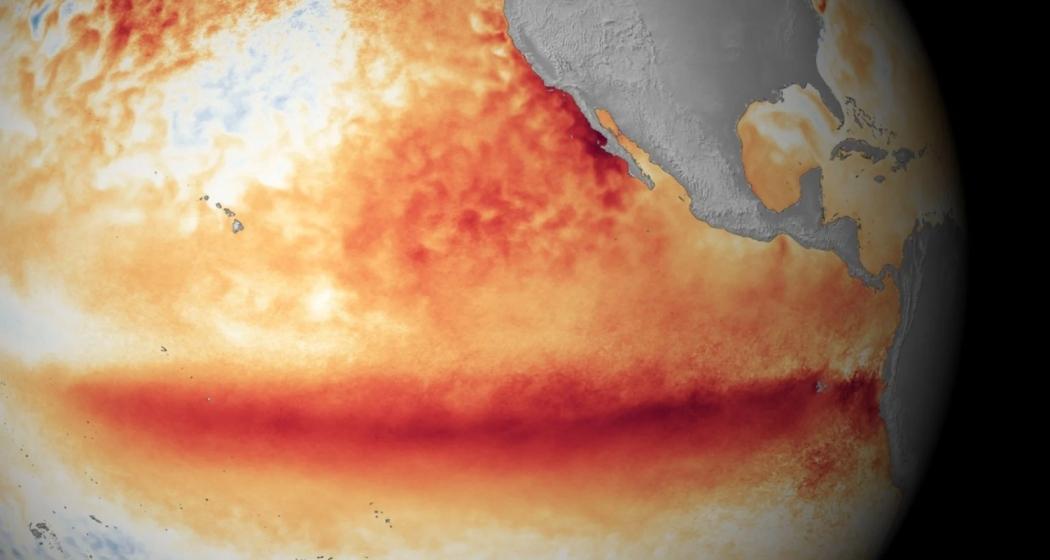
Scientists and climate experts are closely monitoring the development of a potentially strong El Nino event in the Pacific Ocean, warning that its effects could extend far beyond weather patterns and influence agriculture, water resources, energy demand and food prices in India.
El Nino is a naturally occurring climate phenomenon characterised by unusually warm sea surface temperatures in the central and eastern tropical Pacific Ocean. Although it originates thousands of kilometres away from India, it often affects the southwest monsoon, which is critical for the country's agriculture and water security.
Global organisations, including the World Economic Forum, have highlighted the possibility that the emerging El Nino could trigger disruptions across multiple sectors simultaneously if it strengthens in the coming months.
The biggest concern for India remains the monsoon. Nearly half of the country's agricultural land continues to depend on rainfall rather than irrigation. A weaker monsoon or prolonged dry spells could affect the sowing and growth of crops such as rice, pulses, cotton, soybean and maize.
Lower agricultural output could, in turn, affect food supplies and contribute to higher prices of essential commodities.
Also read: India may see 90 pc of long-period average rain this monsoon
Experts also warn that reduced rainfall may put pressure on reservoirs, rivers and drinking water supplies in several regions. Hydropower generation could be affected if water levels decline significantly.
At the same time, hotter-than-normal temperatures associated with El Nino conditions could drive up electricity consumption as households and businesses rely more heavily on cooling systems such as fans and air conditioners.
India has already witnessed record levels of electricity demand in recent years, and any prolonged heat coupled with below-normal rainfall could place additional stress on power infrastructure.
Climate experts note that El Nino can also affect global trade and supply chains. Previous events have contributed to drought conditions in parts of the world, including regions linked to key shipping routes such as the Panama Canal.
While the intensity and exact impact of the developing El Nino remain uncertain, scientists say it is among the most closely watched climate developments of the year because of its potential influence on weather, agriculture, water availability and economic activity across India and beyond.

 Follow us