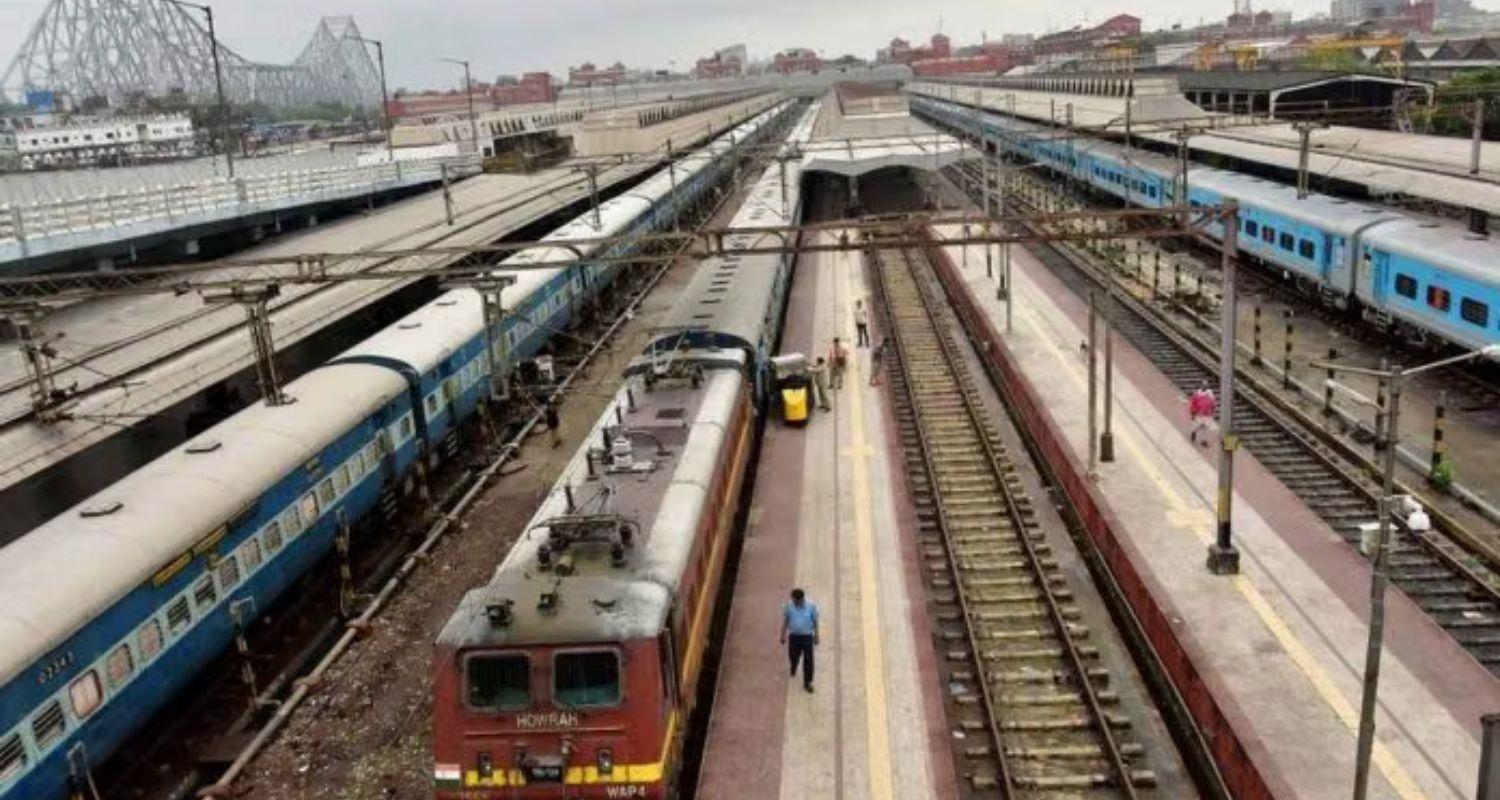
Indian Railways is facing an encroachment problem on a scale large enough to cover nearly 42 Narendra Modi Stadiums or roughly 1,496 FIFA-standard football pitches. According to Right to Information (RTI) data from the Railway Board, 1,068.54 hectares of railway land was under encroachment as of March 2025. Far from shrinking, the issue has steadily worsened over the past five years, while efforts to reclaim the occupied land have made only limited progress.
Although the initial RTI application sought a 25-year history of railway land encroachment, the Railway Board provided only a five-year snapshot. It is clear that the amount of land used increased from 810.31 hectares in 2020-21 to 1,068.54 hectares in 2024-25, thereby showing an increase of about 32 per cent. The figures correspond to the statement made by the government in Parliament on March 27, 2026 wherein the government stated that till April 1, 2025, Indian Railways had about 4.99 lakh hectares of land, out of which about 0.21 per cent land was being illegally occupied.
In order to put the above figures into perspective, the Narendra Modi Stadium located in Ahmedabad, India, the world's biggest stadium for cricket, takes up an area of 63 acres or approximately 25.5 hectares of land. The total encroached railway lands have the potential of fitting as many as 42 of these giant stadiums. In football terms, the figure represents around 1,496 fields.
From the statistics provided by the Land and Amenities Directorate of the Railway Board, there was a marginal decline to 782.81 hectares in 2021-22. However, afterwards, there was a sharp increase in the land occupied, resulting in reaching the highest ever figure of 1,078.55 hectares in 2023-24. This was the biggest increase recorded in any year in the five years period of 268 hectares.
Meanwhile, reclamation drives have struggled to keep up with the pace of the problem. Over the same five-year period, only 98.02 hectares of land was successfully cleared. The government informed the Lok Sabha that any reclaimed land is channelled into crucial infrastructure projects, such as multi-tracking, workshops, and passenger or freight terminals. Any land not immediately required for operations is handed over to the Rail Land Development Authority (RLDA) for commercial development.
Perhaps the most surprising revelation from the RTI response is what the Railway Board does not keep on record. When asked for a 25-year trend, the Board admitted it only preserves encroachment data for a rolling five-year period, meaning there is no centralised, long-term tracking of how this issue has developed over the decades. Furthermore, the Board stated it does not maintain location-wise records centrally, advising the applicant to contact the Public Information Officers of individual zonal railways to find state-specific details.
Also read: PM Modi concludes 3 nation tour, MEA says 'significant outcomes'

 Follow us