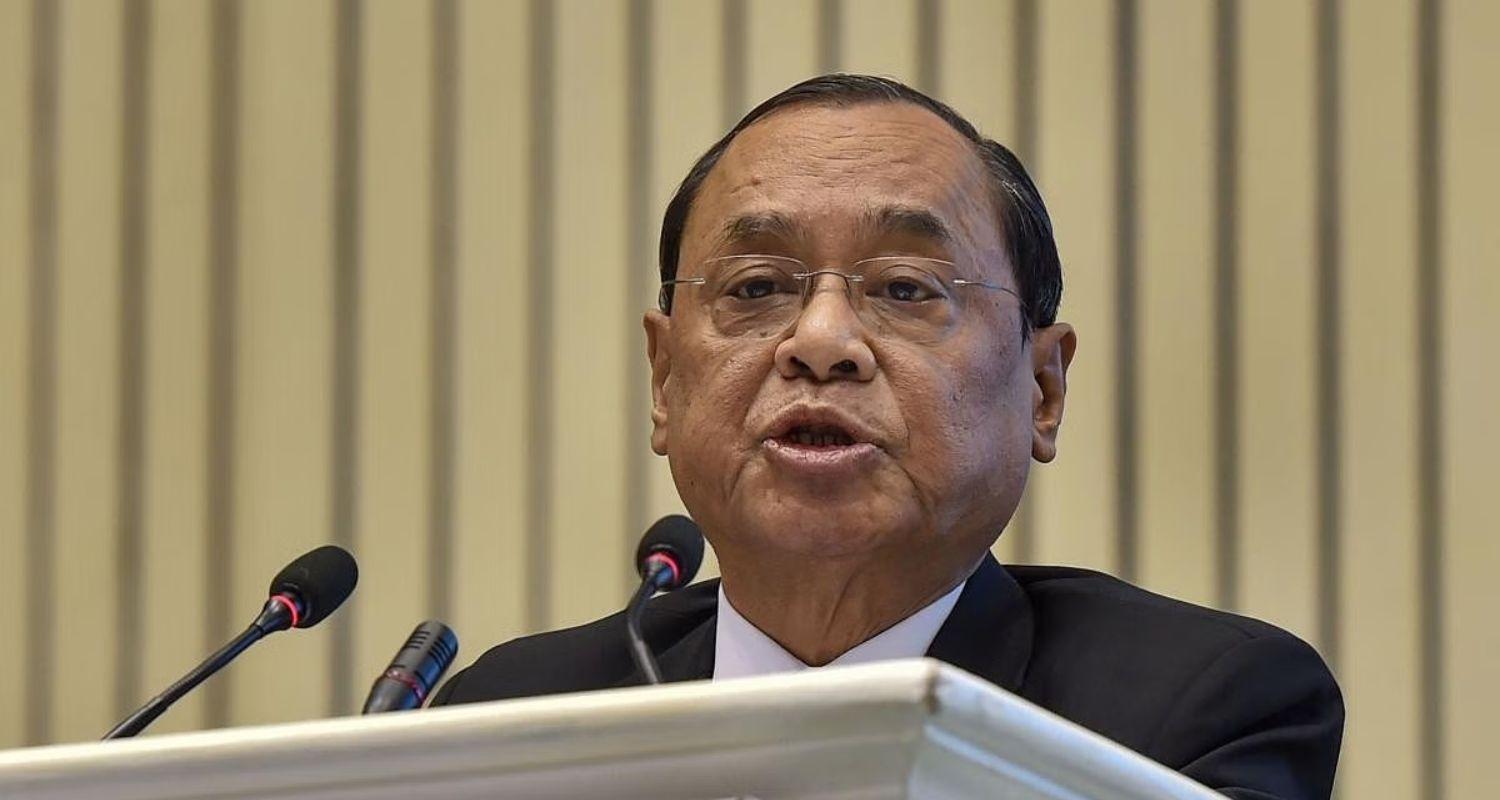
Former Chief Justice of India Ranjan Gogoi on Sunday described the proposed Uniform Civil Code (UCC) as a “very important” step towards national integration and social justice, while stressing the need to build consensus before its implementation.
Speaking at the ‘Surat Litfest 2025’, the Rajya Sabha MP also supported the idea of ‘One Nation, One Election’, stating that frequent elections disrupt governance, strain administrative and financial resources, and cause election fatigue.
“I see the Uniform Civil Code as a very progressive piece of legislation that will replace diverse customary practices which have evolved into laws,” the former CJI said. He emphasised that the UCC is a constitutional goal enshrined in Article 44.
If implemented, the UCC would create a unified set of personal laws for all citizens, irrespective of their religion, covering matters such as marriage, divorce, adoption, inheritance, and maintenance.
A uniform civil code has been a key agenda item in the election manifestos of the ruling BJP.
“I believe it is a significant step towards national integration and achieving social justice. Let us be clear that it does not conflict with Articles 25 and 26, which guarantee the right to religion,” he stated during a session with Prafulla Ketkar, editor of the RSS mouthpiece Organiser.
Gogoi highlighted that the UCC functions effectively in Goa and called for consensus-building and addressing misinformation before implementing the code nationwide.
According to Gogoi, the UCC has no connection with religion. The Supreme Court, in five cases starting with the Shah Bano case concerning Muslim women's right to maintenance, has urged the government to bring the UCC on board, he added.
He argued that the UCC would unify the nation and reduce the judicial backlog caused by diverse laws governing civil and personal matters, which often impede social justice.
“I would, however, urge the government and Parliament not to rush into it. Build consensus, educate the public on what the UCC really entails, and ensure clarity. While some groups may remain resistant, broader understanding can be achieved,” he said.
On the ‘One Nation, One Election’ proposal, Gogoi revealed that former President Ram Nath Kovind had sought the opinions of 4–5 former Chief Justices, including himself, and he had endorsed the idea.
“The primary reason I support it is governance. Every year, there is an election in some part of the country, which means the Model Code of Conduct (MCC) comes into play. Ministers are occupied with electioneering, and administrative functions come to a halt. This negatively impacts governance,” he explained.
Gogoi added that frequent elections also place financial pressure on political parties and administrative machinery, while contributing to election fatigue.
Discussing the judiciary, the former CJI lamented the massive backlog of cases and the lack of focus on addressing it. He highlighted that with 5 crore pending cases, around 9 crore litigants are involved, and considering their families, nearly 45 crore Indians are affected.
“Has anyone realised this? Has this been raised in any forum?” the Rajya Sabha member questioned, adding that discussions about the judiciary tend to focus on the collegium system or judicial overreach rather than pendency of cases.
“How to resolve the backlog of 5 crore cases has not been seriously discussed, no white paper has been published, and no one seems to be interested. But it is a solvable problem, and the Chief Justice of India, as head of the judicial family, should take the initiative,” he said.
He stressed the importance of appointing competent judges to improve the justice delivery system.
“There are 24,000 judges in the country. Increase this to one lakh and recruit capable individuals from the 140 crore population. Focus on selecting individuals of strong character, with compassion, kindness, and a mission to serve,” he suggested.
Commenting on the new criminal laws, Gogoi said they have both “good and bad features”. Positive aspects include provisions for community service for minor offences, gender-neutral crimes, establishing a director of prosecution in every district, and giving greater weight to expert evidence, he noted.

 Follow us