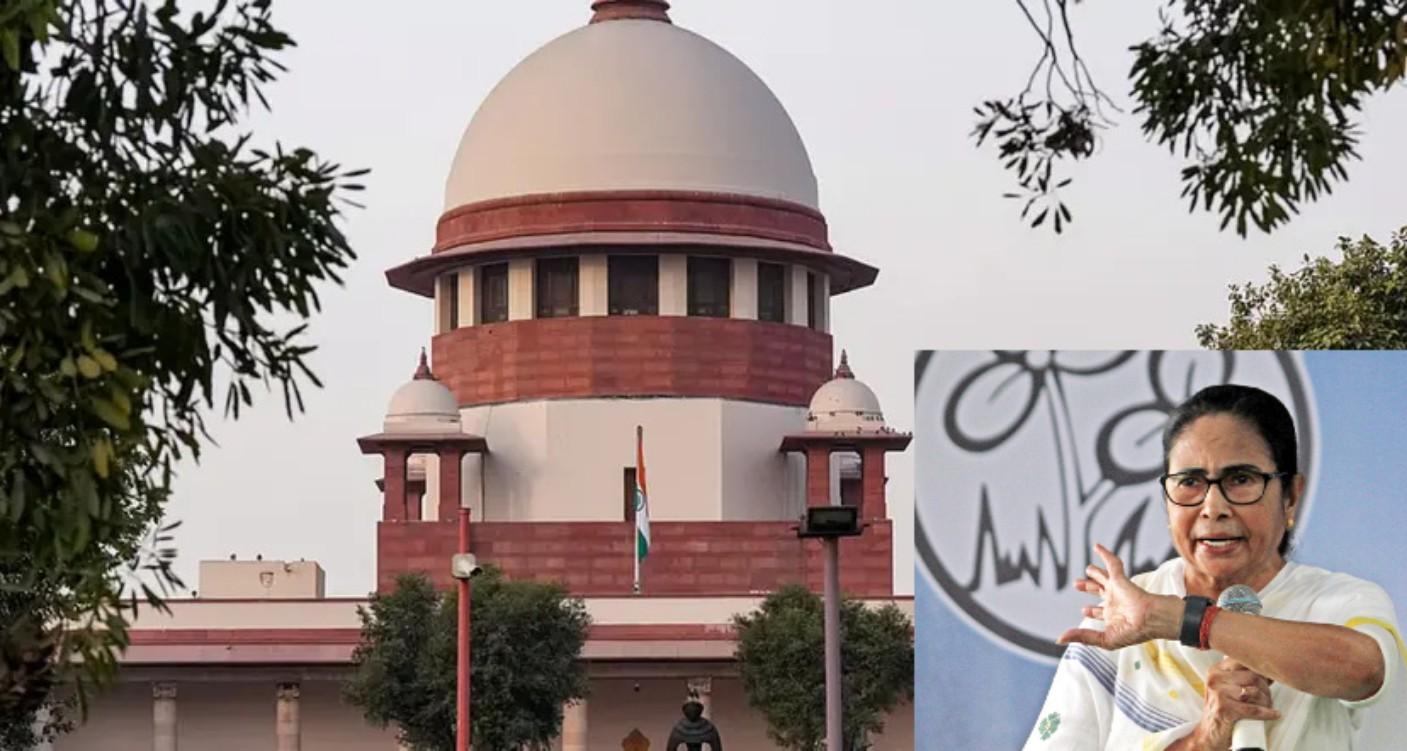
The Supreme Court on Tuesday orally observed that the Special Intensive Revision (SIR) of electoral rolls had been conducted smoothly across the country except in West Bengal, while hearing a batch of petitions relating to the ongoing revision exercise in the State.
A Bench comprising Chief Justice of India Surya Kant and Justice Joymalya Bagchi was dealing with petitions, including one filed by West Bengal Chief Minister Mamata Banerjee, challenging aspects of the revision exercise and the characterisation of certain voters in the “logical discrepancy” list.
During the hearing, the Chief Justice referred to an article discussing the progress of the revision exercise across States.“I was reading an article on SIR. Except West Bengal, every State... the article refers to which are the States governed by A party or B party, except West Bengal, where it has happened smoothly,” the Chief Justice remarked.
Senior Advocate Kalyan Banerjee, for one of the petitioners, then told the bench that the category of 'logical discrepancy' has been applied only to West Bengal. He added that the ECI ordered the midnight transfer of the State's Chief Secretary, and no other State has witnessed such an action.
CJI said that though there were equally complicated issues in other States, "by and large", SIR went on smoothly there. "There is hardly any litigation (from other States) now. I think there are States where after the SIR, the rate is higher," CJI added. Senior Advocate Dama Seshadri Naidu for the Election Commission of India stated that in Gujarat, it was double, and in UP, it was higher. Banerjee said that it was due to the population increase compared to the 2002 roll.
Senior Advocate Menaka Guruswamy, for petitioners, sought an extension of the deadline for freezing the electoral rolls, citing the ongoing adjudication of objections and the need to ensure procedural fairness.Justice Bagchi responded that the Court would consider the request.Court says most issues are of logistical nature
Senior Advocate Shyam Divan, appearing for Mamata Banerjee, drew the Court's attention to its previous directions, including the order requiring the constitution of appellate tribunals headed by former High Court judges to hear appeals against exclusions from electoral rolls.
The Bench indicated that the responsibility for managing logistical aspects of the process had been entrusted to the Chief Justice of the High Court and advised parties to bring specific difficulties to the Court's attention if they persisted.“This burden we have passed onto the Chief Justice of the High Court. If either side is facing any difficulty, then point out to us,” the Chief Justice said.
Justice Bagchi also suggested that constituencies going to polls in the first phase could be prioritized to ensure timely completion before scheduled deadlines.The Court took note of the scale of the revision exercise and the workload placed on judicial officers tasked with adjudicating objections to the electoral rolls.The matter is scheduled to be taken up again tentatively on April 1.

 Follow us