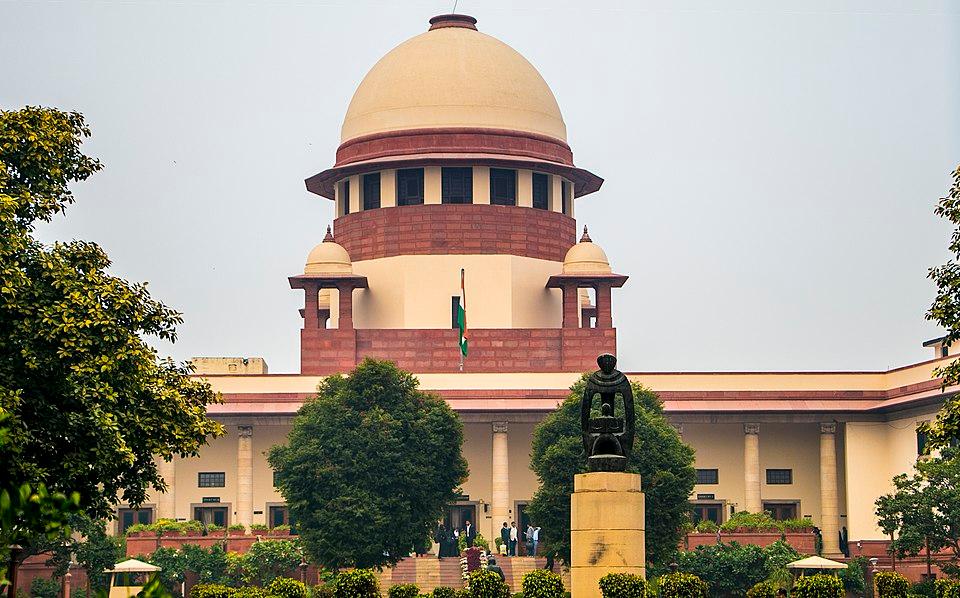
Flagging the “uneven” compliance with the Solid Waste Management (SWM) Rules across India, the Supreme Court issued pan India directions for this, contending that present generation cannot afford to wait for further legislative refinement while existing implementation gaps persist.
Observing that the right to a clean and healthy environment is an “inseparable part” of the right to life, the court issued a slew of pan-India directions to ensure that the executive has the requisite mechanism required to enforce the SWM Rules, 2026, which will be effective from April 1.
A bench of Justices Pankaj Mithal and S V N Bhatti said neglecting municipal solid waste will affect health as much as the economy and India must be fully-compliant with the 2026 Rules when the world looks at the country in technology-related activities.“Compliance of MSW/SWM Rules meant to govern waste management remains uneven across India. While mandated at source, the segregation at source into wet, dry and hazardous streams is still not fully realised in many urban and rural areas,” the bench said in its February 19 order.
It said massive dumpsites remain active in metropolitan areas, though bio-remediation efforts have been initiated under the latest mandates.The court passed the order while hearing two appeals arising from two separate National Green Tribunal (NGT) orders concerning environmental compliances by the Bhopal Municipal Corporation under the SWM Rules, 2016.“It is now or never. Expecting high results without fundamental spadework of source segregation and infrastructure would be unreasonable. Every stakeholder is duty-bound to ensure the realisation of a waste-free India,” the bench said.
It said the surge in economic waste is also linked to the country’s evolving economic landscape.The bench said courts have repeatedly reminded that the State has a duty to protect the environment and ensure the well-being of citizens.“The councillors/mayors and their chairpersons, corporator or ward member, being the primary elected representative of the people, are hereby designated as the lead facilitators for source-segregation education. It is their statutory duty to enrol every citizen within their ward in the implementation of the 2026 Rules,” the bench said.
It said infrastructure audits of solid waste management should be carried out through the district collectors.The judges said the district collectors shall communicate the identified problems and steps taken by stakeholders to the chief secretary in a time-bound manner.
They directed that every local body must establish and communicate an outer time-limit within which 100-per cent compliance will be achieved.
“The district collectors be directed and given power to oversee the establishment, execution and handling of municipal solid waste by the corporations/municipalities/gram panchayats within their jurisdiction and the non-compliance report by any of the local bodies/areas be communicated to the parent department in the state and at the central levels,” the court said.
It directed local bodies to e-mail photographic evidence alongside their compliance reports to the offices of district collectors to verify the actual progress in waste removal and infrastructure readiness.
It directed pollution control boards to identify and expedite the commissioning of the infrastructure facilities required for the four-stream segregation, including bulk (wet, dry, sanitary and special care).
The bench said the local bodies must immediately communicate the 2026 Rules and a copy of the apex court’s order to all the identified bulk-waste generators, all of whom must be fully statutory compliant by March 31.

 Follow us