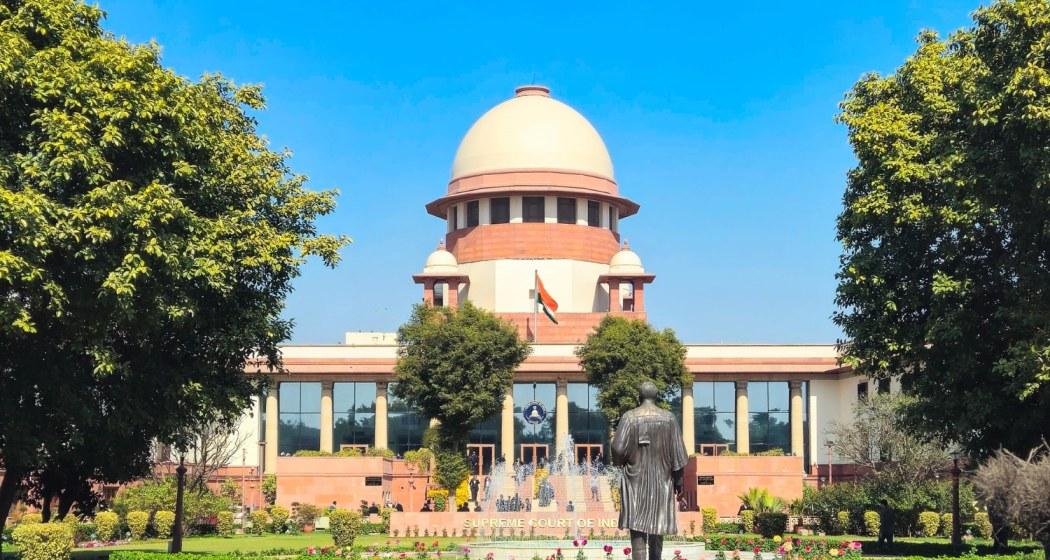
The Supreme Court on Monday said girls should not be forced to abandon education because schools lack sanitary napkins and functional gender-segregated toilets, while directing the Centre to ensure strict compliance with its earlier judgment on menstrual hygiene and sanitation facilities in schools.
A bench of Justices J. B. Pardiwala and R. Mahadevan made the observation after the Centre informed the court that its January 30 ruling on free sanitary napkins and separate toilets for girls had prompted action across states and Union Territories.
“Girls should not give up education and sit at home and do some domestic work only for this reason,” the bench observed, asking the Union government to ensure that the benefits of the judgment reached students across the country.
The apex court said the Centre must continue guiding states and periodically collect data to monitor implementation of its directions “in letter and spirit”.
The court said it would continue monitoring compliance every three months and directed the Centre to submit a fresh status report on progress. All states and Union Territories have been asked to furnish compliance reports to the Centre by August 15.
Additional Solicitor General Archana Pathak Dave, appearing for the Centre, informed the bench that data had been collected from states for the past two to two-and-a-half months regarding implementation of the January verdict.
The matter has been posted for further compliance hearing on September 1.
Also read: NEET case: SC seeks NTA response, says it has not learnt lessons
In its landmark January 30 judgment, the top court directed all states and UTs to provide free oxo-biodegradable sanitary napkins to girl students and ensure functional, gender-segregated toilets with water facilities in all schools, whether government-run, aided or private, in urban and rural areas.
The court had also directed that sanitary napkins be made easily accessible through vending machines inside toilets or through designated authorities within schools.
During Monday’s hearing, one of the advocates raised concerns over the use of the term “oxo-biodegradable” sanitary napkins in the judgment, arguing that such products may be environmentally harmful.
The bench asked the Centre to examine the interim application raising the issue and take appropriate steps.
Referring to constitutional protections, the court had earlier held that the right to life under Article 21 included the right to menstrual health and
reproductive dignity.
“The right to life under Article 21 of the Constitution includes the right to menstrual health,” the court had said in its January judgment, adding that lack of access to menstrual hygiene management adversely affected girls’ participation in education and later opportunities in life.
The bench also directed that there should be “no lapse” by states in submitting compliance reports and said the Ministry of Education would act as the nodal ministry for filing future compliance updates.

 Follow us