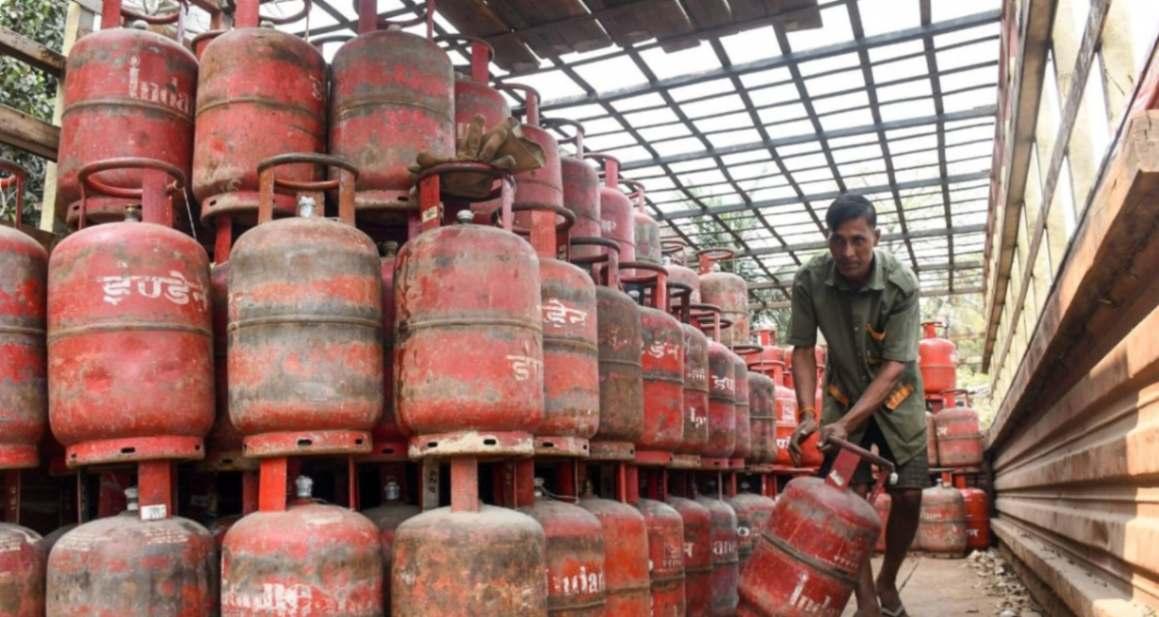
The government has reduced the number of subsidised cooking gas cylinders that 105 million poor households receive under a popular welfare scheme from nine to four, according to a senior petroleum ministry official. The announcement came a day after the reduction was quietly mentioned in a statement justifying a ₹29 price increase for a 14.2 kg cylinder. Praveen M Khanooja, an additional secretary in the petroleum ministry, defended the decision by highlighting that state-run oil companies are still losing ₹700 on every 14.2 kg LPG refill, ₹6 per litre on petrol, and ₹30 a litre on diesel.
He added that all cooking gas customers, totalling around 333.7 million, continue to receive LPG refills at ₹700 cheaper than market rates. In addition, beneficiaries of the Pradhan Mantri Ujjwala Yojana (PMUY), representing about 105 million underprivileged households, receive a targeted subsidy of ₹300 per cylinder for up to four refills a year. This clarification followed a petroleum ministry statement which noted that a PMUY beneficiary would receive the direct benefit transfer on the first four refills each year, describing this as the average consumption of a typical Ujjwala household.
This was the first official indication that the government had cut the number of subsidised cylinders from nine to four. This policy is a deviation from August 2025, when the Cabinet of the Government of India had sanctioned the subsidy for the supply of nine cylinders per year. PMUY Scheme was first implemented in the district of Ballia, UP, in 2016, aiming at offering cooking fuel connections free of cost to poor households. Within the second phase of the Ujjwala Scheme, which means Ujjwala 2.0 Scheme, all connections have been offered with one free cylinder along with cookstove ever since August 2021.
During the time of the pandemic of Coronavirus, three free cylinders were distributed among Ujjwala Scheme beneficiaries. After that, starting from May 2022, the subsidy scheme worth Rs. 200 per cylinder for a maximum of twelve refills a year had been revised in October 2023 to Rs. 300 per cylinder. The Cabinet had passed the bill for giving subsidy of Rs. 300 per cylinder for nine refills every year, starting from August 2025, which has been cut down to only four.
Government initiatives had previously led to a steady rise in domestic LPG consumption. According to official data, the average per capita consumption of PMUY consumers grew from around three refills in 2019–20 to 4.47 refills in 2024–25. Industry experts suggest that cutting the number of subsidised cylinders is an attempt to contain a ballooning fuel subsidy bill amidst two rounds of price hikes and global energy markets roiled by conflict in West Asia. Khanooja did not provide an estimate for the total LPG subsidy expenditure for the 2026–27 financial year given the volatile international energy landscape.
According to the petroleum ministry, domestic consumers benefit from dual price protection: the under-recoveries absorbed by public sector oil marketing companies for all consumers, and the additional ₹300 subsidy reserved for the 105.8 million Ujjwala beneficiaries. Under-recovery represents the gap between the international cost of the fuel and the regulated retail price, which is absorbed by marketing companies and partly compensated by the exchequer. In the 2025-26 financial year, the total amount of under-recoveries on domestic LPG increased to ₹60,000 crore from ₹41,338 crore last year due to which the Union Cabinet agreed to provide compensation worth ₹30,000 crore to the marketing companies. The ministry clarified that the government has managed to provide some of the most affordable cooking gas rates in the world even when the global market is extremely volatile.
Also read: LPG price hiked by ₹29, second increase in 3 months

 Follow us