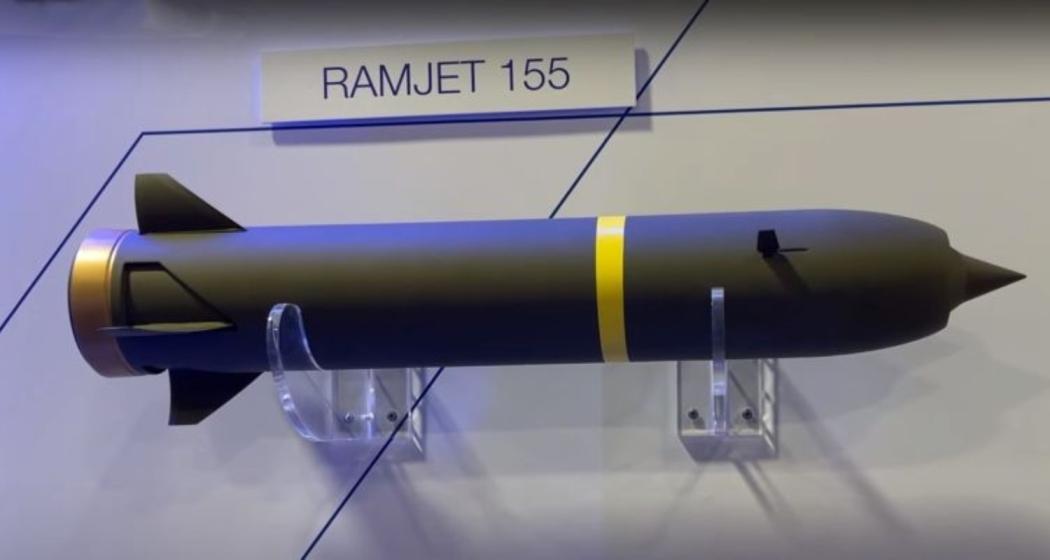
The Indian Institute of Technology (IIT) Madras on Monday announced a significant breakthrough in indigenous defence technology with the successful development and testing of ramjet-assisted 155 mm artillery shells capable of extending the range of existing gun systems by nearly 50 per cent.
The innovation, achieved in collaboration with the Indian Army, promises a cost-effective upgrade for the Indian Armed Forces by enhancing artillery reach without requiring new gun platforms or expensive missile systems.
Project lead Prof P A Ramakrishna of IIT Madras’ Department of Aerospace Engineering said the technology would offer greater tactical flexibility and deeper strike capability to artillery units. “This technology has the potential to let Indian artillery units engage targets at nearly 50 per cent more distances, offering commanders greater tactical flexibility, deeper strike options and enhanced deterrence, without the need for new gun platforms or costly missile systems,” he said.
He emphasised that the increase in range does not come at the cost of firepower. “Importantly, the design ensures that the extended range does not dilute battlefield impact, maintaining the lethality required for frontline operations,” Prof Ramakrishna added.
According to an official IIT Madras release, the breakthrough involves replacing the conventional base-bleed unit in artillery shells with a compact ramjet engine. Unlike traditional projectiles that rely solely on initial muzzle velocity, the ramjet provides sustained propulsion after the shell exits the gun barrel.
Also read: IIT-Madras, ICMR find weak spots in deadly fungus for new drugs
A ramjet functions by using the shell’s high speed to compress incoming air, mix it with fuel and generate thrust, without requiring moving parts such as turbines. This allows the projectile to travel significantly farther while retaining destructive power on impact.
The project, initiated in 2020, has undergone extensive testing over multiple phases. Early trials were conducted on a 76 mm gun at IIT Madras, followed by scaled tests on 155 mm artillery systems. Field trials held in September 2025 at the School of Artillery in Deolali demonstrated clean gun exit, stable flight and successful ramjet ignition.
Further evaluations in December 2025 at the Pokhran Field Firing Range confirmed performance at higher operational regimes. Ongoing refinements are now focused on achieving full operational capability.
The multidisciplinary team includes retired senior Army officers Lt Gen P R Shankar and Lt Gen Hari Mohan Iyer, along with faculty members Prof H S N Murthy, Prof G Rajesh, Prof M Ramakrishna, Prof Murugaiyan, Prof Lazar C and Dr Yogesh Kumar Velari.
Prof Ramakrishna noted that similar ramjet technology could also be adapted for rockets, potentially extending their range further, with related projects already under development.

 Follow us