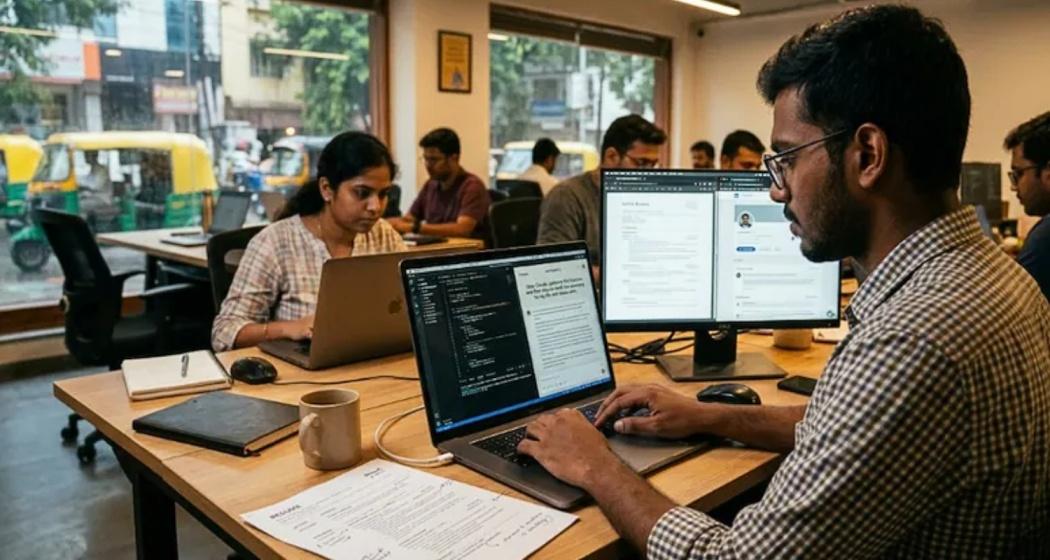
India is among the world’s most advanced users of artificial intelligence (AI), particularly in coding, data analysis and complex reasoning, but adoption remains uneven and concentrated in a few urban centres, OpenAI said in a report on Wednesday.
According to its latest “capability gap findings” for India, the country ranks among the top five globally in thinking capability usage per person, measured through reasoning tokens used by ChatGPT Plus users. Indian users are increasingly engaging with AI for complex problem-solving and analytical tasks.
India is also one of the fastest-growing AI builder ecosystems, with a fourfold rise in users of Codex, an AI coding tool, within two weeks of the launch of the OpenAI Codex app in February 2026. The country shows strong usage trends in coding and data analysis.
However, the report highlights that this capability is not evenly distributed. AI adoption is highly concentrated in a handful of cities, with the top ten accounting for about 50 per cent of all users. These cities represent less than 10 per cent of the population, making adoption nearly three times more concentrated than in countries such as the US, UK, Brazil and Germany.
Delhi NCR leads in ChatGPT penetration, followed by cities such as Bengaluru, Hyderabad and Chennai, which together form key hubs of advanced AI usage.
Also read: Chatbots' medical information is inaccurate, incomplete: Study
The disparity is sharper in advanced applications. Data analysis usage is up to 30 times higher in leading cities compared to lagging regions, while coding usage is four times higher. Use of developer tools like Codex shows a nine-fold gap.
Despite this concentration, emerging use cases beyond metros point to broader adoption. In education, eastern states such as Assam, Odisha, Manipur, Tripura and Chhattisgarh show higher engagement, with a significant share of AI interactions linked to learning.
In health and wellness, regions including Jammu & Kashmir, Punjab, Chandigarh, Himachal Pradesh and Kerala report above-average usage. In Jammu & Kashmir, nearly one in ten AI interactions relates to health queries.
The report said the next phase of India’s AI growth would depend on expanding access through better infrastructure, affordability and language inclusion.
Oliver Jay said the key challenge is to extend AI benefits beyond early adopters and major cities. Bridging this gap will require wider access, skill development and deeper integration of AI in everyday use cases, he added.

 Follow us