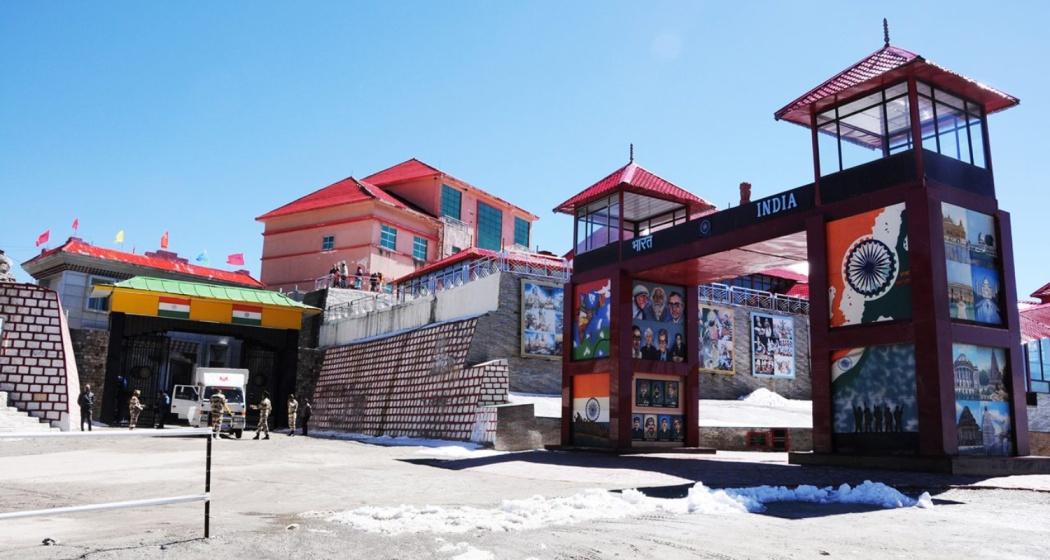
Border trade between India and China through the Nathula Pass in Sikkim resumed on Saturday after remaining suspended for six years, reviving one of the oldest trade routes linking the two countries and signalling a gradual restoration of cross-border commercial activity.
The reopening was marked by a formal ceremony at the Nathula border gate, where officials from both sides exchanged trade passes before handing them over to registered traders at Sherathang.
The revival of trade comes alongside the resumption of the Kailash Mansarovar Yatra through Nathula, with the Sikkim government expecting both developments to provide a significant boost to tourism, local businesses and the state's economy.
Sikkim Tourism Minister T.T. Bhutia welcomed the move and said the government would urge the Centre to revise the existing export list so that traders can ship more contemporary products from the state.
Traders, however, said the current list of tradable goods no longer reflects market realities. They pointed out that several items permitted under the decades-old agreement, including yak tail, sheep skin, goat skin, wool and raw silk, have limited commercial demand today. They also sought an increase in the existing daily trade ceiling of ₹2 lakh per registered trader and an expansion of the list of exportable goods.
Also read: Trade through Sikkim’s Nathula to resume in June
Under the current Standard Operating Procedure (SOP), up to 400 trade passes can be issued during a trading season. However, because the reopening decision came later than usual this year, only around 38 registered traders have received passes so far. Officials said more passes are expected to be issued after approvals from the Ministry of External Affairs and the State Intelligence Bureau.
Border trade will be conducted from Monday to Thursday every week, with the Nathula gate opening at 7.30 am IST (10 am Beijing time). The daily trade limit remains ₹2 lakh per trader.
Officials clarified that there has been no change in the existing list of tradable items or the operating procedures. India will continue exporting 36 approved items, including handicrafts, textiles, agricultural implements, rice, barley, vegetables, flowers, spices and traditional religious items, while imports from China will include garments, quilts, local herbs, wool, raw silk, borax, common salt and sugar.
The reopening is expected to gradually restore commercial exchanges between border communities while paving the way for future discussions on modernising the decades-old trade framework.

 Follow us