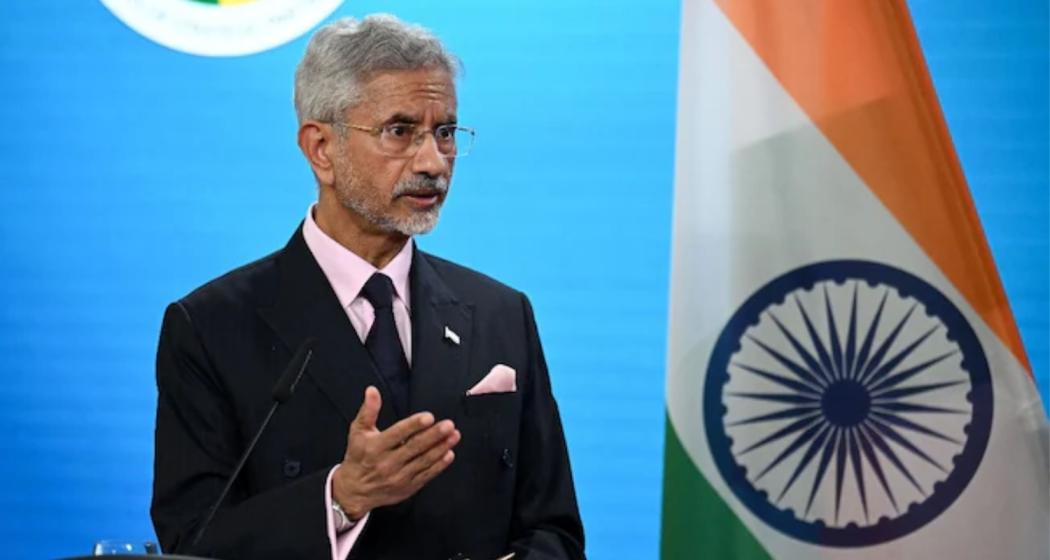
External Affairs Minister S Jaishankar on Friday said India has every right to defend its people when dealing with “bad neighbours”, asserting that a country which promotes terrorism cannot simultaneously seek cooperation from New Delhi, including on water-sharing.
Interacting with students at IIT Madras in Chennai, Jaishankar, without naming Pakistan, said India’s approach to its neighbourhood is shaped by a clear distinction between constructive and hostile conduct.
“India’s growth is a lifting tide for the region, and most of our neighbours recognise that if India grows, they grow with us. But when it comes to bad neighbours who persist with terrorism, India has every right to defend its people and will do whatever is necessary. You cannot request us to share our water with you and also spread terrorism in our country,” he said.
Drawing a contrast, the Union minister said India has consistently invested in and supported “good neighbours”, citing assistance during times of crisis.
“But more broadly, our approach to the neighbourhood is guided by common sense. With good neighbours, India invests, helps and shares, whether it was vaccines during COVID, fuel and food support during the Ukraine conflict, or the USD 4 billion assistance to Sri Lanka during its financial crisis,” he said.
Jaishankar stressed the importance of clear communication in foreign policy to prevent misinterpretation of India’s intentions.
“How to prevent people from misreading you is to communicate. If you communicate well, clearly and honestly, other countries and other people respect it and accept it.
“A lot of people across the world are proud of their culture, tradition and heritage. I see no reason why we should not be,” he said.
Also read: India flags Pakistan's arms buildup post Op Sindoor, alarming
He underlined India’s unique civilisational continuity, noting that only a few ancient civilisations have evolved into modern nation states.
“We have a sense of our past which very few countries have… It was our decision to opt for a democratic political model, which made the very idea of democracy as a universal political concept.
“Had we not gone that way, the democratic model, as we know it, would have been regional and narrow… Partnership with the West is also important, and that is how we shape the world,” he added.
Jaishankar also referred to his recent visit to Bangladesh, where he represented India at the funeral of former prime minister Khaleda Zia.
The External Affairs Minister launched the IITM Global Research Foundation, an international initiative of the Indian Institute of Technology Madras aimed at positioning the institute as a globally networked hub for education, research, innovation and entrepreneurship.
Reflecting on India’s diplomatic philosophy, Jaishankar said countries progress by strengthening themselves domestically before engaging internationally.
“When we say ‘Vasudhaiva Kutumbakam’, the term is we have never considered the world as an inimical or hostile place from which we have to defensively protect ourselves. We have limitations on our resources. With limited resources, how do you have maximum impact? That is actually the problem that has to be solved,” he said.
“What we try to do in Indian foreign policy and diplomacy today is solve that problem. We try to do that partly using our competitiveness and strengths and leveraging other institutions and possibilities,” he added.

 Follow us