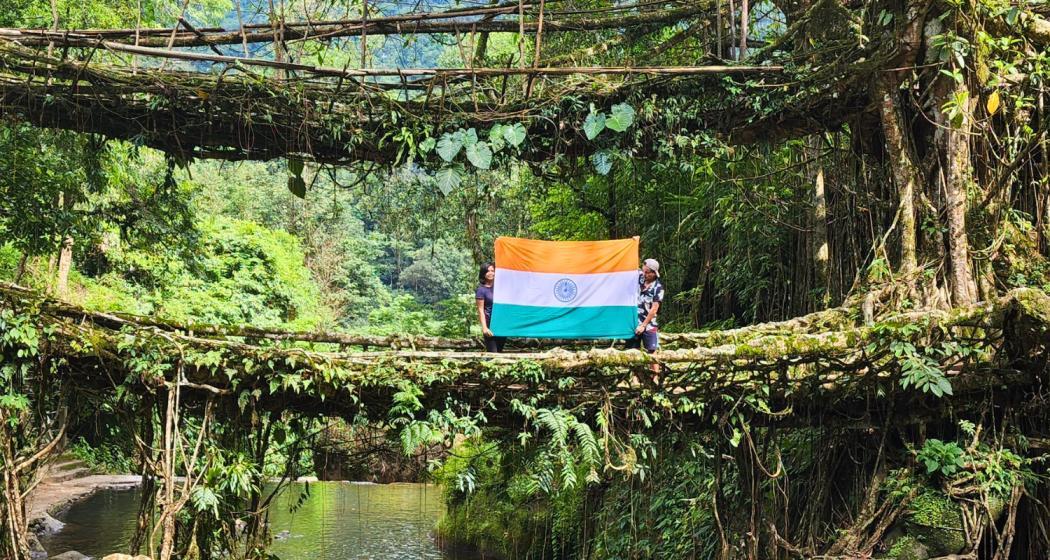
India has nominated the ‘Jingkieng Jri/Lyu Charai Cultural Landscape’, popularly known as the Living Root Bridges of Meghalaya, for inscription on the UNESCO World Heritage List for the 2026–27 cycle, the government informed Parliament on Monday.
Replying to a query in the Lok Sabha, Union Culture Minister Gajendra Singh Shekhawat said a proposal has been submitted to the World Heritage Centre for consideration. He added that India has also nominated the Ancient Buddhist Site, Sarnath for the 2025–26 cycle.
Locally known as Jingkieng Jri, the Living Root Bridges are unique bio-engineered structures created by indigenous Khasi communities. These bridges are formed by guiding the roots of rubber fig trees over rivers and streams, allowing them to grow into strong, living structures over time.
Spread across Meghalaya’s dense subtropical forests, particularly in high-rainfall regions, these bridges serve as vital connectivity links for remote villages.
According to UNESCO’s description, they are an example of sustainable engineering and demonstrate a deep harmony between humans and nature.
The knowledge and techniques involved in creating the bridges have been passed down through generations and continue to be practised. These structures have withstood extreme climatic conditions for centuries, showcasing the resilience and ingenuity of local communities.
“Facilitating connectivity and disaster resilience in more than 75 remote villages in and near the wettest region on Earth, LRB validate outstanding ingenuity and resilience of an ancient culture,” UNESCO notes.
The minister said India currently has 44 sites inscribed on the UNESCO World Heritage List, including 36 cultural, seven natural, and one mixed site.
Prominent examples include the Mahabodhi Temple Complex, Rani ki Vav, Chhatrapati Shivaji Terminus and the Kaziranga National Park.
He also highlighted that the Archaeological Survey of India (ASI) is responsible for the conservation and maintenance of 3,686 monuments, including 27 World Heritage properties. Efforts include providing basic amenities for visitors and undertaking regular preservation work based on the needs of each site.
The nomination of the Living Root Bridges is expected to draw global attention to Meghalaya’s unique cultural heritage and further strengthen conservation efforts in the region.

 Follow us