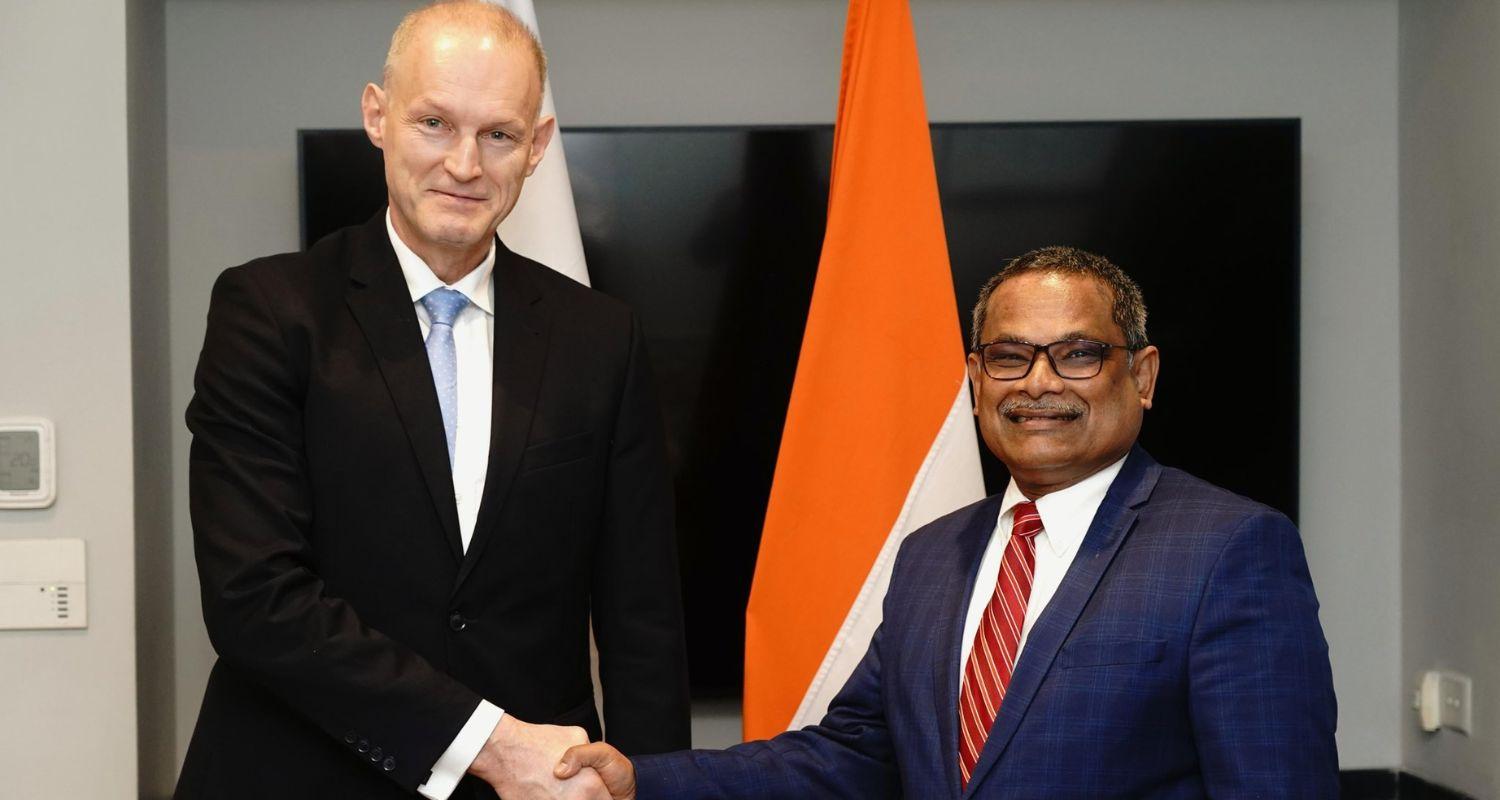
India and Poland have recently held bilateral consultations in New Delhi, where they discussed the deepening of their strategic partnership, a relationship that was formally established during Prime Minister Narendra Modi’s visit to Poland in August.
The meeting was led by Arun Kumar Sahu, Additional Secretary for Central Europe at the Ministry of External Affairs (MEA) on the Indian side, and Wojciech Zajaczkowski, Director of the Asia-Pacific Department at the Polish Ministry of Foreign Affairs.
The consultations covered a wide range of topics, including high-level exchanges, trade, investment, technology, agriculture, and energy. The focus was on the 2024-2028 Action Plan, which outlines steps for implementing the Strategic Partnership agreed upon during PM Modi’s visit.
Areas like cybersecurity, connectivity, environmental cooperation, and people-to-people ties, including youth exchange, were also on the agenda.
Both sides exchanged views on regional and global issues that hold mutual interest. The discussions were aimed at enhancing cooperation between the two nations, which share common goals and values, particularly in the context of regional security and global peace.
In particular, the consultations marked an important step in continuing the momentum generated during PM Modi’s visit, where India and Poland decided to elevate their relationship to the level of a strategic partnership.
Prime Minister Modi’s visit to Poland in August was a historic moment, as it was the first time in 45 years that an Indian Prime Minister visited the country.
During the visit, both leaders, PM Modi and Polish PM Donald Tusk, expressed their shared commitment to a free, open, and rules-based Indo-Pacific region.
They also expressed their concerns over the ongoing Ukraine conflict, particularly its devastating humanitarian impact, and emphasised the importance of seeking a comprehensive, just, and lasting peace.
The two leaders also underscored the need for stronger collaboration within multilateral forums to promote international norms and ensure a stable and secure global environment.
This visit was widely regarded as a significant step in the growing bilateral ties between India and Poland. The MEA termed the visit as “historic and very successful,” emphasising the importance of strengthening the partnership between the two countries.
The bilateral consultations in New Delhi marked another milestone in this ongoing relationship. Both India and Poland are keen to expand their cooperation in various sectors.
Discussions around energy security, agricultural development, and youth exchange have set the stage for future collaboration. Furthermore, the two countries’ shared focus on regional security, especially in the context of the Indo-Pacific, is expected to play a vital role in shaping their future engagements.
In terms of trade and investment, both nations are looking to enhance economic collaboration.
The strategic partnership also provides a platform for increased cooperation in technology transfer, agricultural innovations, and energy solutions, which are critical to the economic development of both countries.
Additionally, the two countries have committed to greater cooperation in multilateral forums. They aim to jointly advocate for the respect of international norms, particularly in areas like environmental protection, and to work together in fostering a more secure global environment.
The strong bilateral ties between India and Poland are likely to contribute to a more stable and prosperous region, as both nations work together to promote peace and security.

 Follow us