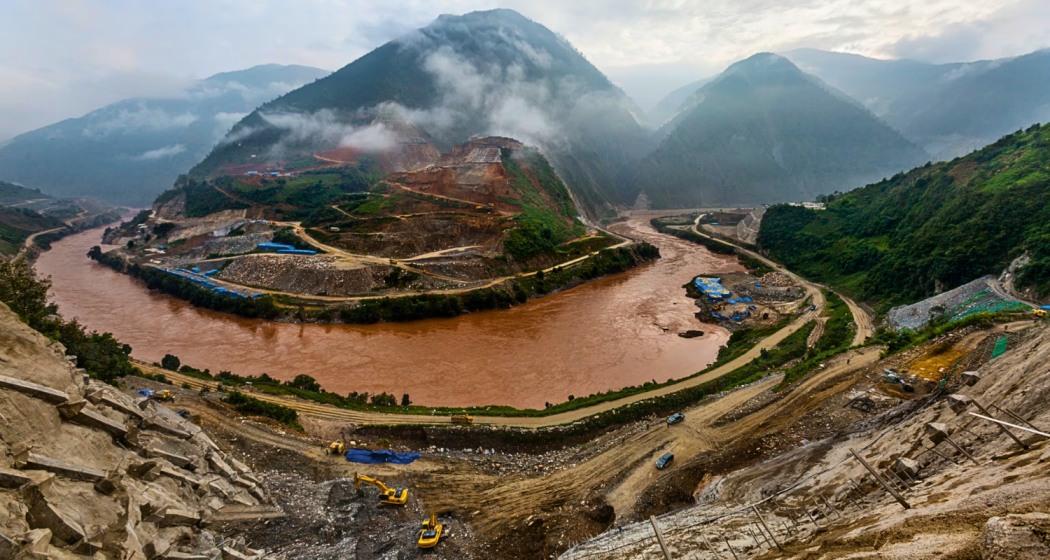
China's decision to begin construction of the world's largest hydroelectric dam on the Yarlung Tsangpo river in Tibet has renewed attention on India's long-pending Siang Upper Multipurpose Project (SUMP) in Arunachal Pradesh, a strategic infrastructure plan seen as crucial for water security, flood management and energy generation in the Northeast.
The massive Chinese project, known as the Medog Hydropower Project, is being built on the lower reaches of the Yarlung Tsangpo, barely 50 kilometres from the Arunachal Pradesh border. Once completed, the project is expected to have an installed capacity of around 60,000 MW, making it the largest hydropower facility in the world.
The development has heightened concerns in India because the Yarlung Tsangpo flows into Arunachal Pradesh as the Siang before becoming the Brahmaputra, one of the country's most important river systems supporting millions of people across the Northeast.
Against this backdrop, India is pushing forward with the proposed 11,000 MW Siang Upper Multipurpose Project in Arunachal Pradesh's Upper Siang and Siang districts. The project, being pursued by state-run NHPC, is envisaged as India's largest hydropower venture and is expected to generate nearly 47 billion units of electricity annually.
However, while construction activity has already begun on China's side, India's project remains at the pre-feasibility stage, with surveys and preparatory studies still underway. The contrast has intensified discussions in strategic and policy circles about the need to fast-track critical infrastructure projects in border regions.
Also read: Arunachal, Mizoram plan major hydropower expansion
Beyond electricity generation, the Siang project is designed to serve a wider strategic purpose. Experts have long argued that a large storage dam on the Indian side could help regulate river flows, mitigate floods and act as a safeguard against any sudden changes in water discharge from upstream areas.
The Centre recently informed Parliament that it was closely monitoring developments in the Brahmaputra river basin, including China's hydropower activities. The government said it remains committed to taking all necessary preventive and corrective measures to protect the interests of people living downstream.
New Delhi has repeatedly emphasised the need for transparency, hydrological data sharing and prior consultation on transboundary river projects. Water experts have warned that large-scale interventions upstream could affect river ecology, sediment flow, agriculture and livelihoods in downstream regions if not managed carefully.
At the same time, the government is strengthening flood forecasting mechanisms, river-monitoring systems and disaster preparedness infrastructure across the Northeast.
As construction gathers pace in Tibet, the focus is increasingly shifting to how quickly India can advance its own strategic response through the Siang project, which many view as central to safeguarding the Northeast's long-term water and energy security.

 Follow us