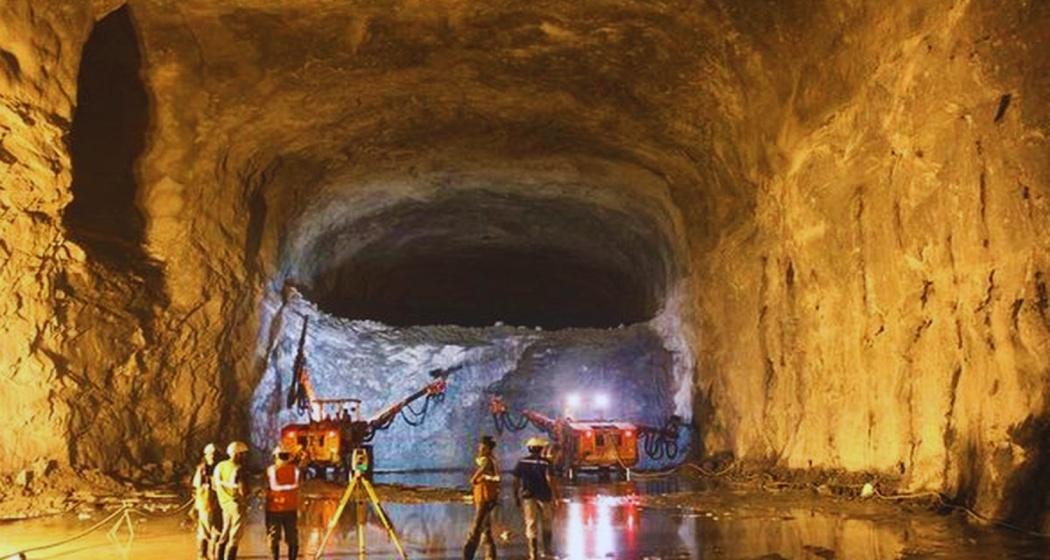
India’s strategic petroleum reserves, meant to act as a buffer during supply disruptions or global price shocks, are currently filled to about two-thirds of their total capacity, the government informed the Rajya Sabha on Monday.
Minister of State for Petroleum and Natural Gas Suresh Gopi said India has about 3.372 million tonnes of crude oil stored in its strategic reserves, which is roughly 64 per cent of the total capacity of 5.33 million tonnes. These reserves can provide cover for about 9.5 days of the country’s oil requirements in case of emergencies.
The reserves are stored in underground caverns at three locations, Visakhapatnam in Andhra Pradesh, and Mangaluru and Padur in Karnataka. They are managed by Indian Strategic Petroleum Reserve Ltd (ISPRL), a government-owned entity set up specifically to maintain emergency oil stockpiles.
Gopi said the level of reserves is not fixed and changes depending on global market conditions and domestic consumption. “The actual reserve is a dynamic number depending on the stocks and actual consumption, both of which are not static,” he said.
The status of these reserves has gained importance amid the ongoing conflict in the Middle East, which has disrupted supplies of crude oil, natural gas, and LPG. India imports nearly 88 per cent of its crude oil needs, making it highly vulnerable to global supply shocks.
Also read: Iran charges $2m fee for Hormuz passage: Report
Between April 2025 and February 2026, India spent about USD 110 billion to import crude oil. A significant portion of this came from countries such as Saudi Arabia, Iraq, and the UAE, with shipments passing through the strategically critical Strait of Hormuz.
The country also spent USD 12.4 billion on importing nearly half of its natural gas consumption during the same period, while around 60 per cent of its LPG demand was met through imports. Disruptions in supply routes have already led to some curtailment of gas and LPG supplies for industrial and commercial users.
To strengthen energy security, the government has approved additional storage facilities with a capacity of 6.5 million tonnes at Chandikhol in Odisha and Padur in Karnataka. Construction work at Padur began in October 2025.
India has also allowed foreign companies to use part of its storage. Under an agreement, Abu Dhabi National Oil Company (ADNOC) is using a cavern at Mangaluru with a capacity of 750,000 tonnes.
Overall, India currently has enough storage, including reserves held by oil marketing companies, to meet about 74 days of demand. Officials said the country is also diversifying its import sources, with oil now being sourced from 41 countries, including the US, Nigeria, Brazil, and Canada, in addition to traditional Middle East suppliers.

 Follow us