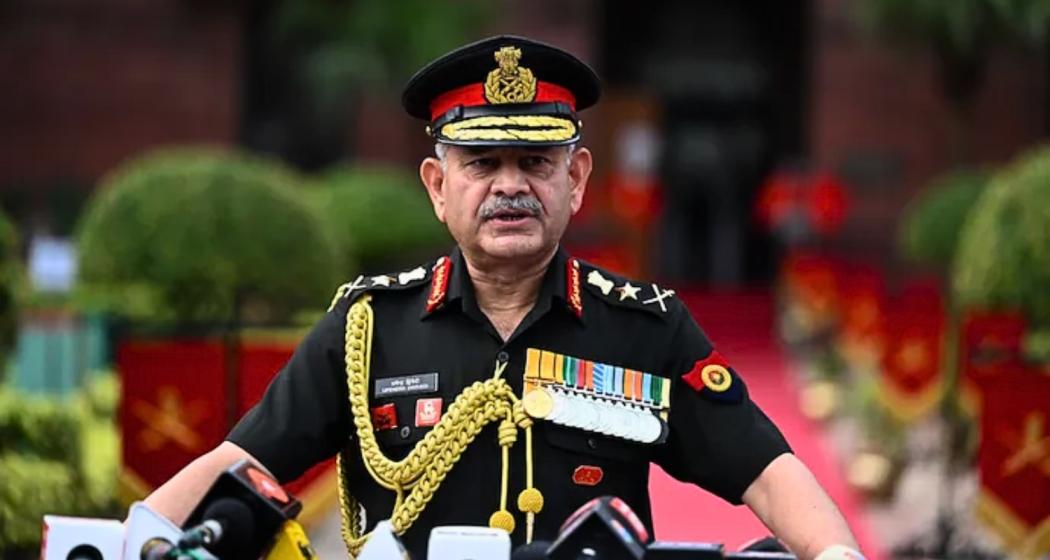
India is shifting from a reactive security approach to a proactive deterrence posture, Army Chief Upendra Dwivedi said while outlining the evolving strategic outlook of the Indian military.
Addressing participants of the 21st Higher Defence Management Course at the College of Defence Management in Hyderabad on Tuesday, the Army Chief said the Indian Army stands at the threshold of a new era marked by technological advancement, organisational agility and greater self-reliance.
“Highlighting key lessons from Operation Sindoor, the Chief of the Army Staff underscored India’s shift from a reactive to a proactive deterrence posture,” a defence release said on Wednesday.
General Dwivedi emphasised the importance of effectively harnessing multi-domain operations, data-centric warfare and unmanned systems in future conflicts.
He also underlined the need to develop “battlefield equalisers”, technologies or capabilities that can neutralise the advantages of a superior force, alongside conventional battlefield strengths.
According to the Army Chief, adaptation and innovation are essential to sustaining operational advantage in modern warfare.
Dwivedi said “Change Management” must be treated as a strategic necessity rather than an option. He urged officers to cultivate five dimensions of thinking, creative, critical, systems, cognitive and imaginative, to enhance institutional adaptability and encourage innovative problem-solving.
The Army Chief also observed that all “five generations of warfare” must be fought together through an integrated multi-domain approach that combines conventional and modern methods of combat.
He highlighted the importance of understanding “grey-zone warfare”, conflicts that fall short of full-scale war, and said such challenges must be addressed at every level of command, from commanding officers to the Army Chief.
Emphasising the need for optimal use of human resources, Dwivedi called for empowering Junior Commissioned Officers to help bridge officer shortages and strengthen leadership at the tactical level.
He also referred to the raising of new formations such as the Bhairav Battalion, tasked with operational requirements along the India–Pakistan border, and the Special Operations Forces Brigade as examples of the Army’s adaptation to emerging security challenges.
During his visit, the Army Chief interacted with faculty members and international participants from friendly countries, exchanging views on strategic management, leadership development and resource optimisation.
He commended the College of Defence Management for its role in developing strategic leaders and strengthening tri-service synergy within India’s defence establishment.

 Follow us