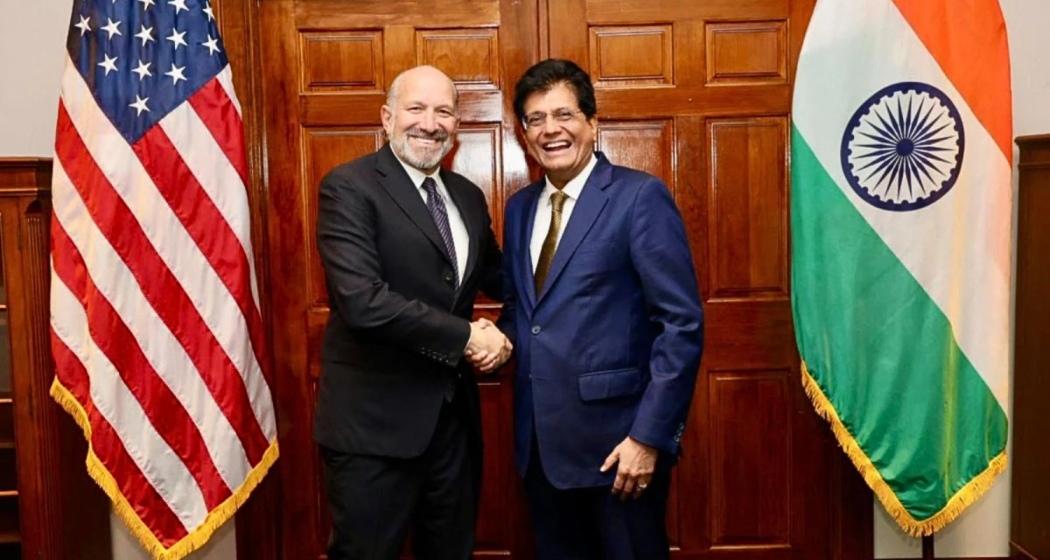
An official Indian delegation will travel to Washington next week to hold trade talks with US authorities, an official source said on Wednesday, as both sides move forward on an interim bilateral trade agreement.
The visit assumes significance as India and the US have already finalised the framework for the first phase of the pact, though changes in the American tariff regime have delayed its signing.
The agreement was initially expected to be signed in March. However, a ruling by the Supreme Court of the United States against sweeping reciprocal tariffs proposed by President Donald Trump altered the tariff landscape.
Subsequently, the US imposed a flat 10 per cent tariff on imports from all countries for 150 days starting February 24, reducing the relative advantage India had under the earlier framework. Officials had earlier indicated that the agreement would be signed once the new tariff architecture is fully in place.
India and the US had, in February, announced the framework for the first phase of the trade agreement, under which the US had agreed to reduce tariffs on Indian goods to 18 per cent.
Also read: Goyal holds talks with US official on trade pact
The evolving tariff structure led to the postponement of a scheduled meeting between chief negotiators last month. The two sides were earlier expected to finalise the legal text of the agreement in February.
Next week’s talks are also significant in the backdrop of ongoing investigations by the United States Trade Representative under Section 301 of the Trade Act.
On March 12, the USTR launched a probe covering 60 economies, including India and China, to examine policies related to the import of goods produced with forced labour and their potential impact on US commerce.
A separate Section 301 investigation, initiated on March 11, is examining industrial policies and practices of 16 economies, again including India and China.
The outcome of these investigations could influence the trajectory of the proposed trade agreement, even as both sides continue negotiations amid a shifting global trade environment.

 Follow us