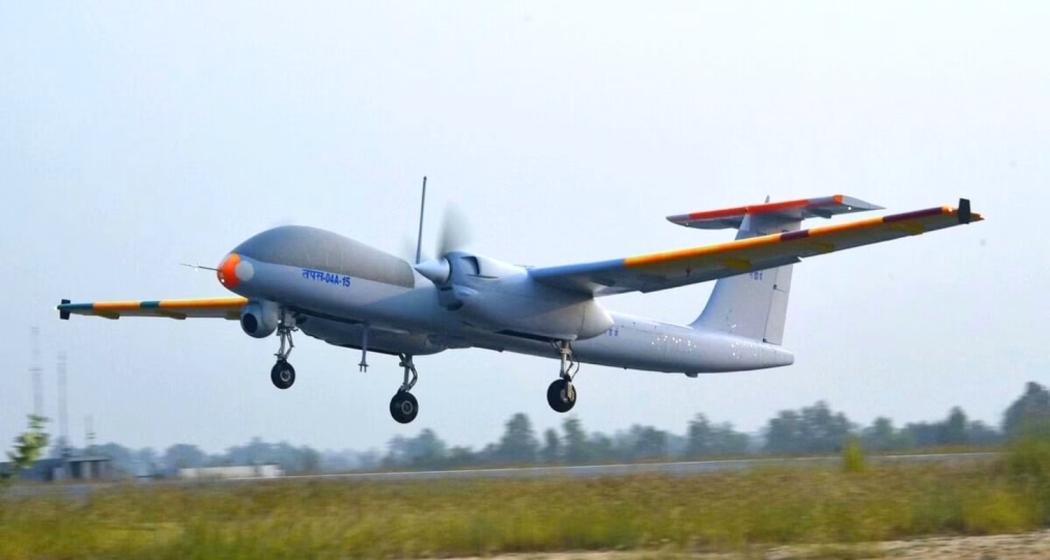
In a major post-Operation Sindoor push to modernise military infrastructure, India has initiated work on its first dedicated runway for drones and Remotely Piloted Aircraft (RPA) at Meerut in Uttar Pradesh, marking a significant shift towards sustained unmanned operations.
The 900-acre military aviation base, to be developed by the Border Roads Organisation (BRO) under the Ministry of Defence, will cater primarily to High Altitude Long Endurance (HALE) RPAs while also supporting transport aircraft in the C-295 and C-130 class. The BRO has invited bids for Project Management Consultancy services for the Rs 406-crore project.
2.1-km runway with CAT-II systems
At the heart of the base will be a 2,110-metre-long and 45-metre-wide runway. The airstrip will be equipped with ICAO CAT-II compliant lighting and advanced navigational aids, enabling operations in low-visibility conditions.
Two large hangars, each measuring 60 by 50 metres, are planned to house aircraft and RPAs, facilitating maintenance, storage and rapid deployment. The facility is expected to handle heavy aircraft movement annually and around 1,500 RPA sorties per year, translating to roughly four drone missions daily.
Also read: India set to buy 114 Rafales for ₹3.25L cr
Strategic lessons from Op Sindoor
The project follows the extensive use of unmanned aerial systems during Operation Sindoor, where drones played a key role in surveillance, reconnaissance and precision targeting. Military planners assessed that sustained drone deployment significantly enhanced situational awareness while reducing risks to personnel.
Officials believe dedicated infrastructure is now essential to sustain high-tempo unmanned missions, especially along sensitive borders.
HALE RPAs are designed for prolonged endurance at high altitudes, providing real-time intelligence across vast areas. In volatile scenarios, such capabilities allow forces to anticipate developments rather than merely respond to them.
85-month implementation plan
The project timeline spans 85 months. Seven months have been earmarked for pre-award activities and preparation of the Detailed Project Report, followed by 18 months of supervised construction. A 24-month defect liability period and 36 months of maintenance oversight are built into the plan to ensure long-term operational readiness.
For the Indian Army, the Meerut base is expected to function as a strategic nerve centre for unmanned aviation. For the region, it signals the growing centrality of drone warfare in India’s defence architecture.

 Follow us