India has refused to recognise the latest orders of the Court of Arbitration (CoA) in The Hague under the Indus Waters Treaty (IWT), asserting that it will not participate in proceedings it deems illegitimate.
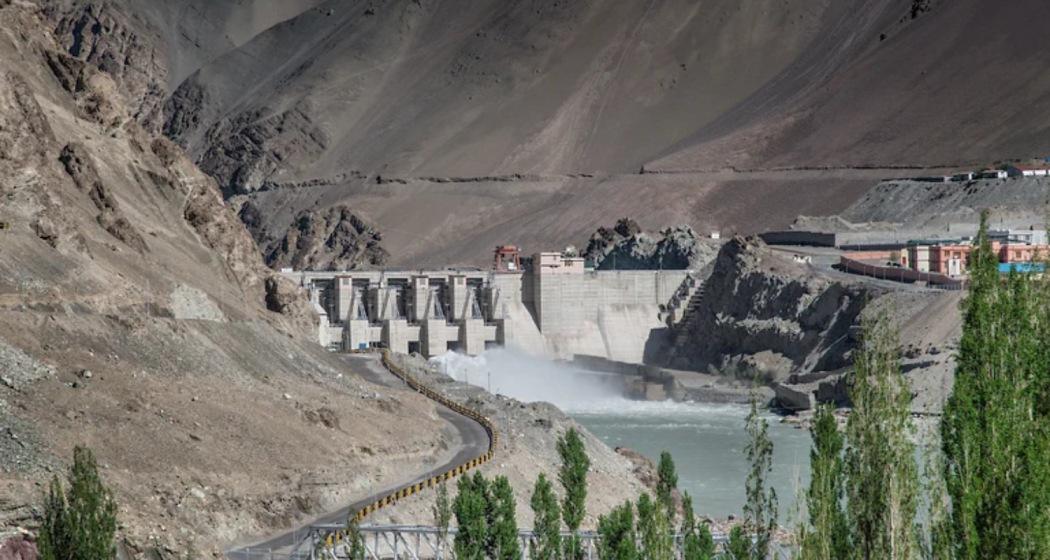
The CoA had directed India to submit operational “pondage logbooks” from the Baglihar and Kishanganga hydroelectric plants as part of the “Second Phase on the Merits” and scheduled hearings on February 2–3. The court noted that India had not filed any counter-memorial or indicated participation.
Government sources described the CoA as “so-called illegally constituted” and accused Pakistan of seeking to involve India in “parallel proceedings” outside the neutral expert mechanism. “Since we do not recognise the legitimacy of the CoA, we do not respond to any of its communications,” a source said.
India placed the IWT in abeyance on April 23, 2025, a day after 26 civilians were killed in Pahalgam by Pakistan-linked terrorists. For the first time since 1960, New Delhi explicitly linked water cooperation to Pakistan’s continued use of terrorism as an instrument of state policy.
“The treaty is in abeyance; India is not bound to respond. This is a tactic by Pakistan to get us involved to show that we remain engaged,” officials said.
Nearly 80–90 per cent of Pakistan’s agriculture relies on the Indus river system, with major reservoirs reportedly near dead storage. What was once a technical treaty arrangement has now become a strategic pressure point.
Also read: IWT in abeyance, Centre's nod to Dulhasti -II project over Chenab
Despite India’s position, the Hague-based court has continued as if the treaty framework remains fully operational. In an order dated January 24, 2026, the CoA laid out a detailed hearing schedule and specified that Pakistan alone would present arguments if India did not attend.
Five days later, the court asked India to produce internal operational logbooks, warning that non-compliance could lead to “adverse inferences” or compel Pakistan to submit documents obtained through neutral expert proceedings. The court explicitly stated that India’s abeyance of the IWT “does not limit the competence of the court.”
India has consistently rejected this premise. Under the IWT dispute mechanism, technical differences are adjudicated by a neutral expert, while legal disputes are handled by a Court of Arbitration. New Delhi maintains that current issues fall squarely within the neutral expert’s domain, and Pakistan’s move to the CoA constitutes “forum shopping.”
The court’s attempt to link the two processes is seen by India as illegitimate. Officials insist that continuing the CoA proceedings without India risks creating a one-sided legal record rather than a binding adjudication.
“This is not merely a legal dispute over hydroelectric calculations. It is the first test of India’s decision to use the treaty framework diplomatically after decades of restraint,” a South Block official said.
India’s message since Pahalgam has been consistent: treaties cannot function in isolation from ground realities. Until Pakistan addresses what New Delhi calls “abnormal hostility,” even the world’s most cited water-sharing agreement will remain suspended in more ways than one.

 Follow us