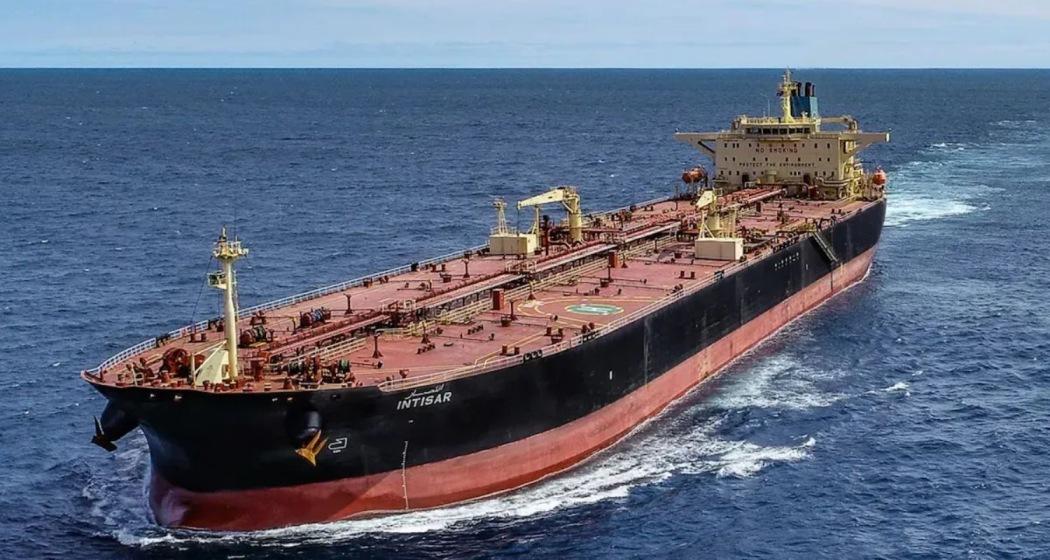
A US-sanctioned tanker carrying Iranian crude has rerouted mid-voyage from India to China, signalling shifting trade dynamics amid sanctions and payment constraints in the global energy market.
The Aframax tanker Ping Shun, which had earlier indicated Vadinar as its destination, is now signalling Dongying in China, according to ship-tracking firm Kpler.
“An Iranian crude vessel ‘Ping Shun’ that had been en route to Vadinar, India, over the past three days has dropped India as its declared destination near arrival and is now signalling China,” said Sumit Ritolia, Lead Research Analyst at Kpler.
The vessel, built in 2002 and sanctioned by the United States in 2025, was carrying around 600,000 barrels of oil loaded from Kharg Island in early March. Its earlier route had raised the prospect of India receiving Iranian crude for the first time since 2019.
However, the destination change is not necessarily final, as Automatic Identification System (AIS) signals can be altered during transit.
Analysts said the shift appears to be linked to payment-related issues, with sellers tightening terms and moving away from earlier 30–60 day credit windows to upfront or near-term settlement requirements.
Also read: West Asia war: Russia offers more oil, LNG to India
“While such mid-voyage destination changes are not unprecedented with Iranian crudes, they highlight the increasing sensitivity of trade flows to financial terms and counterparty risk,” Ritolia said.
Vadinar houses a major refinery operated by Nayara Energy, backed by Russian oil major Rosneft, making it a key import point for crude shipments into India.
The development comes amid a temporary US sanctions waiver allowing limited purchase of Iranian oil at sea, aimed at easing global price pressures driven by tensions in West Asia. The window is set to expire on April 19.
India had been a significant importer of Iranian crude until sanctions tightened in 2018, with imports ceasing from May 2019. At its peak, Iranian oil accounted for 11.5 per cent of India’s total imports, with volumes reaching over 500,000 barrels per day in 2018.
Since then, Indian refiners have diversified sourcing to the Middle East, the United States and other suppliers.
A key constraint remains Iran’s exclusion from the SWIFT system, which has complicated payment mechanisms. Earlier transactions were routed through intermediary banks, an option no longer available.
The episode underscores how financial terms, alongside logistics and geopolitics, are increasingly shaping global crude flows, with China continuing to emerge as a primary destination for Iranian oil cargoes.

 Follow us