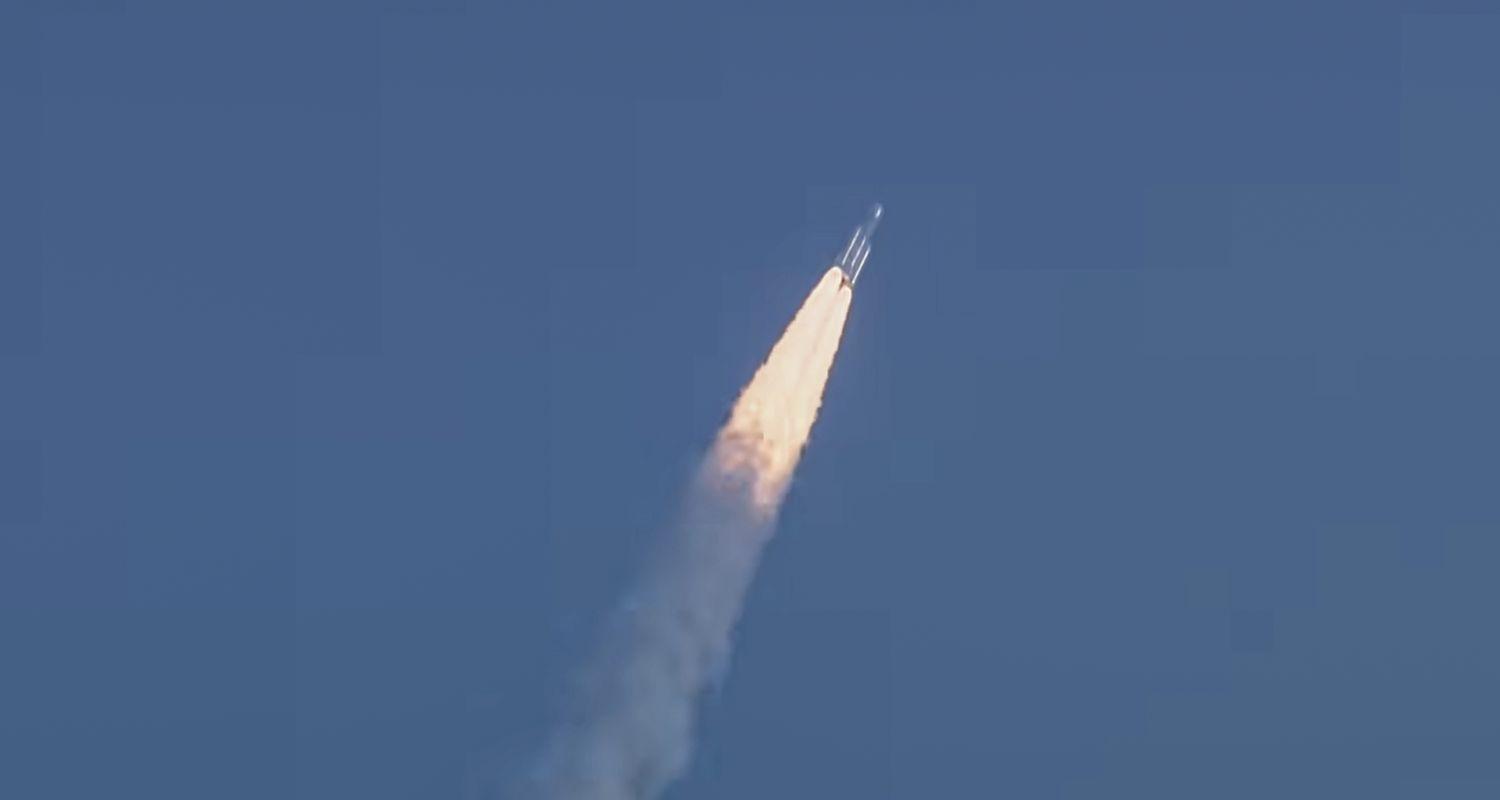
The Indian Space Research Organisation (ISRO) is set to deploy the EOS-N1 earth observation satellite into space in its first launch of the new year, slated for January 12.
The ‘Earth Observation Satellite’ has been built jointly by Thailand and the United Kingdom, ISRO said.
The PSLV C62 mission – which would be the 64th flight of PSLV – would be undertaken by the organisation’s commercial arm, NewSpace India Ltd (NSIL), and include 13 other co-passenger satellites that belong to domestic and overseas customers.
“The integration of the vehicle and the satellites has been completed and pre-launch checks are in progress. The PSLV-C62 mission is proposed to lift-off on January 12 at 10.17 hrs, from the first launch pad at Satish Dhawan Space Centre, Sriharikota,” ISRO said in a statement on Saturday.
The 25-hour countdown of the mission is scheduled to commence on January 11 and last more than two-and-a-half hours after lift-off on January 12.
The primary payload – ‘Earth Observation Satellite’ – would be deployed into the intended sun-synchronous orbit around 17 minutes after lift-off.
Also Read: BlueBird Block-2 mission: ISRO successfully launches LVM3 rocket
However, the separation of the fourth stage of the rocket (PS4) and demonstration of Kestrel Initial Technology Demonstrator (KID) capsule belonging to a Spanish startup, is expected to take place in over 2 hours after the launch.
ISRO said scientists would restart the fourth stage of the rocket to demonstrate the KID capsule to make its re-entry into the earth atmosphere. For this to occur, the scientists would re-start the fourth stage to de-boost and enter a re-entry trajectory, and this will be followed by the KID capsule separation.
Both the PS4 stage and the KID capsule (which will be the last co-passenger) will re-enter the Earth’s atmosphere and make a splashdown in the South Pacific Ocean, ISRO said.
PSLV has completed 63 flights so far, including the ambitious Chandrayaan-1, Mars Orbiter Mission (MOM), and Aditya-L1 mission.

 Follow us