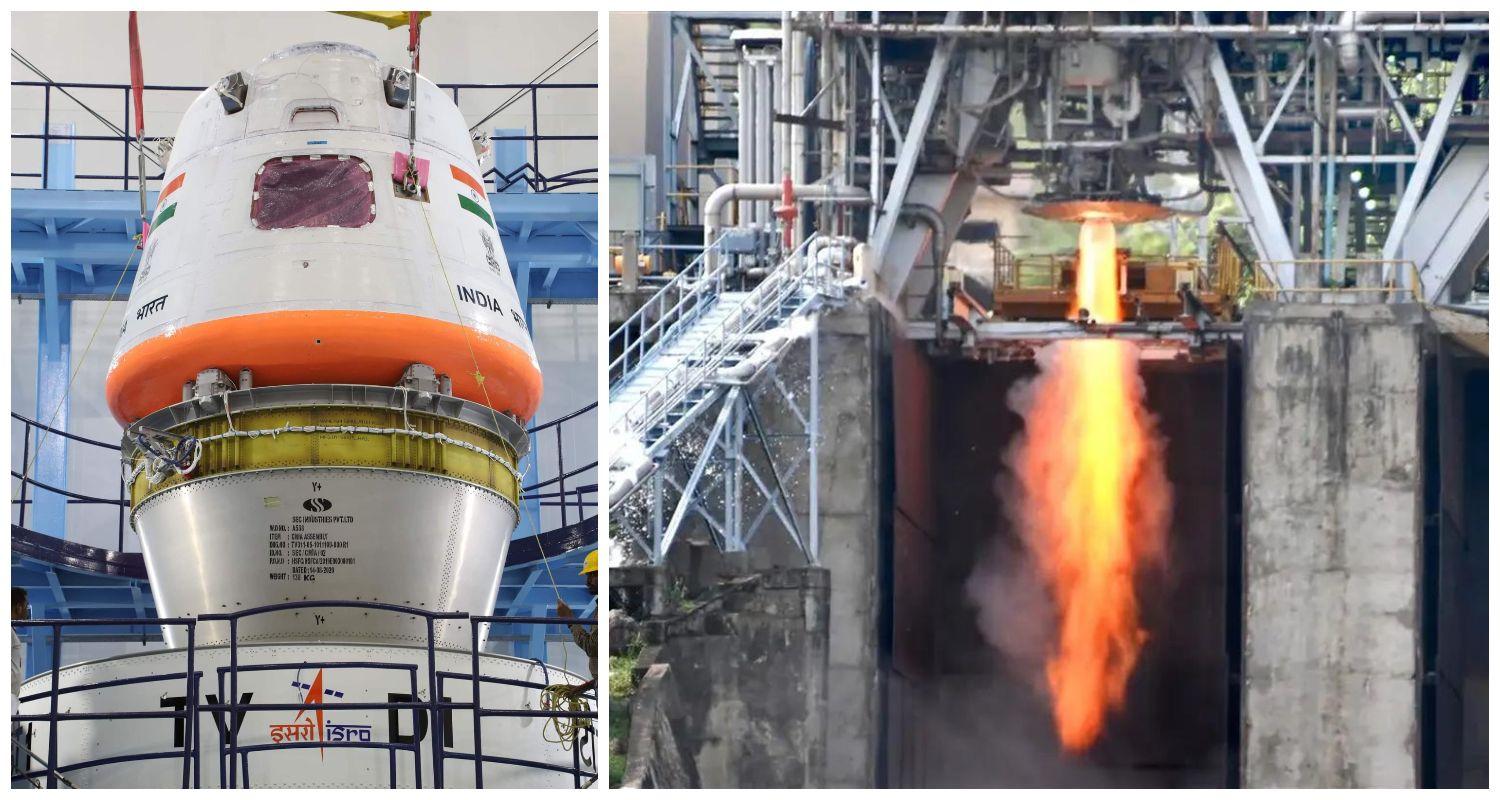
The Indian Space Research Organisation (ISRO) has reached a significant milestone with the successful testing of its C20 cryogenic engine, which now features a restart enabling system.
The test, conducted in ambient conditions, was a crucial step for the agency’s future missions.
On November 29, ISRO completed a successful sea-level hot test of its CE20 cryogenic engine at the ISRO Propulsion Complex in Mahendragiri, Tamil Nadu.
The engine, which has a nozzle area ratio of 100, is integral to the upper stage of the Launch Vehicle Mark-3 (LVM-3). ISRO confirmed the CE20 engine's thrust capacity of 19 tonnes, which has powered six LVM3 missions to date.
The CE20 engine, developed by the Liquid Propulsion Systems Centre, was recently upgraded to meet the demands of the Gaganyaan mission, India’s first manned mission.
It has now been qualified to operate at a thrust of 20 tonnes and is set for an uprated thrust level of 22 tonnes for the future C32 stage, enhancing LVM3’s payload capability.
A key achievement of the test was the demonstration of the multi-element igniter, which is essential for engine restart capability.
This feature was tested alongside the engine’s performance at sea level, despite the challenges posed by its high area ratio nozzle and exit pressure of about 50 mbar.
Testing at sea level typically introduces concerns such as flow separation inside the nozzle, which can cause vibrations and thermal issues.
ISRO addressed these concerns with a Nozzle Protection System designed to simplify the testing process, offering a more cost-effective approach compared to the High-Altitude Test (HAT) facility used for previous tests.

 Follow us