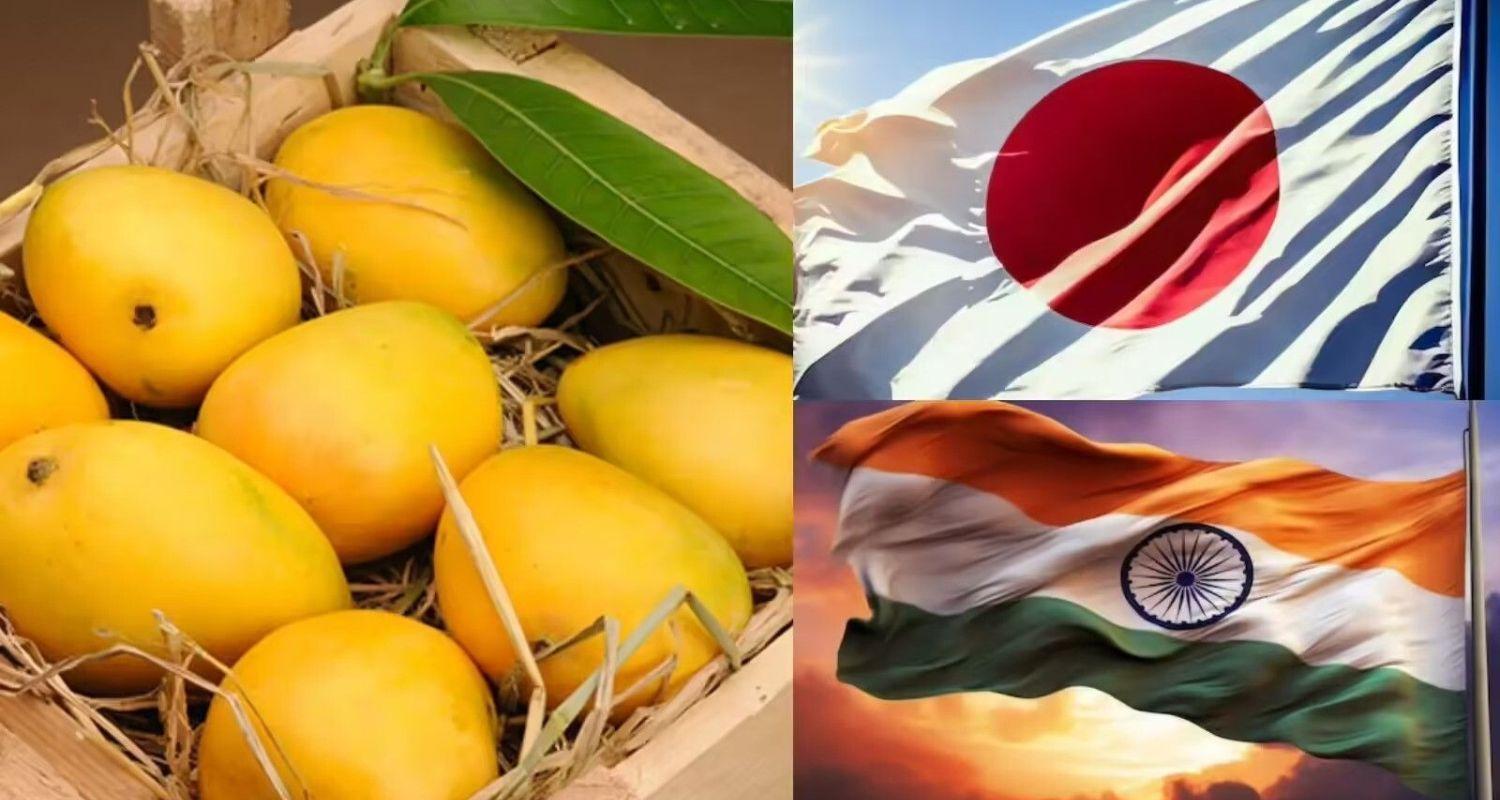
Indian mango exports to Japan have been temporarily halted after authorities in the country raised concerns over technical irregularities in the fumigation procedures. The decision comes after a Japanese delegation conducted a detailed inspection of mango treatment facilities in Rehmanpur, Uttar Pradesh.
During the inspection, officials closely evaluated the vapor heat treatment method used to eliminate pests. According to reports, certain flaws were identified in the sterilisation — also referred to as fumigation — process. Following this, Japan’s Yokohama Plant Protection Association ruled that mangoes accompanied by inspection certificates issued by India would not be permitted entry into the country.
The move is expected to result in financial losses for Indian mango growers and exporters. However, traders clarified that this does not amount to a complete ban. Instead, Japanese authorities have issued an advisory recommending corrective measures. Exports are likely to resume once the identified deficiencies are addressed.
This is not the first instance of such action. Approximately two decades ago, Japan imposed a similar restriction on Indian mango imports due to concerns over fruit flies. After India upgraded its treatment protocols, exports resumed. Industry stakeholders remain hopeful of a similar resolution this time.
India primarily exports premium varieties such as Alphonso, Langra, Kesar, and Banganapalli to Japan, all of which enjoy high demand among Japanese consumers. Exporters had also planned to introduce additional varieties this season, but the current setback has disrupted those plans.
The vapor heat treatment process — central to the issue — involves exposing mangoes to controlled hot and humid air to eliminate insects, larvae, and bacteria without the use of chemicals. The process, which lasts between 12 and 48 hours, preserves the fruit’s natural taste while ensuring it is pest-free. Strict adherence to such procedures is crucial, as the introduction of pests into foreign ecosystems can cause severe agricultural damage.
Ujjal Saha, President of the Malda Mango Association and State Secretary of the West Bengal Exporters' Coordination Committee, acknowledged the economic impact of the decision. “Although Japan is not India’s largest mango market, the fruit fetches premium prices there— around Rs 350 per kilogram. Annually, 50 to 60 metric tons were exported, indicating significant potential losses,” he said.
He further noted that efforts to establish Malda mangoes in the Japanese market have suffered a setback. “Just last year, a small consignment of Langra mangoes was exported from Malda to Japan for the first time. We had only begun to build a presence there,” he added. Saha emphasised that the situation is not a blacklisting but a warning, and confirmed that the Quarantine Department are working to meet Japan’s requirements.
Local farmers have also expressed concern. Uttam Chowdhury, a mango grower from Malda, warned that if similar restrictions are imposed by other countries, exports could be severely affected. He highlighted the need for improved infrastructure, stating that vapor heat treatment facilities are currently unavailable in Malda, forcing producers to rely on processing centers in Mumbai and other states.
Another farmer, Biman Mondal, pointed out that growers have already adopted modern techniques such as fruit bagging to prevent pest infestations. While these measures have increased production costs, farmers remain committed to ensuring quality. However, they stressed that establishing proper sterilisation infrastructure remains a government responsibility.
Also read: Indian mangoes add flavour to Singapore cultural festival

 Follow us