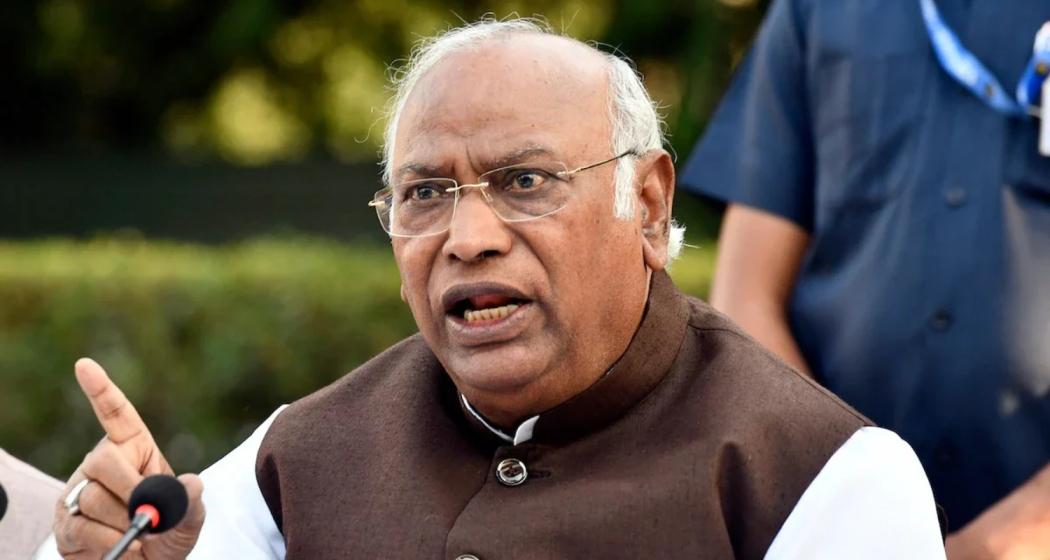
Congress president Mallikarjun Kharge on Wednesday questioned whether India had compromised under United States pressure in the recently announced India-US trade deal, and criticised the Modi government for unveiling the framework while Parliament was in session without placing details before lawmakers.
Raising a series of pointed questions, Kharge asked whether India had agreed to zero tariffs on American imports, as claimed by US President Donald Trump, and whether the country’s agriculture sector had been opened to US farm products, potentially endangering Indian farmers.
In a post on X, the Congress chief said that while India and the United States have shared a comprehensive global strategic partnership for years, the manner in which the current trade deal was announced marked a sharp departure from past practice.
He cited the Indo-US nuclear deal signed under former Prime Minister Manmohan Singh as an example of transparency, noting that the Congress-led UPA government had consistently taken Parliament into confidence while negotiating major international agreements.
Also read: Economy in mess...will govt offer any 'solutions', asks Kharge
“Contrast this with the present scenario, where the nation does not know any aspect of the trade deal announced by President Trump,” Kharge said, pointing out that Prime Minister Narendra Modi’s public remarks focused only on tariff reductions to 18 per cent, without outlining the broader terms of the agreement.
Kharge questioned why the government chose to communicate the deal through an external platform instead of Parliament, despite the Budget session being underway.
Among the issues flagged by the Congress president were whether India would stop purchasing oil from Russia and what assurances, if any, had been conveyed to Moscow in this regard.
“Parliament and 140 crore people of India have the right to know,” Kharge said, insisting that the government clarify whether any concessions had been made under external pressure.
India and the United States have agreed on a framework under which Washington will reduce tariffs on Indian goods to 18 per cent from the existing 50 per cent, but the full contours of the agreement are yet to be disclosed.

 Follow us