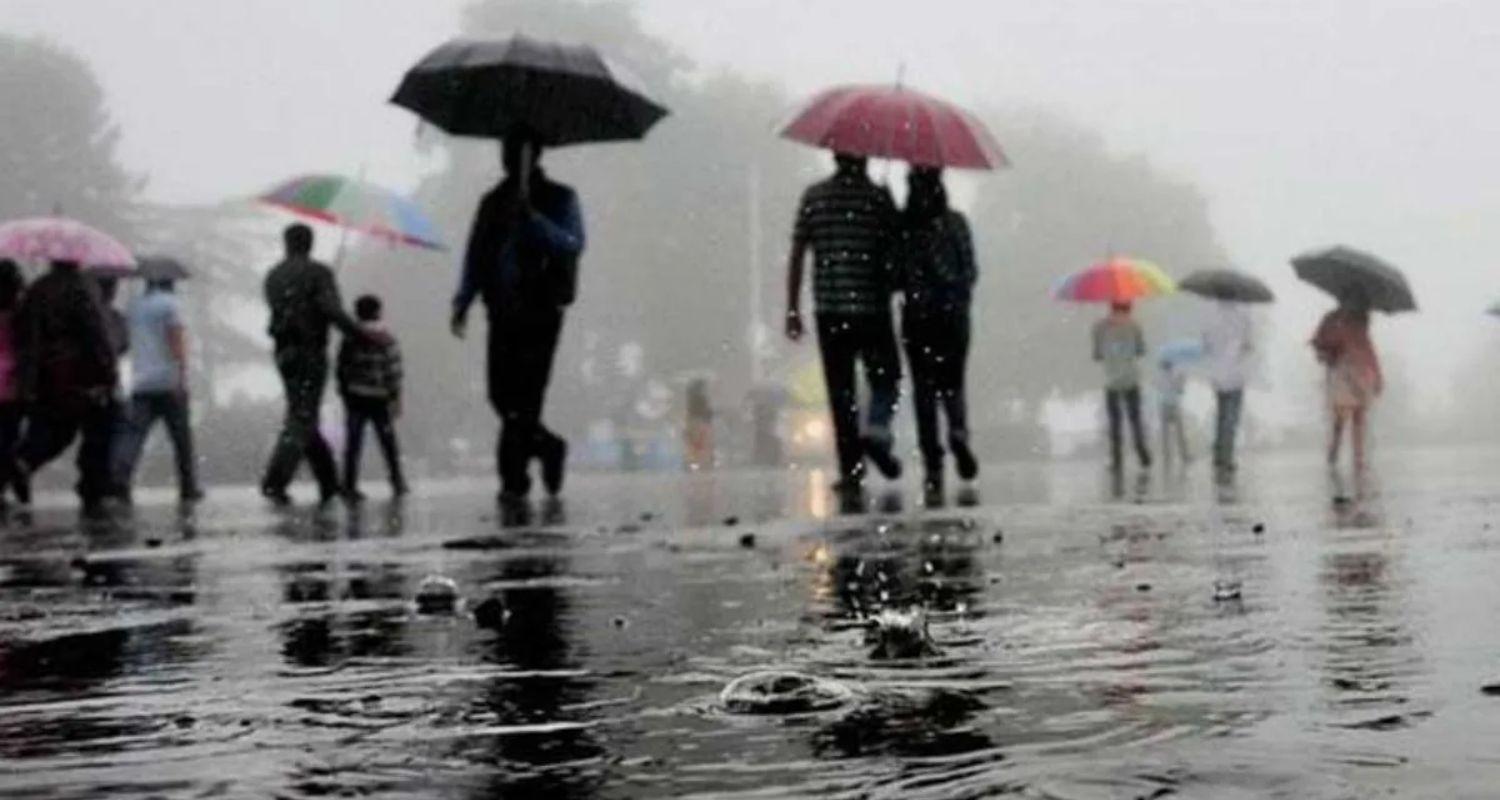
After weeks of a sluggish advance and a deepening rainfall deficit, India's southwest monsoon may finally be preparing for a comeback. Meteorologists are tracking two significant weather systems expected to develop over the Bay of Bengal and central India this week, setting the stage for widespread rainfall across large parts of the country, including the long-awaited onset of sustained monsoon conditions over north India. The monsoon has been unable to develop itself in northern India despite coming to the month of June. Delhi-NCR, Haryana, and Rajasthan have continued experiencing extreme heat and humidity. While there has been an increase in moisture content in northern India, there has been no development of monsoon circulation to generate rains.
Weather experts say that is about to change, and the key lies in the monsoon trough, a low-pressure belt that drives much of India's seasonal rainfall. Although the trough has formed, it has remained positioned unusually close to the foothills of the Himalayas, well north of its normal location. This has shifted the zone of active rainfall away from the Indo-Gangetic plains, delaying the arrival of proper monsoon conditions over Delhi and adjoining states. Forecast models now indicate that the trough will gradually migrate southwards over the coming days. As the situation starts moving towards its normal state, atmospheric instability will rise, resulting in thunder showers and rainfall in Punjab, Haryana, Delhi-NCR, Rajasthan, and western Uttar Pradesh. The change will start from July 1 to July 5, after which monsoon will establish itself over northern India and result in cooler temperatures.
The revival, however, will not be driven by the monsoon trough alone. Two back-to-back low-pressure areas are expected to form over the Bay of Bengal and move inland through central India during the week. Such systems will release huge quantities of moisture into the atmosphere, leading to an increase in monsoon circulation and increased precipitation over eastern, central, and western parts of India.
The west coast is also expected to be subjected to intense rainfall yet again. The city of Mumbai, which has seen some heavy showers earlier in the season, may be subjected to intense rainfall mid-week. Forecasts suggest heavy to very heavy rain is likely, with some locations in the Mumbai Metropolitan Region potentially receiving close to 500 mm of rainfall by the weekend if the systems evolve as projected. The renewed activity is expected to improve rainfall over many rain-deficit regions, although experts caution that localised flooding, waterlogging, and disruptions to transport remain possible in areas experiencing prolonged heavy rain. After nearly a month of waiting, India's monsoon engine finally appears to be revving back to life. If the forecast holds, the first week of July could mark the transition from scattered pre-monsoon storms to widespread, sustained rains.
Also read: Monsoon loses momentum in India due to 28 pc rainfall deficit

 Follow us