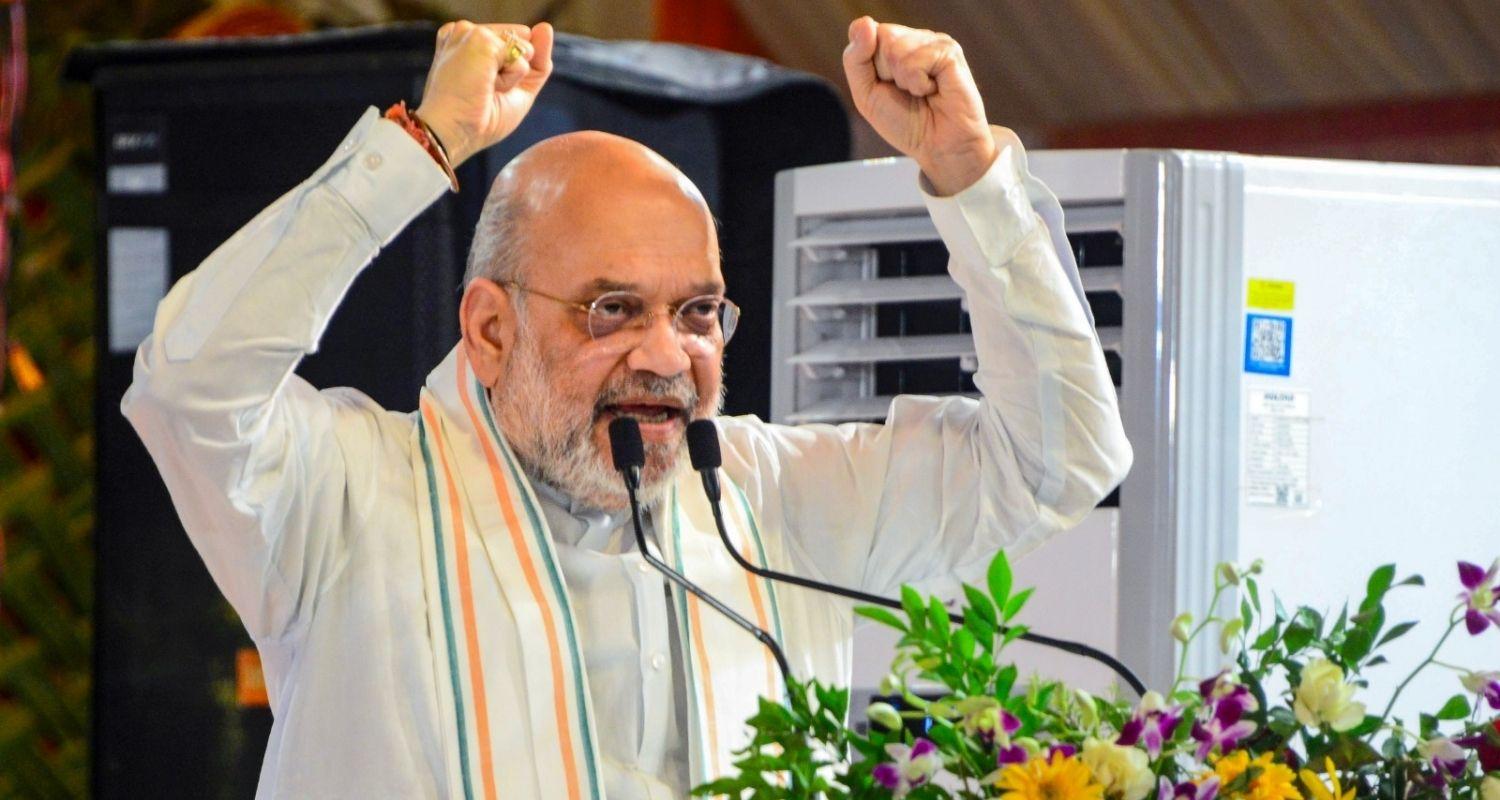
Union Home Minister Amit Shah on Tuesday declared that Naxalism had been completely eradicated from the country ahead of the Centre’s March 31, 2026, deadline, crediting the achievement to the bravery, determination and sacrifices of the security forces.
Speaking at a press conference, Shah said several dates would remain historically significant in the government’s ‘Naxal-Free India Campaign’. He identified December 13, 2023—the day the BJP government assumed office in Chhattisgarh—as the point when a determined campaign to wipe out Naxalism gained momentum.
He also referred to August 24, 2024, when a conference of Directors General of Police from across the country resolved to make India free of Naxalism by March 31, 2026.
“The third date, which everyone knows, is March 31, 2026. But due to the valour, courage and supreme sacrifice of our security personnel, Naxalism has been completely eliminated from the country even before the deadline,” Shah said.
Also read: PM Modi meets Iceland PM ahead of India-Nordic Summit
The home minister stated that while several non-BJP state governments had cooperated with the Centre in anti-Naxal operations, the previous Congress government in Chhattisgarh had not extended adequate support.
“It was only after the BJP government came to power in Chhattisgarh in December 2023 that we were able to eliminate Naxalism from Bastar,” he said.
Shah also criticised a long-standing argument made by some intellectuals that underdevelopment had led to the rise of Naxalism.
“For years, people claimed Naxalism spread because development failed to reach these areas. But the reality is the exact opposite—development could not reach these regions because Naxalism existed there,” he said.
According to Shah, violence and fear created by Naxal groups deprived residents of welfare schemes and economic opportunities for decades. “People in these areas did not receive ration cards, could not benefit from free grain schemes, and had no access to health insurance coverage of up to Rs 5 lakh. Employment opportunities were also absent,” he said.
He pointed out that many regions in India were economically more backward than Naxal-affected districts, yet they did not witness insurgency and therefore progressed steadily through development initiatives.
“Bastar and several other affected regions remained cut off from development because of violence and intimidation,” Shah added. The minister asserted that by May 19, 2026, areas once deeply affected by Naxalism were now witnessing a new era of integrated development. He outlined several welfare and infrastructure initiatives being launched in the region.
“To free the vast Bastar division from Naxalism, the Ministry of Home Affairs established nearly 200 security camps in the region. Out of these, around 70 camps—nearly one-third—will now be transformed into ‘Veer Shahid Gundadhur Seva Dera’ centres,” Shah said.
He explained that the aim of the ‘Veer Shahid Gundadhur Seva Dera’ initiative is to connect the entire Bastar region with development and public services.
The government also plans to establish Primary Agricultural Credit Societies (PACS) and dairy centres in the area.
“Every tribal woman will be able to bring milk to these dairies. Through this cooperative model, we aim to provide every tribal family in Bastar with one cow and one buffalo so that they can market dairy products across India,” Shah said. He added that forest produce collected from the region would also be integrated into a cooperative structure to ensure that profits directly benefit tribal communities.
“We have also launched the ‘Bastar Pandum’ initiative. Prime Minister Narendra Modi had emphasised the need for dedicated efforts to preserve and promote tribal culture,” Shah said.
Under the programme, platforms have been created to showcase various aspects of tribal heritage, including traditional dance, music, language, attire, cuisine and handicrafts.
Shah further noted that two editions of the Bastar Olympics had already been organised, attracting participation from nearly 3.94 lakh athletes, including a large number of former Naxals who had accepted rehabilitation.

 Follow us