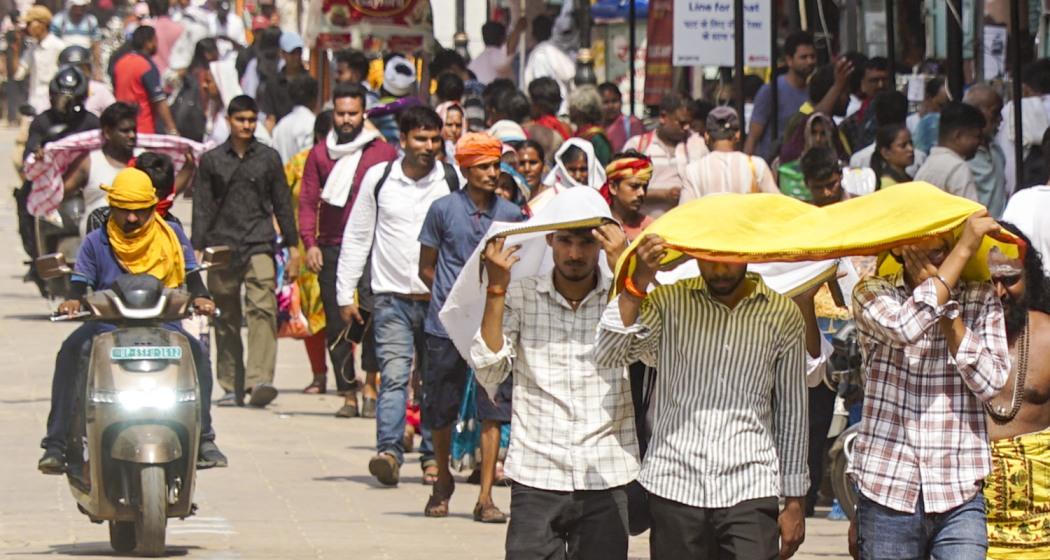
The National Green Tribunal has sought responses from the Centre, multiple state governments and other authorities over rising heatwave conditions and soaring temperatures across the country, stressing the need for urgent adaptation strategies to tackle the growing impact of climate change.
The tribunal was hearing a matter in which it had taken suo motu cognisance of a newspaper report highlighting how extreme heat was affecting public health, productivity, learning outcomes and the economy across large parts of India.
In an order dated May 25, a bench comprising NGT Chairperson Justice Prakash Shrivastava and expert member Afroz Ahmad observed that heatwaves, despite lacking dramatic visuals, remained among the country’s most under-recognised disasters.
Citing the latest bulletin of the India Meteorological Department, the bench noted that scorching temperatures were being recorded across northwest, west, central and adjoining eastern and north peninsular India, with Banda in Uttar Pradesh recording a maximum temperature of 48 degrees Celsius.
The tribunal also noted that Delhi continued to remain under heatwave conditions through May.
The bench observed that urban and rural heatwave conditions differed significantly and stressed the need for region-specific adaptation planning and policy measures.
Also read: PM urges citizens to take precautions amid heatwave,show empathy
The NGT impleaded several ministries, departments and state governments as respondents, including the Union Ministry of Environment, Forest and Climate Change, Ministry of Earth Sciences, Ministry of Jal Shakti, Central Pollution Control Board, the Delhi government, and the governments of Uttar Pradesh, Rajasthan, Gujarat, Punjab, Himachal Pradesh, Jammu and Kashmir, Uttarakhand, Maharashtra, Madhya Pradesh, Bihar, Jharkhand and Chhattisgarh.
The tribunal directed the respondents to file their replies through affidavits at least one week before the next hearing scheduled for August 18.
It said the states and authorities must formulate both short-term and long-term adaptation strategies to address rising temperatures caused by climatic changes and anthropogenic activities during the summer months.
The bench also underlined the urgent need for dedicated research on heat risks, stronger support systems, high-resolution thermal mapping, mobile temperature surveys, open-access data and climate adaptation planning.
“The issue is very serious as it relates to climate change and also anthropogenic activities,” the bench observed, adding that area-specific microplanning would be essential as temperatures were likely to rise year after year, affecting water availability and other basic needs.

 Follow us