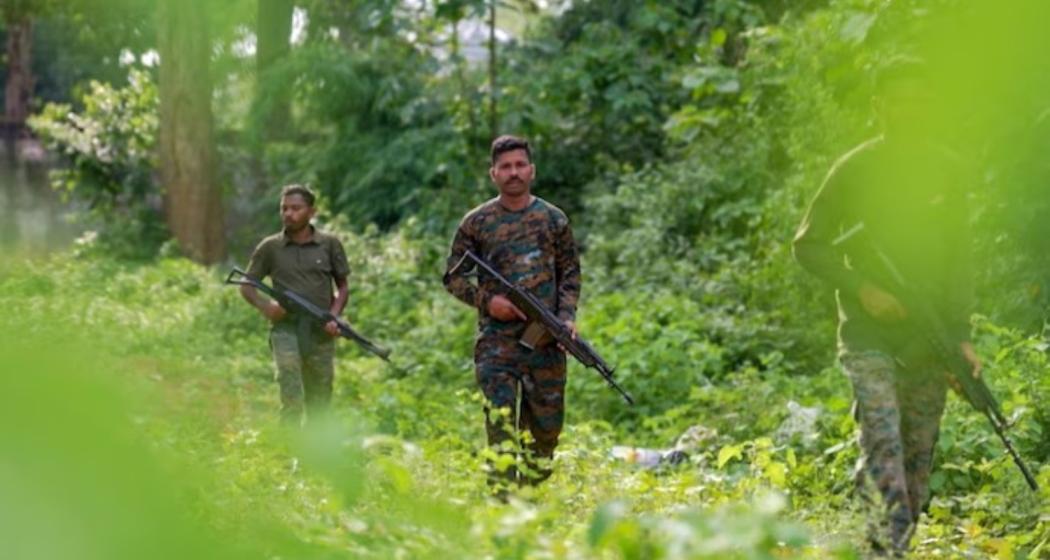
The Ministry of Home Affairs has informed state governments that no district in the country now falls under the Naxal violence-affected category, marking a significant shift after more than five decades of Left Wing Extremism (LWE) in India.
In a communication issued on April 8 to nine states, the ministry said a comprehensive security review conducted after March 31 found that “no district in the country falls under the LWE-affected category”.
The review followed a high-level assessment under the Centre’s 2015 National Policy and Action Plan to Address LWE, undertaken after the deadline set by the government to eliminate Naxalism expired on March 31.
Union Home Minister Amit Shah had earlier informed Parliament that India was now free from Maoist violence.
Officials said the review assessed the strength of armed Naxal cadres, their ability to carry out attacks, the presence of “liberated zones”, and the frequency of violent incidents across affected states.
Also read: Woman Naxalite with ₹5 lakh bounty killed in Kanker
The ministry described the development as a “historic achievement” resulting from sustained and coordinated efforts of the Centre and state governments.
However, it said continued vigilance would be required. As part of a revised classification, 37 districts have been categorised as “Legacy and Thrust districts”, while one district, West Singhbhum in Jharkhand, has been designated a “District of Concern”.
According to the policy, “Legacy and Thrust districts” are those that are now free of Naxal insurgency but require sustained security and development efforts to prevent any resurgence. A “District of Concern” is one where violence has been controlled but continued monitoring is necessary.
States informed of the revised categorisation include Andhra Pradesh, Bihar, Chhattisgarh, Jharkhand, Madhya Pradesh, Maharashtra, Odisha, Telangana and West Bengal.
The last such review in March had listed two districts, Bijapur in Chhattisgarh and West Singhbhum in Jharkhand, as Naxal-affected.
The Naxalite movement originated in 1967 in Naxalbari in West Bengal, driven by issues of land rights, social injustice and economic inequality. Over the decades, LWE violence has claimed more than 17,000 lives, including civilians and security personnel.

 Follow us