Prime Minister Narendra Modi on Monday invoked the 1998 Pokhran nuclear tests to assert that “no power on earth can make India bow down or succumb to pressure”, while accusing unnamed political forces of placing appeasement politics above national self-respect.
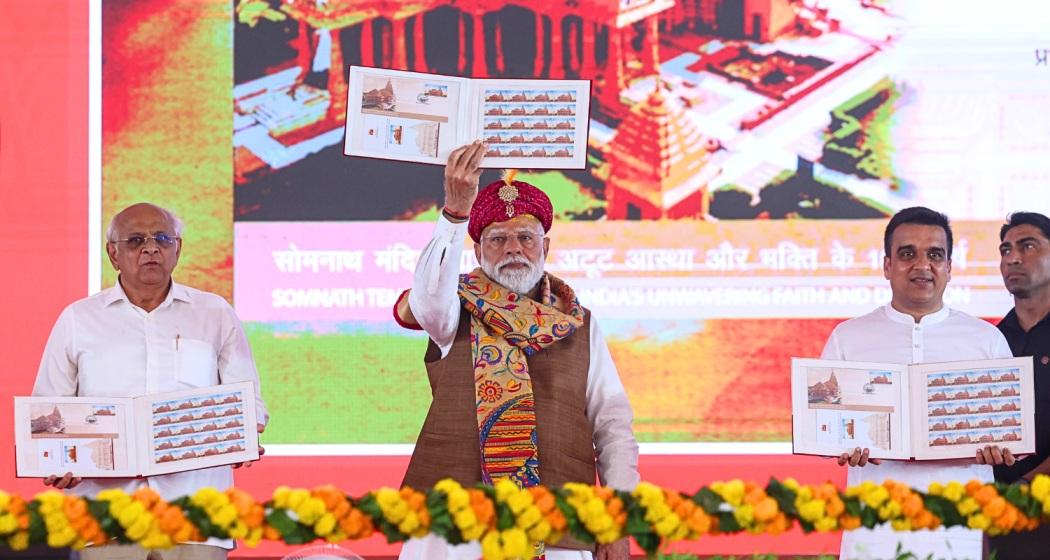
Addressing a gathering at the Somnath Amrut Mahotsav marking 75 years of the inauguration of the restored Somnath temple, Modi linked the temple’s reconstruction and India’s nuclear programme to what he described as the country’s assertion of national consciousness and sovereignty.
“On May 11, 1998, the nation conducted its nuclear tests. Our scientists demonstrated India’s capabilities and potential to the entire world,” Modi said, referring to the Pokhran-II tests conducted under the Atal Bihari Vajpayee government.
He said the tests triggered strong international reactions and economic sanctions, but India did not yield to pressure.
“Global powers mobilised to suppress India. Various sanctions were imposed. Anyone else would have faltered. But we are built differently,” the Prime Minister said.
Modi noted that India went ahead with two additional nuclear tests on May 13 despite mounting global pressure, calling it proof of the country’s “unwavering political will”.
“At that time, India faced immense pressure from the entire world. Yet, under the leadership of Atal ji, the BJP government demonstrated that for us, the nation comes first,” he said.
Also read: Indian Army plans to procure 300 additional Dhanush howitzers
The Prime Minister also used the occasion to draw parallels between the reconstruction of the Somnath temple and the Ram temple movement in Ayodhya, alleging that certain “forces” continued to oppose symbols of national identity and heritage.
“We witnessed this same phenomenon during the construction of the Ram temple and the manner in which it was opposed,” Modi said, without naming any party or leader.
Referring to post-Independence debates around the restoration of the Somnath temple, Modi said leaders such as Sardar Vallabhbhai Patel and India’s first President Rajendra Prasad supported the reconstruction effort despite opposition from then Prime Minister Jawaharlal Nehru.
“Politics was played even over issues linked to national self-respect, and the Somnath temple stands as a prime example,” he said.
The Prime Minister said heritage and development must move together, arguing that neglect of cultural centres had hindered India’s growth in the past.
Earlier in the day, Modi offered prayers and performed rituals at the Somnath temple in Gujarat’s Gir Somnath district. He also released a commemorative stamp marking 75 years of the temple’s restoration.
Thousands of people lined the roads during a nearly 1.5-km roadshow from the helipad to the temple area, with cultural performances staged along the route.

 Follow us