An online petition seeking withdrawal of the Centre’s proposed infrastructure projects in Great Nicobar Island has gathered more than 2.11 lakh signatures, reflecting growing opposition from environmentalists, researchers and citizens over ecological and tribal concerns linked to the mega development plan.
The petition, addressed to President Droupadi Murmu, Prime Minister Narendra Modi, the Union Environment Ministry and the National Board for Wildlife, urges the government to reconsider the projects and adopt sustainable alternatives for development in the ecologically sensitive island region.
The Centre has proposed a series of infrastructure projects on Great Nicobar Island, located in the Andaman and Nicobar archipelago, including an international transshipment container terminal, a greenfield airport, a township and a power plant.
The petition, initiated by PURA (Providing Urban Amenities in Rural Areas), claims the projects will lead to large-scale destruction of rainforest ecosystems and adversely impact indigenous tribal communities.
According to the petition, nearly 130 square kilometres of tropical rainforest could be cleared through the felling of around 9.6 lakh trees, though some experts estimate the number could approach one million.
It also raises concerns over the impact of the proposed port project at Galathea Bay, warning that the development could threaten biodiversity in one of the island’s most ecologically significant coastal regions.
Also read: Great Nicobar plan a recipe for disaster: Jairam to Rajnath
Environmentalists, conservationists, social scientists and retired civil servants have repeatedly criticised the project, alleging that the Environmental Impact Assessment (EIA) process was flawed and that the government underestimated the environmental damage likely to result from the construction activities.
As of 3:30 pm on May 22, the petition, floated more than a year ago on Change.Org, had garnered 2,11,574 signatures.
The petition further alleges that the dissent of local communities has been ignored and that legal safeguards under the Forest Rights Act, 2006, were bypassed while granting clearances for the projects.
Concerns have also been raised over the possible displacement and disruption of the indigenous Shompen and Nicobarese tribes, who inhabit the island and rely heavily on its forests and natural resources for survival.
“The project encompasses urban development through residential townships and hotels, highlighting business and economic advantages. However, this focus on economic growth comes at the expense of severe ecological and social impacts that cannot be overlooked,” the petition stated.
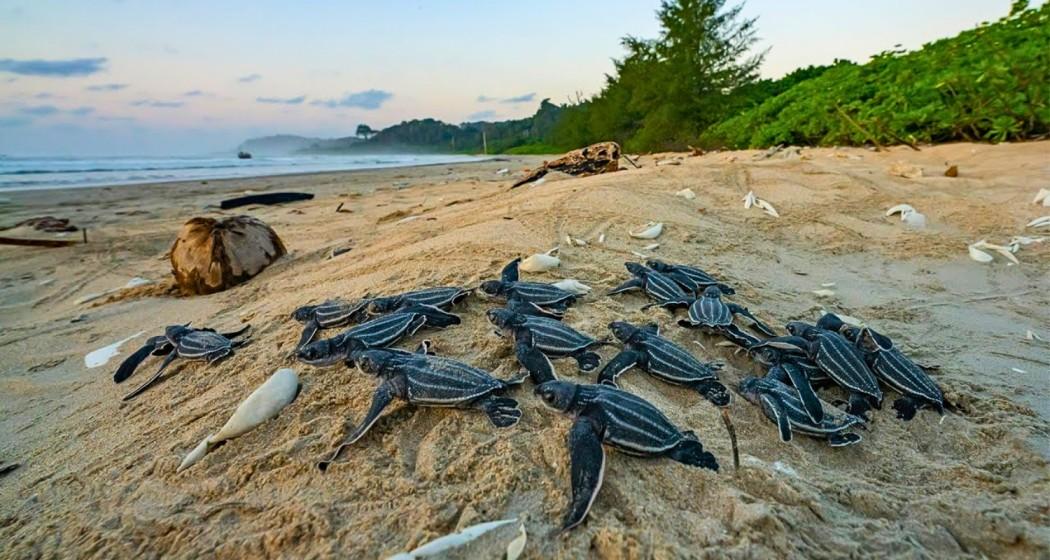
The petition additionally underlines the geological vulnerability of the region, noting that Great Nicobar lies in a highly seismic zone prone to earthquakes and tsunamis, making large-scale infrastructure development particularly risky. The petition also noted that Galathea Bay is regarded as one of the last major nesting grounds of the endangered leatherback sea turtle, raising fears that the proposed port project could severely disrupt its fragile habitat.
The proposed Great Nicobar development project has remained one of India’s most debated infrastructure initiatives, drawing sharp divisions between proponents of strategic and economic expansion and those advocating environmental conservation and indigenous rights.

 Follow us