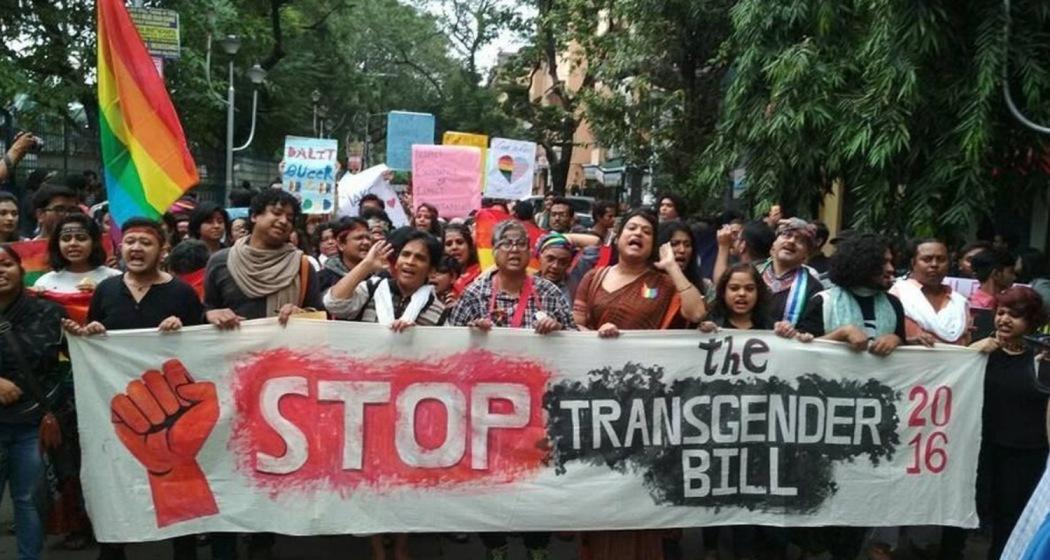
More than 44 student organisations from over 25 law schools across India on Friday condemned the proposed amendments to the Transgender Persons (Protection of Rights) Amendment Bill 2026, alleging that it undermines the dignity, autonomy and constitutional safeguards of transgender, intersex and genderqueer persons.
The Bill, introduced in the Lok Sabha on March 13 by Union Social Justice and Empowerment Minister Virendra Kumar, seeks to provide a precise definition of “transgender” while excluding “different sexual orientations and self-perceived sexual identities” from its ambit.
In a joint statement, student bodies including NALSAR Queer Collective, Feminist Alliance at NLSIU, Jamia Queer Collective, and groups from Government Law College, Mumbai, and Delhi University’s Faculty of Law, said the amendment “threatens self-identification, transition, and chosen family structures”.
“This bill...effectively seeks to dilute the protections recognised in NALSA v. Union of India, which affirmed the right to self-perceived gender identity, dignity, and expression. We, the undersigned, are queer and allied student groups across Indian law schools. The proposed amendment threatens...the very existence of many trans persons, while stripping away already limited benefits,” the statement said.
The groups further alleged that the proposed changes echo “the dark colonial legacy” of laws such as the Criminal Tribes Act and Eunuchs Act, which historically treated transgender communities as subjects of control.
The Bill states that a transgender person “shall not include, nor shall ever have been so included, persons with different sexual orientations and self-perceived sexual identities”, asserting that the law is intended to protect a specific class facing “extreme and oppressive” discrimination, not all gender identities or fluidities.
Also read: Lok Sabha passes Appropriation Bill, 2026
However, the student organisations argued that this position contradicts existing provisions. “This explicitly goes against Section 4(2) of the Act, which the Bill seeks to omit. This provision recognised the right to self perceived gender identity,” the statement said, questioning the government’s claim of a “vague definition” without substantiating enforcement issues.
They also pointed to implementation gaps, noting that only 12 states and Union Territories have constituted transgender welfare boards, attributing shortcomings to “systemic failures in resources, infrastructure, and political will”.
The proposed amendment has also drawn protests from transgender rights activists, the Student Federation of India, the Communist Party of India (Marxist), and Anish Gawande.
The Bill introduces a revised definition that includes socio-cultural identities such as kinner, hijra, aravani and jogta, as well as intersex persons and individuals with congenital variations in sex characteristics. It also includes persons allegedly compelled to assume a transgender identity through coercive means.
Student groups rejected what they described as a narrowing of the definition to limited cultural identities and physiological markers. “It conflates the distinct identities of intersex and transgender peoples and excludes all trans identities that do not fall into this narrow criteria,” the statement said.
They further alleged that the amendment was introduced without adequate consultation with the community and fails to address longstanding demands on issues such as sexual violence, reproductive rights and marriage equality.
“It is a deep irony that a statute claiming to protect the rights of transgender persons, is now proposed to penalise ‘coercing or alluring’ people to be transgender... This shows a deeply twisted view of transgender identity as a result of compulsion and coercion, rather than a representation of a person’s autonomy and agency,” the statement added.

 Follow us