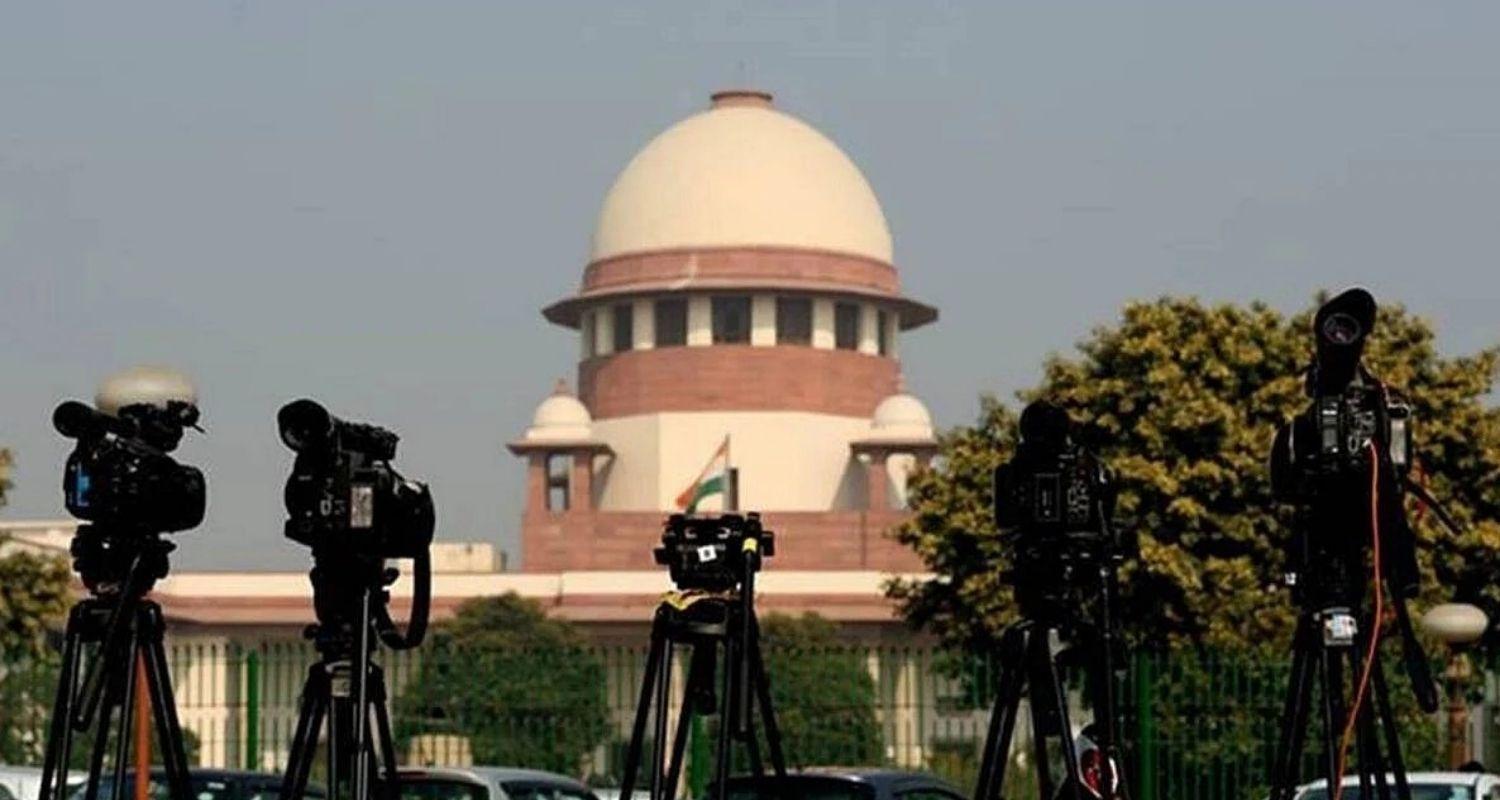
The Supreme Court of India on Thursday declined to entertain a plea filed by a group of ex-servicemen challenging the validity of existing pay-fixation rules, which they alleged unfairly disadvantage armed forces veterans who join civil services after retirement.
A bench comprising Chief Justice Surya Kant and Justices Joymalya Bagchi and Vipul M Pancholi, however, permitted advocate Ashwini Upadhyay to submit a representation to the concerned authorities. The court directed that such a representation be considered and decided upon at the earliest.
The bench also observed that if the petitioners, led by Baidya Nath Choudhary, remain dissatisfied with the outcome, they are free to approach the Central Administrative Tribunal for redressal of their grievances.
In their petition, filed through advocate-on-record Ashwani Dubey, Choudhary and five other former servicemen challenged Rule 8 of the Central Civil Services (Revised Pay) Rules, 2016, along with a Department of Personnel and Training memorandum dated May 1, 2017.
The petitioners, all of whom had served as Personnel Below Officer Rank (PBORs) before joining government departments such as the Income Tax Department and the Food Corporation of India, argued that the current framework compels them to begin at the ‘minimum pay level’ in their new roles.
Also read: SC rejects Anil Ambani’s pleas against Bombay HC order
They contended that this ‘mechanical fixation’ disregards their long years of military service, prior experience, and last-drawn salaries in the Army, Navy, or Air Force. According to them, the system effectively places them in a financially disadvantageous position.
The plea further stated that in several cases, the combined income of re-employed veterans is lower or less beneficial than what they earned during active service. It also alleged ‘hostile discrimination’, noting that while some public sector banks extend pay protection to re-employed veterans, similar benefits are not uniformly available across government departments.
Additionally, the petition argued that treating veterans with 15 to 20 years of service on par with fresh recruits is inherently unequal and violates Article 14 of the Constitution of India, which guarantees the right to equality before the law.

 Follow us